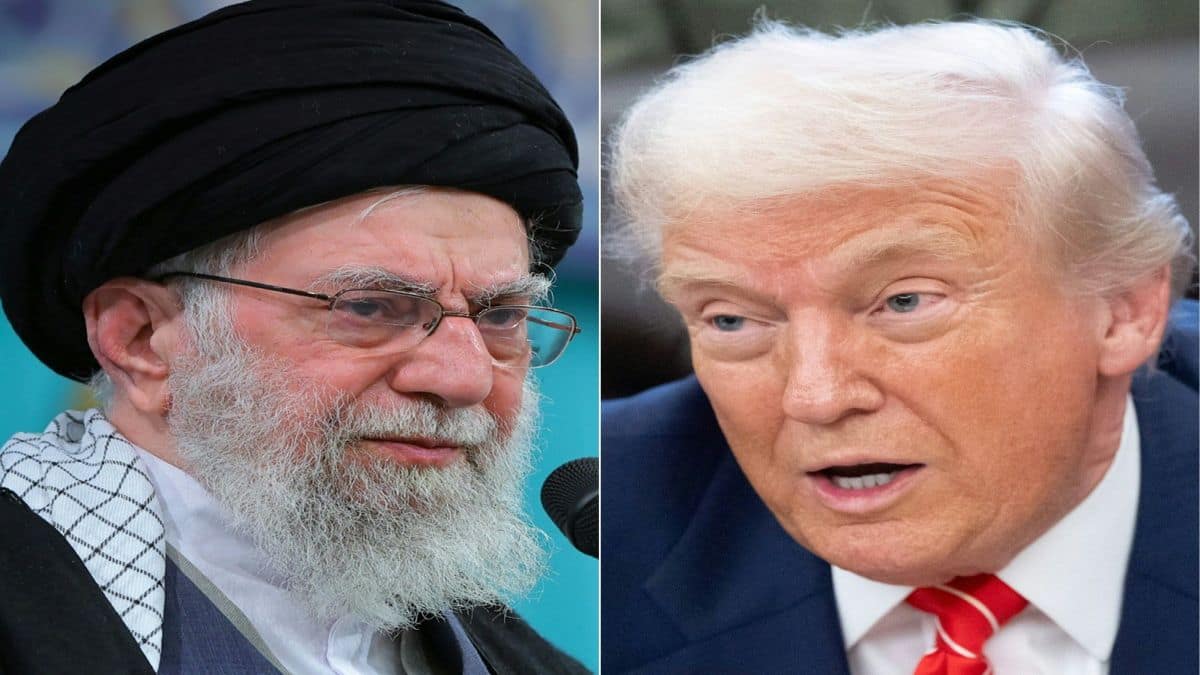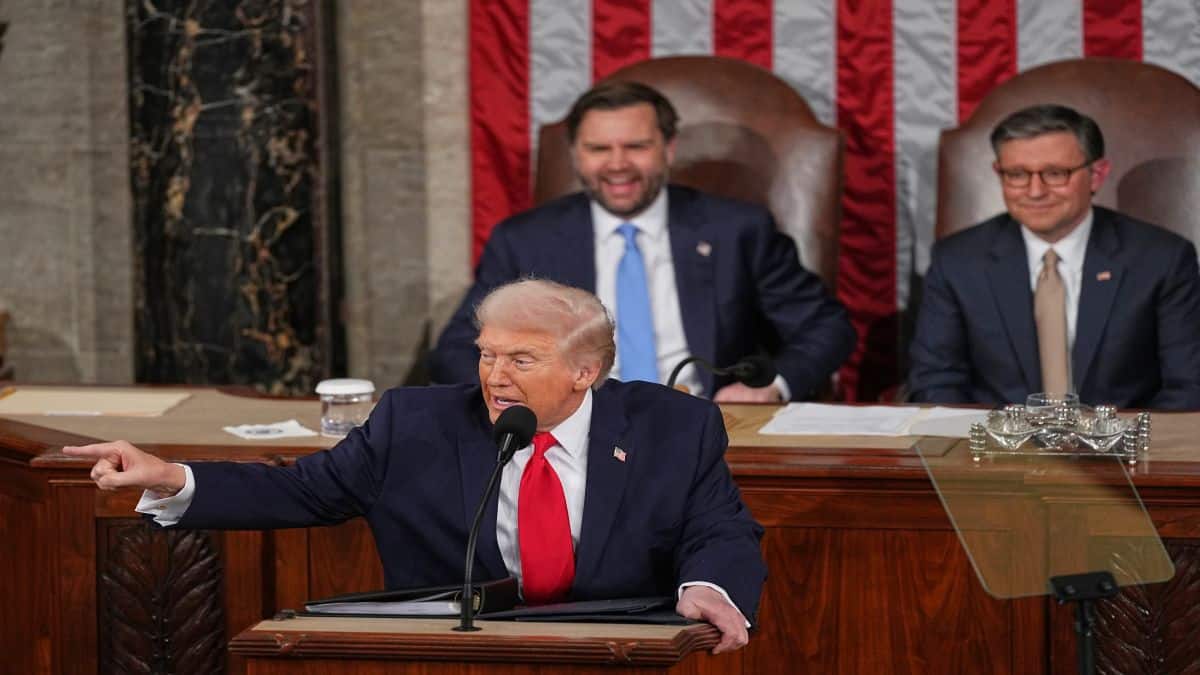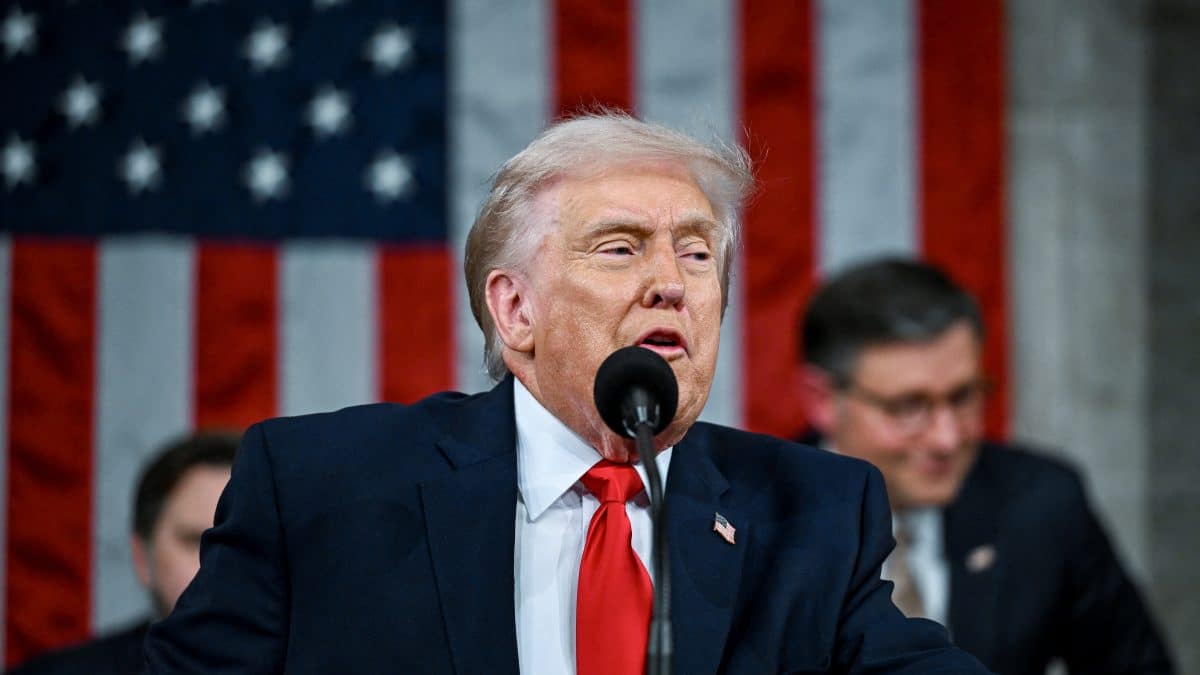
Donald Trump has a specific way of handling geopolitical crises. He turns them into folklore. During his 2026 State of the Union address, he claimed that Pakistan’s Prime Minister, Shehbaz Sharif, told him 35 million people would have died if it weren’t for his personal intervention in the India-Pakistan conflict.
That is a staggering number. It sits somewhere between the death toll of a global pandemic and the casualties of entire wars. When a leader drops a statistic like that, it demands scrutiny. Not because it might be true, but because of what it reveals about the nature of modern international diplomacy.
The Arithmetic of Hyperbole
Let’s look at the claim directly. Trump stated that during the hostilities surrounding India's "Operation Sindoor" in May 2025, he prevented a nuclear war. His assertion rests on a quote attributed to the Pakistani Prime Minister. In the world of high-stakes, real-time diplomacy, leaders talk. They negotiate. But they rarely trade in precise, mass-casualty figures like "35 million" during a phone call.
Military analysts in New Delhi and Washington have spent years tracking the specific escalation points between these two nuclear-armed neighbors. They look at troop movements, air defense capabilities, and command-and-control protocols. Not one credible defense report from 2025 supports the idea that 35 million people were on the brink of death. Even the most catastrophic nuclear exchange models between India and Pakistan, while horrifying, generally project casualties based on urban density and wind patterns. A round number like 35 million feels plucked from a speechwriter’s playbook rather than a strategic situation room.
The Reality of the 2025 Standoff
India has maintained a consistent stance throughout Trump's claims of mediation. They say the de-escalation happened through direct military-to-military communication. When a conflict flares up, hotlines between the Director Generals of Military Operations (DGMOs) are the primary tools of de-escalation. These are functional, cold, and bureaucratic lines of communication. They aren't where you discuss the fate of 35 million people with an American president.
Why does the narrative persist? Because Trump understands a basic rule of political communication. If you repeat a story enough times, it becomes part of the record. He has claimed credit for halting this conflict more than 80 times since May 2025. By framing himself as the only person capable of stopping a catastrophe of that magnitude, he shifts the focus from the messy, ground-level reality of regional disputes to his own personal authority.
How Diplomacy Actually Works
You don't solve a border conflict involving nuclear powers with a single phone call. Diplomatic resolution is a slow, grueling process of back-channeling, economic pressure, and mutual exhaustion.
When you see a claim about "stopping a war" in under 10 minutes, treat it with extreme skepticism. True mediation involves:
- Verification: Credible international observers or neutral parties confirming terms.
- Documentation: Written agreements or at least formal, public statements from both sides.
- Consistency: If both sides deny the mediation, the chances are high that the mediation didn’t happen as described.
In this case, the discrepancy isn't just a difference of opinion. It’s a total separation from the facts provided by the actual participants.
The Danger of Myth-Making
The problem with these stories isn't just that they might be false. It's that they erode the mechanisms of actual diplomacy. If every conflict is treated as a narrative arc—where the hero swoops in to save the day—the genuine, incremental work of diplomats gets buried. We start to value the performance of peace over the labor of it.
When you hear a figure like 35 million, ask yourself one question: What is the source of this data? If the only source is the person claiming the credit, the credibility is zero. In the current era, information is abundant, but context is scarce. Don't take grand claims at face value. Look for the technical details. Look for the denials. And look for the incentives behind the storytelling.
If you want to understand how a conflict actually ended, stop listening to the stump speeches. Look at the military logs. Look at the trade reports. Look for the quiet, boring, and factual breadcrumbs that diplomats leave behind. That is where the truth lives.