Political consultants in Washington still treat swing states like fragile antiques. Don't run a populist progressive. Don't talk about universal healthcare. Keep your head down, hug the center, and pray the presidential bully doesn't notice you.
That entire playbook just burned to the ground in Michigan.
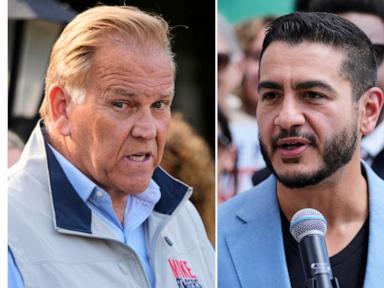
When President Donald Trump barnstormed into Port Huron in late October 2026 to rescue Republican Senate nominee Mike Rogers, the beltway press framed it as a textbook squeeze play. The lazy consensus went like this: Trump’s base turnout machine plus a relentless barrage of ideological smears would bury Democrat Abdul El-Sayed, a former Wayne County health director running on Medicare for All and ending foreign military aid. Media pundits nodded along, assuming a rust-belt battleground Trump carried in 2024 would automatically recoil from a progressive Muslim physician.
They missed the actual mechanics of modern voter behavior. Trump’s Michigan swing didn't undermine El-Sayed. It nationalized the race on terms that fatally backfired on Mike Rogers, alienated the exact coalition that delivered Michigan to Republicans two years prior, and proved that establishment triangulation is a losing bet against populist authenticity.
The Myth of the "Too Extreme" Candidate
Every midterm cycle, party operatives waste tens of millions of dollars chasing a mythical moderate voter who reads white papers and splits tickets based on committee assignments. I have watched campaigns blow astronomical sums sanitizing their candidates until they sound like corporate HR manuals, only to lose by three points anyway.
In Michigan, outside groups and campaigns poured more than $270 million in disclosed spending—plus mountains of undisclosed dark money—into making this the most expensive Senate race in state history. Republicans bet the house on one message: El-Sayed was a radical outsider out of step with Midwestern values.
Look at the August polling data that made GOP strategists salivate. A Fox News survey showed 54% of Michigan voters viewed El-Sayed’s positions as too extreme. On paper, Rogers had a layup.
Except strategists ignored the second half of that exact same poll: 51% of Michigan voters said Rogers was too close to Trump.
When an electorate dislikes the ideological label of Candidate A, they do not automatically default to Candidate B. In a midterm election, voters treat the ballot as a referendum on the party holding the White House. By inviting Trump onto the stage in Port Huron and embracing the president's scorched-earth rhetoric, Rogers erased any daylight between himself and an administration facing voter fatigue over the economy and foreign entanglements.
Voters didn't grade El-Sayed on a purity curve. They weighed a physician promising to lower healthcare costs against a former congressman acting as a human megaphone for the sitting president. Once Trump stepped to the podium, the race stopped being a referendum on progressive policy and became a straight up-or-down vote on Trumpism. In a midterm year, that is political suicide for the incumbent president's party.
How Scorched-Earth Smears Shattered the 2024 Coalition
To understand why the GOP attack strategy imploded, you have to look at negative polarization and coalition defection—two forces political hacks routinely confuse.
- Negative polarization occurs when voters cast ballots primarily out of hostility toward the opposing party or leader rather than enthusiasm for their own nominee.
- Coalition defection happens when a party's rhetoric directly attacks the identity or core interests of a swing bloc that previously backed them.
Trump and Rogers triggered both at the exact same time.
Instead of hammering El-Sayed on tax rates or regulatory costs—arguments that actually move suburban independents in Oakland and Kent counties—the Republican ticket leaned into personal and religious smears. Trump labeled El-Sayed a "communist," a "jihadist," and an operative of the Egyptian Muslim Brotherhood. In the closing days of the campaign, Trump posted on Truth Social accusing El-Sayed of hating Jewish, Black, and white people. Rogers echoed the Muslim Brotherhood line on stage and used their final debate to openly question whether El-Sayed was loyal to the United States or to overseas terrorist groups.
Here is the fatal flaw in that tactic: Michigan is not a uniform red-state primary electorate.
In 2024, Republicans made historic inroads with Arab American and Muslim voters in Southeast Michigan who were furious over the previous administration's handling of the war in Gaza. Those voters were up for grabs in 2026. They were frustrated with Washington, skeptical of establishment Democrats, and open to a populist message.
Then Trump and Rogers spent October treating Muslim identity itself as a national security threat.
The backlash was immediate and public. Bishara Bahbah, a founder of Arab Americans for Trump who helped spearhead the president's 2024 outreach to the community, publicly rebuked the president, stating the remarks crossed a red line and were racist. You cannot win a statewide race in Michigan while actively driving away Wayne and Washtenaw County swing blocs that gave you your margin two years earlier.
Why Democratic Establishment Panic Backfired Too
Republicans weren't the only ones misreading the room. Establishment Democrats spent months trying to stop El-Sayed from ever reaching the general election, convinced he was unelectable.
During the August primary, Michigan’s political machine—including Governor Gretchen Whitmer and U.S. Representative Shri Thanedar—lined up behind Representative Haley Stevens. Senate Minority Leader Chuck Schumer and outgoing Senator Gary Peters kept their distance. When El-Sayed won the primary anyway with 48.5% of the vote, the party's moderate wing didn't unify. Days before the November election, Stevens went nuclear and publicly endorsed Republican Mike Rogers, declaring El-Sayed "unfit to serve".
Beltway insiders predicted a catastrophic Democratic fracture. They assumed Stevens' defection would give cover to moderate suburbanites to vote Republican.
Again, the pundits got the psychology backward.
- It validated El-Sayed's outsider brand. Voters hate career politicians who play inside-baseball games. Watching a Democratic establishment figure cross party lines to hug a Trump-backed Republican proved El-Sayed’s central thesis: the political class protects its own regardless of party label.
- It mobilized the base. As Representative Debbie Dingell noted at the time, Stevens' endorsement had the exact opposite of its intended effect, galvanizing communities across the state behind El-Sayed.
- It neutralized GOP attacks. When both the Republican president and a corporate Democrat are attacking the same guy, voters stop seeing him as a partisan threat and start seeing him as someone the entrenched system fears.
Answering the Questions Pundits Refuse to Ask
If you search for post-mortems on the 2026 Michigan Senate race, you will see the same tired questions dominating the conversation. Every single one rests on a broken premise.
Did Trump's rally help or hurt Mike Rogers?
Asking whether a presidential rally "helped" or "hurt" treats turnout like a simple volume knob. Trump’s appearance in Port Huron undoubtedly fired up hardcore MAGA loyalists in St. Clair and Macomb counties. That is undeniable.
The problem is net turnout. A campaign rally that energizes 15,000 base voters while simultaneously motivating 40,000 angry suburbanites and alienated Arab Americans to crawl over broken glass to vote against you is a net loss. In modern swing-state politics, rallies don't just turn out your team—they act as air-raid sirens for the opposition.
Can progressive populists actually win in Trump-won states?
Yes, provided they talk like normal human beings instead of faculty lounge activists. El-Sayed didn't win by lecturing auto workers on academic theory. He won because he holds a medical degree, ran a county health department, and anchored his progressive platform in kitchen-table economics—specifically lowering healthcare costs and fighting corporate price-gouging. Voters will forgive ideological distance if they believe you genuinely care about their bank account and aren't owned by lobbyists.
What happens when a populist Democrat and a populist president actually govern?
Watch what happened immediately after the dust settled on November 3. El-Sayed defeated Rogers by roughly seven percentage points—taking 52.56% to Rogers' 45.44%—to become the first Muslim American elected to the United States Senate.
Within days of the election, the rigid partisan caricatures evaporated. Following Trump’s surprise Election Day announcement of an agreement with Israeli Prime Minister Benjamin Netanyahu to end U.S. military aid to Israel at the end of the year, Senator-elect El-Sayed publicly praised the move. He stated bluntly that he agreed with the president on ending unconditional foreign military aid and even arranged a meeting with Vice President JD Vance—the very man who had called him "very, very evil" during the campaign.
That is the realignment Washington refuses to see. On foreign intervention and anti-corporate populism, the horseshoe bends closer together than party bosses want to admit.
The Hard Truth About Running This Playbook
Before progressives declare victory and copy-paste El-Sayed’s campaign across every swing state in 2028, let’s be honest about the risks and limitations of this approach.
First, the environment did heavy lifting. Midterm elections historically punish the party in the White House, and 2026 was no exception—Republicans lost their majorities in both chambers of Congress. Running an unapologetic left-wing platform in a wave year against an unpopular incumbent administration is vastly easier than defending that same platform in a neutral or unfavorable presidential cycle.
Second, credentialed authenticity cannot be faked. El-Sayed’s background as a physician and public health director gave him immediate credibility on healthcare that a career lawyer or lifelong activist simply cannot manufacture. When another candidate tries to run the exact same populist script without real-world credentials, voters smell the fraud instantly.
Third, taking on $270 million in dark money and establishment defections requires an iron stomach. Most candidates crack under that pressure, pivot to safe consultant-approved talking points in September, and lose both their base and the middle.
Stop Taking Advice From People Who Lose Elections
If you run campaigns, advise candidates, or analyze American politics, throw away the conventional wisdom from the last twenty years.
- Stop hiding behind triangulation. Voters can spot a focus-grouped answer from a mile away. If you run from your own record or water down your platform to appease television pundits, you hand your opponent the narrative.
- Never let the opposition define your identity. When attacked on background, faith, or loyalty, pivoting to dry policy memos doesn't work. You confront the smear head-on, expose the desperation behind it, and tie your opponent to the status quo voters already despise.
- Recognize that presidential coattails cut both ways. Bringing a polarizing president into a late-stage midterm battleground doesn't rescue a weak candidate; it turns a local choice into a national protest vote.
Trump flew into Michigan expecting to bully a progressive outsider off the stage. Instead, he handed Abdul El-Sayed the exact foil he needed to unite a fractured coalition, bury Mike Rogers by seven points, and rewrite the rules of swing-state politics.


