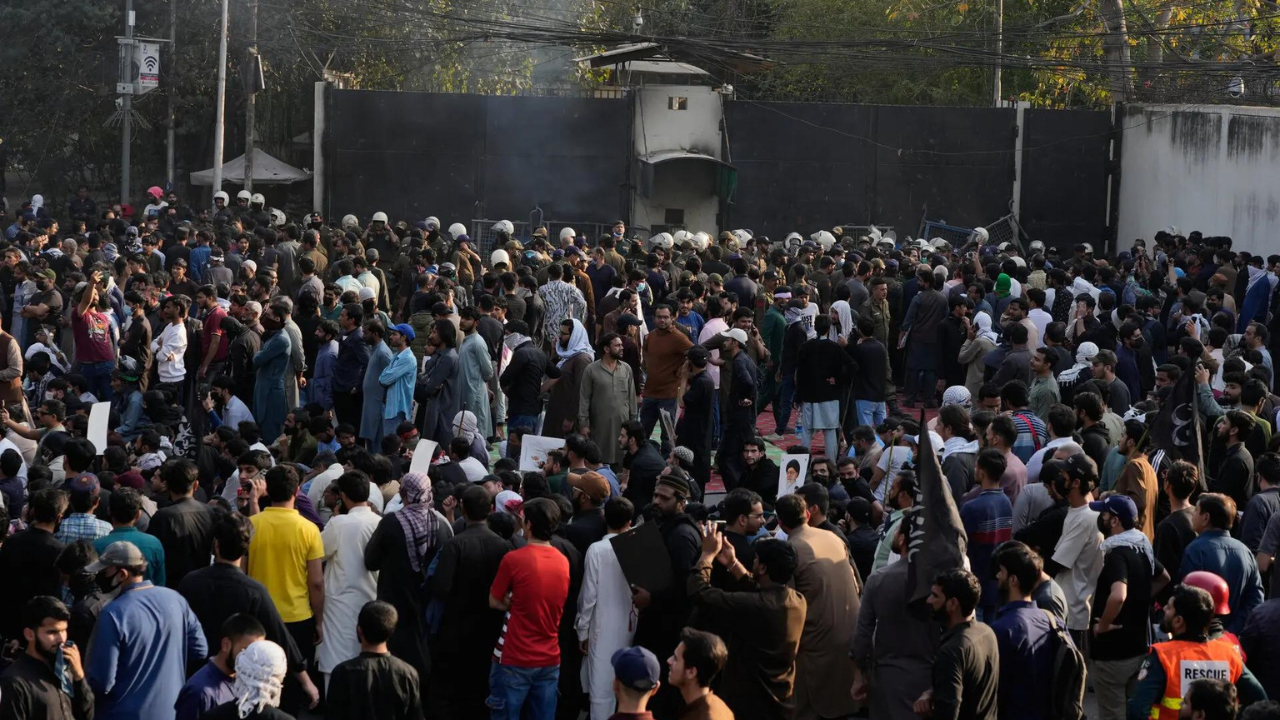
Chaos isn't a strong enough word for the scene that unfolded at the US Consulate in Karachi. When a mob breached the outer perimeter, the line between a diplomatic standoff and a combat zone vanished in seconds. Reports confirm that US Marines opened fire on protesters who stormed the Karachi consulate, a move that has sent shockwaves through international diplomatic circles and ignited a firestorm of debate over the use of lethal force on sovereign foreign soil.
It wasn't just a protest that got out of hand. It was a security nightmare.
The situation in Karachi has always been a powder keg. For those who follow South Asian geopolitics, this isn't exactly a surprise, but the escalation to live ammunition marks a grim milestone. When the perimeter of a high-security diplomatic mission is compromised, the "Rules of Engagement" change. You're no longer dealing with a crowd. You're dealing with an active threat to American personnel and assets.
The Breakdown of Security in Karachi
The US Consulate in Karachi is practically a fortress. It's designed to withstand everything from car bombs to sustained sieges. Yet, a large, determined crowd managed to push through. Reports indicate that the initial layers of local police security failed to hold back the tide. When the mob breached the outer wall, the responsibility for protection fell squarely on the shoulders of the Marine Security Guard (MSG) detachment.
These aren't just any troops. They're elite Marines specifically trained for this exact scenario. Their job isn't to play nice. It's to ensure the safety of the diplomats inside and the sensitive information they hold. When protesters started climbing walls and setting fire to consulate property, the decision was made to use lethal force. It’s a call no commander wants to make, but in the heat of a breach, the luxury of time doesn’t exist.
Local sources claim the protesters were unarmed, but "unarmed" is a relative term when you're facing a mob of hundreds with the intent to burn and destroy. In the eyes of the Marines on the ground, the threat was imminent and potentially fatal.
Why the Rules of Engagement Shifted
People often ask why non-lethal methods like tear gas or rubber bullets weren't enough. In some cases, they are. But once a perimeter is breached, the distance between the threat and the target shrinks to a point where non-lethal measures lose their effectiveness.
The US military operates under very specific standing rules of engagement (SROE). These rules aren't just suggestions. They are the legal and tactical framework that dictates when a weapon is fired.
- Inherent Right of Self-Defense: Every service member has the right and obligation to defend themselves and others against a hostile act or demonstrated hostile intent.
- Hostile Act: An attack or other use of force against US personnel or property.
- Hostile Intent: The threat of the imminent use of force.
When you have a mob storming the walls of a consulate, both "hostile act" and "hostile intent" are clearly met. The Marines didn't just wake up and decide to start shooting. They responded to a direct and immediate breach of their secure zone.
The Failure of Local Law Enforcement
One aspect people consistently overlook is the role of the Pakistani security forces. By international law—specifically the Vienna Convention—the host nation is responsible for the protection of diplomatic missions. When a mob gets close enough to the walls to start climbing, it’s a failure of the host nation's security apparatus.
The Karachi police and paramilitary forces were supposed to be the first line of defense. They weren't. Whether it was a lack of resources, a lack of will, or a sheer numbers disadvantage, the local forces didn't stop the advance. This left the Marines with no buffer.
The Political Fallout of the Karachi Incident
The immediate reaction in Pakistan has been one of outrage. Protests have erupted in other major cities, including Lahore and Islamabad. The Pakistani government is in a tough spot. They need to condemn the use of force to appease their domestic base, but they also have to acknowledge that they failed to protect the consulate in the first place.
On the American side, the State Department and the Pentagon are standing firm. They’ll likely conduct an internal review, but the public stance is clear. The Marines were doing their job.
This isn't just about one afternoon in Karachi. It’s about the message it sends to other groups around the world. If you storm an American mission, the response will be lethal. It’s a harsh reality, but it’s the one we live in. The days of "wait and see" are over when it comes to embassy and consulate security.
What You Need to Know About Consulate Security
Most people think of a consulate as an office building with some extra guards. It’s not. It’s a piece of American soil in a foreign land. The security protocols are intense and layered.
The Marine Security Guard Detachment
The MSGs are the primary internal security for all US diplomatic posts. They go through a grueling training program at Quantico, Virginia. They are trained in everything from fire-fighting to high-intensity urban combat. Their presence is a deterrent, and when that deterrent fails, they are the last line of defense.
The Defensive Perimeter
A typical consulate has multiple rings of security.
- Outer Perimeter: Usually patrolled by local police or private security.
- Intermediate Zone: Fences, walls, and blast-resistant barriers.
- Inner Perimeter: The actual consulate building, which is hardened against entry and attack.
In the Karachi incident, the mob bypassed the outer perimeter and was actively engaging the intermediate zone. Once they reached that point, the "safe" distance was gone.
The Long-Term Impact on US-Pakistan Relations
This incident is going to strain the relationship between Washington and Islamabad for years. We’ve seen this movie before. Every time there’s a violent incident involving US forces and Pakistani civilians, the cycle of blame starts all over again.
Pakistan is a nuclear-armed nation with a deeply divided political landscape. The US needs Pakistan for regional stability, particularly with the ongoing issues in neighboring Afghanistan. But how do you maintain a partnership when your soldiers are firing on their citizens?
There’s no easy answer. Honestly, the relationship is more of a "marriage of convenience" than a true alliance. Both sides know they need each other, but there’s very little trust.
A Growing Trend of Diplomatic Violence
We aren't just seeing this in Pakistan. From the Middle East to South America, diplomatic missions are becoming the primary targets for anti-Western sentiment. The "diplomatic immunity" that used to provide a shield of sorts is increasingly ignored by non-state actors and radicalized mobs.
Groups have figured out that attacking a consulate is a high-impact way to get global attention. It forces a response and creates a visual narrative of "the people vs. the empire." The US Marines who opened fire were caught in the middle of this larger geopolitical game.
The Reality of the "Report"
The report that the Marines opened fire isn't just a rumor. It's backed by eyewitness accounts, local medical reports, and internal military communications that have slowly leaked to the press. While the US government might try to downplay the number of casualties, the fact remains that live fire was used.
For the families of those injured or killed, the legalities of the Vienna Convention mean very little. For the Marines on the ground, the political fallout is someone else's problem. They survived. They held the line.
The Karachi consulate incident serves as a brutal reminder of the risks associated with foreign diplomacy in volatile regions. It's a world where a peaceful protest can turn into a deadly firefight in the blink of an eye.
If you're following this story, keep an eye on the official statements from the Pakistani Interior Ministry. They’re the ones who will ultimately have to explain why their own security forces were unable to prevent the breach. Also, watch for any shifts in US travel advisories for the region. If the US starts pulling non-essential personnel out of Karachi, you’ll know the situation is far from over.
The best way to stay informed is to look for reports from multiple sources. Don't just rely on the official government lines. Compare what the State Department says with what local Karachi journalists are seeing on the ground. The truth is usually somewhere in the middle, and it's never as simple as a headline makes it seem.
Stay aware of the security environment if you’re traveling or working in high-risk areas. Always have an evacuation plan and know where your nearest diplomatic mission is, but also understand that in a crisis, those missions become the biggest targets.