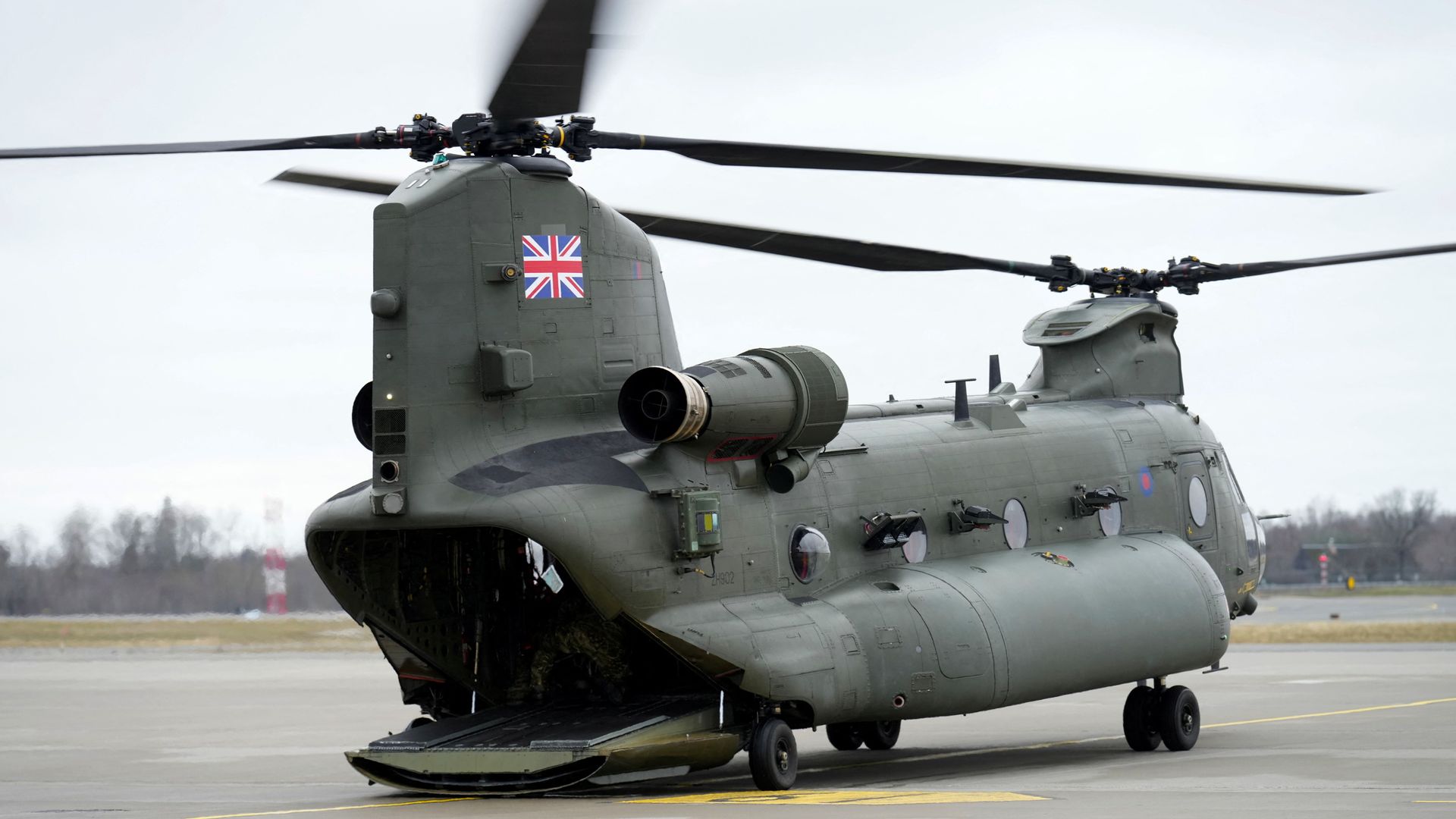
Every single time a hillside catches fire, the public screams for the same exact shiny object. People look at the skies, watch a commercial airliner or a tactical military transport drop thousands of gallons of red slurry, and assume we just need more gray iron in the air. Politicians love it. Headlines praise it. Taxpayers foot the bill for billion-dollar hardware retrofits because throwing heavy metal at nature feels proactive.
It is an expensive, comforting delusion. For a deeper dive into similar topics, we recommend: this related article.
Converting military aircraft into firefighting platforms is the aviation equivalent of using a scalpel to chop firewood. It looks intense, it makes for great evening news footage, and it fundamentally misunderstands how fires behave, how logistics work, and where actual capital should go. I have watched municipal budgets bleed dry trying to keep aging defense surplus airborne while the brush beneath them burns unabated.
Let us dismantle the romanticized narrative of the airborne military tanker once and for all. To get more background on this topic, detailed analysis is available on The Washington Post.
The Physics Problem Nobody Wants To Talk About
Imagine a scenario where you take a cargo aircraft designed to haul armored vehicles across continents, strip out its defensive avionics, and bolt modular liquid tanks onto its floorboards. On paper, you get a massive payload capacity. You get speed. You get range.
Then reality sets in.
Military airframes are engineered for high-altitude transit and tactical maneuvering under specific structural tolerances. Dumping fifteen thousand gallons of water out of a belly hatch changes the center of gravity of a heavy transport faster than a pilot can blink. The sudden weight shift introduces violent aerodynamic instability.
Furthermore, drops from high-speed jets do not land where you want them with surgical precision. By the time a fast-moving platform slows down enough to drop retardant effectively, it is burning through fuel at an astonishing rate. Ground crews spend days prepping temporary tarmac facilities that can handle the sheer wingspan and weight of these beasts, only to watch thermal updrafts blow a high-altitude drop completely off target.
Water dropped from twenty thousand feet often evaporates before it even hits the tree canopy. What does survive the fall turns into a high-speed mist that coats the upper foliage while the base of the fire continues to feast on dry undergrowth. You have just spent hundreds of thousands of dollars per flight hour to water-cool the treetops.
The Cost Equation Is Broken
Let us talk numbers because the defense contractors certainly will not.
Operating a front-line military transport or converted tactical aircraft is an hourly financial hemorrhage. Between specialized maintenance, proprietary parts, and specialized flight crews, the cost per flight hour easily runs into five figures. When you factor in the lifecycle cost of maintaining aging frames that were never designed for the low-altitude, high-stress, corrosive environment of heavy retardant drops, the math becomes indefensible.
Every single dollar dumped into retrofitting defense assets for civilian emergency response is a dollar stolen from actual mitigation. While bureaucrats obsess over procuring surplus transport aircraft, regional fire districts are starving for basic ground infrastructure. They lack modern telemetry, local water reservoirs, resilient communications arrays, and enough boots on the ground to cut tactical containment lines before a spark turns into an inferno.
We are pouring champagne into a leaking bucket and wondering why the floor is still wet.
The False Promise of Speed
The primary argument for using military hardware is velocity. The logic goes that a jet can cross a continent in hours, swoop over a hot spot, and save a town before ground crews can load their trucks.
This is fantasy. Wildfires do not wait for flight plans. By the time an inter-state military asset is mobilized, cleared through bureaucratic red tape, deployed to a regional base, and routed into an active airspace choked with smoke and local helicopter traffic, the tactical window has usually closed.
Agility beats raw speed every single time in emergency response. A fleet of smaller, nimble, locally stationed agricultural aircraft or specialized air tractors can reload, refuel, and cycle back over a target area ten times before a retrofitted military transport finishes a single wide-arc turn. Precision beats volume when you are fighting dynamic, shifting fire fronts.
What Actually Works
If we stop chasing high-tech vanity projects, what does an effective response look like? It looks unglamorous. It looks boring.
It looks like hardened local infrastructure. It looks like underground water reservoirs placed strategically near high-risk wildland interfaces. It looks like continuous, year-round controlled burns that clear out dry timber before peak season arrives. It looks like investing in automated infrared drone early-detection grids that catch spot fires within minutes of ignition, long before they require a fleet of heavy metal to contain.
We need to stop treating wildfire management like a defense procurement contract. Every time a major blaze makes national news, defense lobbyists salivate at the prospect of offloading aging hardware onto civilian agencies. We cannot afford to keep buying into the illusion that bigger wings equal better safety.
Stop waiting for the military to save the forest. Build the infrastructure on the ground, fund the local crews who know the
Why Turning Fighter Jets Into Firefighters Is A Million Dollar Mistake
news, business, technology
Everyone loves a good hardware crossover. Take a weapon built to drop precision ordnance, strip out the targeting pods, strap on a temporary belly tank, and point it at a forest fire. It feels proactive. It feels like defense dollars working overtime. It is also an operational disaster disguised as common sense.
The lazy consensus says we need to militarize our aerial firefighting fleets. Politicians love the visual. Defense contractors love the procurement budgets. But people who actually understand fluid dynamics, fleet logistics, and airframe fatigue know this idea is dead on arrival.
Let us look past the marketing deck.
The Physics Problem Nobody Wants To Discuss
Military aircraft are marvels of engineering, designed for high-G maneuvers, supersonic transit, and extreme stress envelopes. They are built narrow and light. Firefighting is the exact opposite job.
To drop retardant effectively, an aircraft needs massive internal volume or a conformal belly tank that does not completely destroy its aerodynamic profile. When you retrofit a supersonic jet or a heavy transport aircraft for drops, you are fighting the airframe's native geometry.
Drop a few thousand gallons of water from a high-speed platform and watch what happens to center-of-gravity shifts. The physics of low-altitude, low-speed delivery are brutal. Fighters stall at speeds where air tankers thrive. Heavy cargo planes require runway lengths that do not exist near remote mountain passes.
I have watched defense budgets vanish into R&D black holes trying to make multi-role aircraft do single-role dirty work. You end up with a Swiss Army knife that cuts poorly and costs a fortune to sharpen.
The Cost Per Gallon Fallacy
Proponents point to idle military assets as free capacity. Nothing could be further from reality.
Operating a tactical fighter or a heavy military transport carries an exorbitant hourly cost. Maintenance hours outnumber flight hours by double-digit margins. When you subject an airframe designed for clean skies to the particulate-heavy, corrosive soup of a wildfire smoke plume, you accelerate engine wear exponentially.
Let us look at the economics. Dedicated firefighting platforms like the CL-415 scooper or specialized turboprops are optimized for quick turnaround cycles. They land on nearby lakes, scoop water in seconds, and cycle back to the fire line.
A military transport converted for aerial delivery has to return to a major airfield, land, undergo specialized ground reloading, and burn massive amounts of fuel getting back to the target. You are trading tactical agility for bureaucratic theater.
The Logistics Nightmare
Command and control during a wildfire crisis is already chaotic. Mixing civilian airspace management with military tactical flight rules is a recipe for mid-air catastrophe.
Civilian incident commanders use standardized radio frequencies, visual flight rules, and predictable patterns. Introducing fast-moving military assets into that tight airspace requires layers of deconfliction that slow down the entire operation. Seconds matter when a ridge is crowning. Waiting for clearance while a multi-million-dollar jet sets up a wide-radius drop pattern means the fire has already jumped the containment line.
We do not need more hardware. We need better logistics, localized deployment, and sustained funding for dedicated, purpose-built aerial assets.
Stop trying to turn a fighter jet into a garden hose. Fund the specialized fleet, fix the ground infrastructure, and leave the jets where they belong.