The rusted needle on the dashboard of a local delivery truck in a small town flickers just above empty. For the driver, this isn't a geopolitical data point. It is a calculation of whether he can afford the extra gallon of milk on the way home. Thousands of miles away, in the sweltering heat of the Strait of Hormuz, a group of Iranian officials are busy collecting a "transit fee" that nobody asked for. These two scenes are connected by an invisible, high-tension wire of global economics.
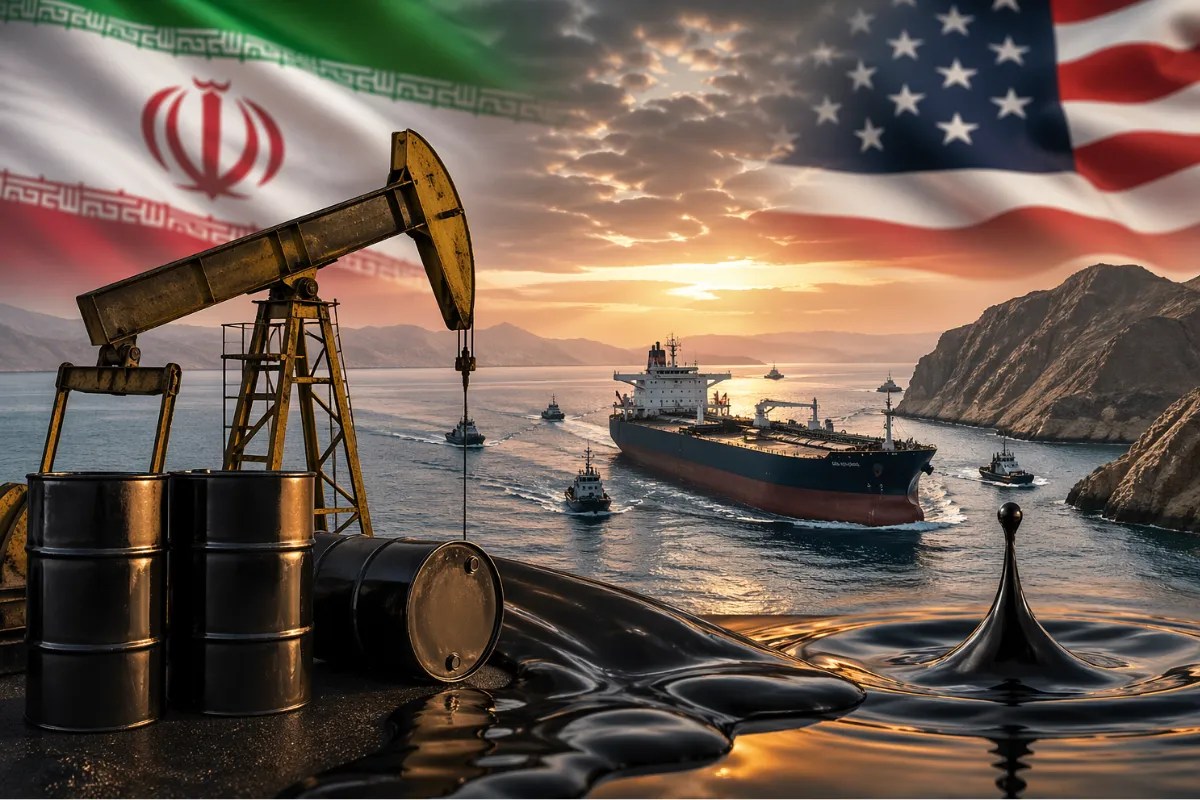
For decades, the Strait of Hormuz has been the world’s jugular vein. It is a narrow strip of water—only about 21 miles wide at its tightest point—separating the Persian Gulf from the Gulf of Oman. One-fifth of the world’s total oil consumption passes through this choke point. Until recently, it was a passage governed by international maritime law and a fragile, unspoken peace. That peace just got a price tag.
The New Toll Booth on the High Seas
Imagine you’ve used the same public road to get to work for twenty years. One morning, a neighbor stands in the middle of the asphalt with a clipboard and a hand out. He tells you that because the road passes near his driveway, you now owe him five dollars every time you pass. You can’t turn around; there is no other way to the office. This is precisely what is happening in the waters off the Iranian coast.
Reports have surfaced that Iran has begun imposing a "toll tax" on ships navigating through the Strait of Hormuz. They aren't calling it a shakedown. They are calling it a service fee, a compensation for the security and environmental monitoring they claim to provide. But to the global market, it sounds like a starting gun for a new era of inflation.
Oil is a nervous commodity. It reacts to rumors long before it reacts to reality. The moment the news broke that Tehran was formalizing a fee for passage, the "fear premium" hit the markets. Traders in London and New York don't wait for the tankers to pay the bill; they bake the expected cost into the price of a barrel immediately.
Why Your Commute Just Got More Expensive
The math of a toll might seem small when applied to a massive tanker carrying two million barrels of crude. If the tax is a few thousand dollars, why does the price at a pump in New Delhi or Chicago jump by several cents?
The answer lies in the ripple effect.
A single tanker doesn't just represent oil. It represents insurance premiums, shipping logistics, and time. When Iran asserts the right to tax the strait, they are also asserting the right to stop, inspect, and delay. Delay is the most expensive word in the shipping industry. A ship sitting idle for twelve hours because of a "tax dispute" burns thousands of dollars in labor and fuel.
Shipping companies pass these costs to the refineries. Refineries pass them to the distributors. By the time that oil reaches your local gas station, that "small tax" has been magnified through a dozen layers of the supply chain. You aren't just paying for the gas; you are paying for the geopolitical risk of the water it traveled across.
The Ghost of 1973
Historical context is a cold comfort, but it provides a map. In the 1970s, the world learned how quickly a disruption in the Middle East could bring the West to a literal standstill. Long lines at gas stations weren't caused by a lack of oil in the ground; they were caused by a blockage in the flow.
Today, the world is more interconnected and yet more fragile. We rely on "just-in-time" delivery. Our economies don't keep massive stockpiles of fuel because it’s more efficient to have a constant stream flowing through the pipes. When Iran puts a thumb on that stream, the pressure builds instantly.
Consider a hypothetical shop owner, let's call her Meena. Meena runs a small transport business. Her margins are razor-thin. When the price of diesel rises by even 5%, her profit for the month vanishes. She doesn't read the financial tickers. She doesn't follow the inner workings of the Iranian Revolutionary Guard. She only knows that her bank account is shrinking. For Meena, the Strait of Hormuz isn't a map coordinate; it’s a thief in the night.
The Strategy of Friction
This move by Iran isn't just about the money. The total revenue from these tolls, while significant, isn't going to save a national economy on its own. The real value is leverage.
By establishing a "toll," Iran is testing the resolve of the international community. They are moving the goalposts of what is considered "normal" in international waters. If the world accepts a toll today, will it accept a closure tomorrow? If the world pays the tax now, what else will it pay for later?
The "transit fee" is a form of friction. It makes the world’s reliance on Middle Eastern oil slightly more painful, slightly more expensive, and significantly more uncertain. It is a reminder that the global economy is built on a foundation of trust that can be revoked by anyone with enough patrol boats and a strategic coastline.
The Invisible Toll in Your Grocery Cart
We often talk about petrol and diesel as if they only affect drivers. This is a dangerous misunderstanding. Everything you eat, wear, or sit on was moved by a vehicle burning fuel.
When the price of diesel spikes because of tensions in the Persian Gulf, the price of tomatoes rises. The price of a new pair of shoes rises. The price of a flight to see family rises. This "Hormuz Tax" is a stealth tax on the global population. It hits the poorest people the hardest because they spend a higher percentage of their income on basic goods that require transportation.
The world is currently trying to transition to green energy, but that transition is years, even decades, away from being complete. For now, we are still tethered to the black gold that flows through that narrow, 21-mile gap. Every time a politician speaks about "energy independence," they are usually ignoring the reality that oil prices are global. Even if a country produces its own oil, its domestic price is dictated by the global market. You cannot hide from a global price hike.
A Choice Between Stability and Sovereignty
The international community now faces a grueling dilemma. If they fight the tax, they risk a physical confrontation in one of the world's most sensitive areas. A single shot fired in the Strait of Hormuz would send oil prices to heights we haven't seen in our lifetime.
If they pay the tax, they concede that international waters are no longer free. They accept that a single nation can charge a "rent" for the world's most vital trade route.
There is no easy exit. There is no "seamless" solution.
The tankers will continue to move. The officials will continue to collect their fees. And somewhere, a driver will look at the rising numbers on a gas pump and wonder why his life feels a little bit harder today than it did yesterday. He won't see the Iranian coastline. He won't see the diplomatic cables. He will only feel the weight of the shadow that the Strait of Hormuz has cast over his world.
The real price of oil isn't found on a stock exchange. It’s found in the quiet, stressful moments at kitchen tables where families try to make the numbers work. As long as our world runs on fuel that must pass through a 21-mile needle’s eye, our prosperity will remain a hostage to whoever holds the gate.