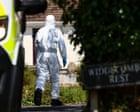
The quietness of Haytor Vale is supposed to be a sanctuary. Nestled on the rugged, sweeping edge of Dartmoor National Park, it is the kind of English village where time slows down, where the mist rolls off the tors, and where neighbors routinely leave their front doors and cars unlocked. It is safe. Or at least, it felt safe until the middle of a mundane Wednesday afternoon.
A 1970s bungalow bears a modest plaque at the end of its driveway reading Widdecombe’s Rest. For years, it was exactly that—a peaceful retreat for Ann Widdecombe, the formidable 78-year-old former Conservative minister, prisons boss, and late-career reality television icon. She had publicly mused that she intended to spend the remainder of her days here. She loved the isolation.
But isolation has a devastating double edge.
Devon and Cornwall Police dropped a chilling detail into the public timeline that transformed a sudden tragedy into an agonizing human narrative. Ann Widdecombe was not found until 11:40 AM on a Thursday morning. Detectives now believe the brutal attack that took her life occurred nearly 24 hours earlier, at approximately 12:30 PM on Wednesday.
Consider what happens when a national figure, a woman whose voice boomed through the House of Commons and echoed across television studios, suddenly goes silent.
The first crack in the facade of normalcy appeared on Wednesday afternoon. Widdecombe was scheduled for a television interview—a routine event for a woman who, even 16 years after exiting Parliament, refused to fade into quiet retirement. She was still fighting, actively campaigning for Reform UK and throwing her trademark uncompromising opinions into the modern political arena. When the screen remained dark and her line went dead, the first ripples of unease began to spread.
Imagine the sheer weight of those missing 24 hours for those who knew her. Her personal driver of ten years, Peter Horrell, dropped off flowers outside the police cordon, remembering a lady who was down-to-earth and entirely devoid of fear. She never mentioned being afraid for her safety. She walked through her life with the armor of conviction.
Yet, as the sun dipped below the Dartmoor horizon on Wednesday night, Widdecombe's Rest became an active crime scene that nobody knew existed. While the political world spun on, while colleagues prepared for the next day's debates, she lay inside her home with severe injuries.
The technical mechanics of a murder investigation often obscure the human reality. We read about timelines, forensic tents, and cordoned roads. We track the movements of the police, who quickly arrested a 26-year-old local man in nearby Newton Abbot, only to release him 24 hours later, clearing him from the inquiry. The crosshairs of justice shifted back to a blank canvas. The killer, described by authorities as a white male, remains out there.
The void left behind is immense. Across the ideological spectrum, the reaction was a mixture of political grief and visceral horror. Prime Minister Keir Starmer called it a "huge, huge loss," urging the nation to rise above the deep political divides that define our era. Reform UK leader Nigel Farage spoke of her deep Christian faith and a woman who never sought popularity but earned respect through sheer authenticity. Liberal Democrat leader Ed Davey expressed the haunting thought echoing in every community: the sheer horror that an elderly woman could be targeted and killed in the supposed safety of her own home.
There is a unique cruelty to the timing. The police have clarified that there is currently no evidence of a political motive or a link to terrorism. It appears, at this terrifyingly early stage, to be an act of senseless violence rather than an ideological assassination. But for a nation that has watched the horrific murders of MPs Jo Cox and David Amess in the past decade, the collective nerve has been rubbed raw.
The tragedy forces us to confront the invisible vulnerability of our public figures when the cameras turn off. We demand their presence, their outrage, and their entertainment value on reality shows. We consumption-heavy citizens watch them dance on Strictly Come Dancing or argue on late-night panel shows, forgetting that when they return home, they are often just elderly individuals living alone in rural bungalows.
The neighborhood has changed forever. Local residents spoke of the eerie transition from locking nothing to locking everything. The illusion of absolute rural safety shattered in the space of a single lunchtime attack.
Widdecombe herself once provided the very philosophy that makes her sudden, violent departure so difficult to process. Her former management agency recalled her favorite maxim: "We get one go this side of eternity, one go. Life is not a dress rehearsal. You take opportunities that you like and you go for it."
She lived exactly by those words, unapologetic and fiercely independent, right up until the moment the quiet of Haytor Vale was permanently broken.