The Chokepoint in the Sand
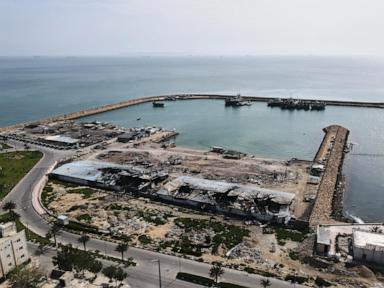
Somewhere in the Musandam Peninsula, an Omani fisherman looks out over a stretch of water that seems too small to hold the weight of the world. To him, the Strait of Hormuz is a place of unpredictable currents and the silver flash of kingfish. To the rest of the planet, it is a jugular vein. It is twenty-one miles wide at its tightest squeeze. If you stood on the shore, you could almost imagine reaching across to touch the Iranian coast.
But when that vein is constricted, the lights flicker in London. The price of a gallon of milk rises in a Parisian suburb. The gears of global industry, which we often assume move by some divine right of commerce, begin to grind and shriek.
This week, the world felt that friction.
In a room far removed from the salt air of the Gulf, Emmanuel Macron and Keir Starmer sat across from one another. The setting was the kind of gilded hall where history is often negotiated through the clinking of porcelain and the rustle of briefing papers. They weren't there for a photo opportunity. They were there because the Strait had effectively been shuttered by a combination of regional skirmishes, drone threats, and a crippling insurance crisis that has left hundreds of massive tankers idling like nervous giants in the open sea.
The Ghost of the Global Supply Chain
Think of a modern cargo ship not as a vessel, but as a floating city. A single Very Large Crude Carrier (VLCC) can hold two million barrels of oil. When you see a news report mentioning a "disruption in maritime corridors," it sounds sterile. It sounds like a delay in a spreadsheet.
The reality is far more visceral.
Imagine a hypothetical merchant sailor named Elias. He is thirty-four, from a small village in the Philippines, and he hasn't seen his daughter in six months. He is currently aboard a tanker sitting thirty miles outside the Strait. He watches the radar. Every blip could be a patrol boat; every shadow could be a loitering munition. His ship is carrying enough energy to power a small nation for a week, yet he is eating tinned fruit and wondering if his company’s "war risk" insurance covers his life.
This is the human cost of a geopolitical standoff. When Macron and Starmer issued their joint declaration to "reopen the artery of the West," they were speaking to the markets, yes. But they were also trying to solve a puzzle of pure fear. If the crews won't sail and the insurers won't sign, the oil doesn't move.
The numbers are staggering. Roughly a third of the world's liquefied natural gas and 20% of its total oil consumption passes through this tiny gap. When the Strait closes, the "Just-in-Time" delivery system we have built our entire lives upon—the one that ensures your local grocery store has fresh produce and your gas station has fuel—reveals itself to be a fragile illusion.
A Continental Recalibration
The British and French leaders aren't traditional allies in every sense; the ghost of Brexit still haunts many a cross-channel meeting. Yet, the Strait of Hormuz has a way of forcing old rivals into a tight embrace. Starmer, representing a Britain trying to find its post-EU footing, needs stability. Macron, ever the champion of "strategic autonomy" for Europe, needs to prove the continent can defend its own interests without waiting for a signal from Washington.
Their summit wasn't just about naval escorts. It was about credibility.
For decades, the United States Navy acted as the world’s neighborhood watch in the Gulf. But as American priorities shift toward the Pacific, a vacuum has opened. That vacuum is currently being filled by uncertainty. Macron and Starmer are attempting to build a new architecture—a European-led maritime coalition that doesn't just react to threats, but prevents them through a presence that is "persistent, but not provocative."
It is a delicate dance. Send too many warships, and you invite a confrontation. Send too few, and the pirates and paramilitary groups realize the door is unlocked.
The Invisible Stakes of Your Morning Routine
Why should someone living in a quiet town in the English Midlands or the French countryside care about a narrow strip of water five thousand miles away?
The answer is found in the "energy tax" of instability.
Economics is often taught as a series of graphs, but it functions like a nervous system. When the Strait of Hormuz is threatened, the price of Brent Crude spikes instantly. This isn't just about the cost of filling up a car. It is the cost of the plastic in your toothbrush. It is the cost of the fertilizer used to grow the wheat for your bread. It is the cost of the electricity that keeps a hospital’s ventilators running.
Consider the ripple effect. A 10% increase in oil prices, if sustained, can shave half a percentage point off global GDP growth. In a world already reeling from inflation and post-pandemic recovery, that is the difference between a small business staying open or a family falling below the poverty line.
Macron and Starmer understand that the "summit" is a performance intended to calm the "Invisible Hand" of the market. If they can convince Lloyd’s of London that the Strait is safe, insurance premiums drop. If premiums drop, the tankers move. If the tankers move, the lights stay on.
The Logistics of Peace
The plan proposed by the two leaders involves a three-tiered approach. First, the establishment of a "Safe Transit Corridor" monitored by a joint task force. This isn't a blockade; it’s a convoy system. Second, a diplomatic "hotline" with regional powers, including Tehran, to ensure that accidental movements don't turn into accidental wars. Third, an investment in drone-denial technology for merchant vessels—giving the "Eliases" of the world a fighting chance against asymmetrical threats.
It sounds technical. It sounds like bureaucracy.
But at its heart, it is an attempt to reclaim the ocean. For centuries, the "High Seas" were a symbol of freedom and the boundless potential of human exchange. Today, they feel more like a dark alleyway where the rules are written by whoever has the fastest boat and the loudest gun.
The Strait of Hormuz is the ultimate test of whether the modern world can still cooperate. If two of the world's oldest diplomatic powers can't keep a twenty-one-mile gap of water open, then the globalized world we’ve spent eighty years building is much closer to the edge than we care to admit.
The Sound of Silence
The most frightening thing about a global chokepoint isn't the sound of gunfire. It is the sound of nothing.
It is the silence of a port that has no ships to unload. It is the silence of a factory that has no power to run its machines. It is the silence of a leader who realizes they have lost control over the most basic requirements of their people’s survival.
As the summit concluded, the two leaders didn't emerge with a victory lap. They emerged with a somber acknowledgment of the task ahead. They are fighting against geography, history, and the physics of a world that consumes more than it can safely transport.
The fisherman in Oman still watches the horizon. He sees the grey hulls of destroyers and the towering shapes of tankers. He doesn't know what was said in the gilded halls of London or Paris. He only knows that when the water is quiet, he can work. When the water is loud, he stays home.
We are all, in a sense, waiting on that water. Our comfort, our security, and our very way of life are currently balanced on a knife-edge, tucked between the jagged rocks of the Middle East and the desperate hopes of two European leaders trying to keep the world’s heart beating.
The Strait remains open for now, but the air is thin, and the margin for error is non-existent.