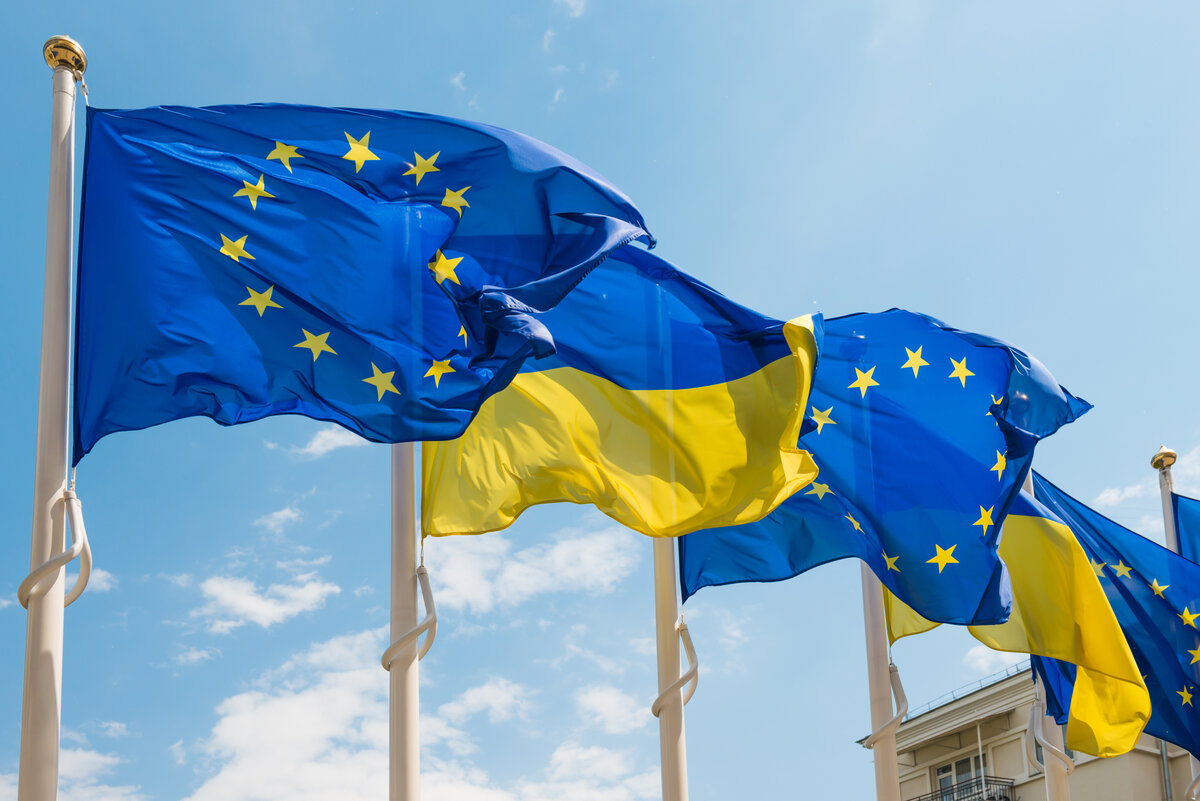
The standard narrative from the "expert" class in Brussels and DC is as tired as it is predictable. They frame Ukraine’s push for EU membership as a noble but dangerous strain on Western unity—a massive, ticking debt bomb that will bankrupt the Common Agricultural Policy and shatter the delicate voting balance of the European Parliament. They talk about "strained ties" as if diplomacy is a glass vase and Volodymyr Zelenskyy is swinging a sledgehammer.
They are looking at the map upside down. For a closer look into similar topics, we suggest: this related article.
The friction we see isn't a sign of failure. It is the sound of a stagnant, bureaucratic machine being forced to grind its gears for the first time in twenty years. The "strain" isn’t the problem; it’s the cure. Ukraine isn’t begging for a seat at a stable table. It is offering the EU a chance to survive its own terminal irrelevance.
The Myth of the "Ready" Member State
Critics love to hide behind the Copenhagen criteria. They demand absolute rule-of-law perfection and economic synchronization before a single pen hits paper. This is a historical fantasy. If the EU applied today’s admission standards to the 2004 "Big Bang" enlargement, half of Eastern Europe would still be waiting in the lobby. To get more context on the matter, comprehensive coverage can be read at The New York Times.
The obsession with "readiness" misses the functional reality of how the Union actually evolves. The EU does not grow through quiet consensus; it grows through crisis management. By forcing the issue now, Kyiv is exposing the structural rot in EU decision-making—specifically the veto power that allows single member states to hold the entire continent hostage for domestic political theater.
Zelenskyy isn't "straining" ties. He is identifying the fracture points. You don't fix a broken bone by pretending it isn't snapped; you set it, even if the process is agonizing.
Agriculture is the Wrong Boogeyman
The loudest whining comes from the agricultural sector. The fear is that Ukraine’s massive, hyper-efficient grain production will "destroy" the Polish, French, and German farmer.
Let’s be honest about what we are protecting here. The Common Agricultural Policy (CAP) is an 18th-century relic dressed up in 21st-century subsidies. It rewards land ownership over innovation and protects inefficiency at the expense of global competitiveness.
Ukraine is a global agricultural superpower. Integrating it doesn't "strain" the EU; it forces the EU to finally modernize a bloated subsidy system that has been a drag on the European budget for decades. If the presence of a more efficient producer "breaks" your system, your system was already broken. Ukraine isn't the threat. The CAP is the threat.
The Security Arbitrage
Brussels has spent decades pretending that "Soft Power" is a substitute for hard security. They built a trade bloc and outsourced the dirty work of defense to Washington. That era is over.
Ukraine currently possesses the most battle-hardened, technologically integrated, and innovative military force on the European continent. While German procurement cycles take a decade to decide on a rifle, Ukraine is iterating drone warfare in two-week sprints.
The "strain" on ties comes from the fact that Kyiv is speaking a language of urgency that the Euro-bureaucracy forgot how to translate. When Zelenskyy pushes for membership, he isn't just asking for money. He is offering a security guarantee that the EU currently cannot provide for itself. Membership is a trade-off: Europe provides the capital, and Ukraine provides the shield.
The Institutional Veto Trap
The biggest lie in the "strained ties" discourse is that Ukraine will make the EU "unmanageable."
The EU is already unmanageable.
The current structure, where a single country like Hungary can derail an entire continent’s foreign policy, is a recipe for slow-motion suicide. The push for Ukrainian accession is the only catalyst strong enough to force "Qualified Majority Voting" (QMV) into the mainstream.
We’ve seen this play out in corporate turnarounds. You don't fix a failing company by tweaking the employee handbook. You introduce a massive, disruptive new project that makes the old, inefficient ways of working impossible to maintain. Ukraine is that disruptive project.
The Risk of the "Buffer Zone" Delusion
Those who argue for a "slow and steady" approach—or worse, a "special partnership" that stops short of full membership—are peddling a dangerous delusion. They want Ukraine to be a permanent buffer zone.
History shows us that buffer zones are just waiting rooms for the next war. A "strained" alliance within the EU is infinitely more stable than a "gray zone" on the border.
If you think the cost of integration is high, calculate the cost of a failed state on the Polish border, or a Ukraine that decides its interests are better served by looking East because the West was too busy debating grain quotas to show real leadership.
The friction we are seeing isn't a reason to slow down. It’s the friction of an engine finally turning over.
Stop asking if Ukraine is ready for the EU. Start asking if the EU is brave enough to let Ukraine save it.
The strain isn't a bug. It's the feature.