Diplomats in Geneva have spent over a decade arguing about autonomous weapons while engineers built them anyway. The push for a legally binding United Nations treaty to ban or restrict lethal autonomous weapons systems (LAWS) has repeatedly stalled because the world's largest military powers refuse to sign away a decisive battlefield advantage, and the consensus rules of the Convention on Certain Conventional Weapons (CCW) allow a single nation to veto progress. While activists demand a preemptive ban on "killer robots," major defense powers like the United States, Russia, China, and Israel favor non-binding guidelines that preserve their ability to deploy AI-driven targeting systems.
That diplomatic deadlock is not an accident. It is a feature of how arms control works when the technology in question is made of software rather than enriched uranium.
The Architecture of a Diplomatic Deadlock
To understand why the UN talks keep hitting a brick wall, you have to look at the venue. Most of the formal negotiations take place within a Group of Governmental Experts (GGE) operating under the Convention on Certain Conventional Weapons. The CCW operates on strict consensus. If 125 nations agree on a text and one nation objects, the text dies.
Over the years, Russia has repeatedly used procedural objections to run out the clock on draft mandates, arguing over everything from translation timelines to the inclusion of non-governmental organizations. The United States and its allies have taken a softer diplomatic tone, yet their underlying position achieves a similar result. Washington argues that a new treaty is unnecessary because existing International Humanitarian Law (IHL)—the Geneva Conventions—already governs how weapons are used, regardless of whether a human or an algorithm pulls the trigger.
Smaller nations, led by countries like Austria, Costa Rica, and New Zealand, alongside the Campaign to Stop Killer Robots, view this as a stalling tactic. They point out that existing laws were written for human commanders making moral and legal judgments on a battlefield, not neural networks processing sensor feeds at machine speed. When the CCW repeatedly failed to produce a mandate for a binding treaty, frustrated diplomats took the issue to the UN General Assembly, passing resolutions calling for urgent action. General Assembly resolutions, however, carry moral weight rather than legal force. Without the signatures of the countries actually building the hardware, a treaty becomes an empty gesture.
The Software Problem Nobody Wants to Admit
Even if every diplomat in Geneva suddenly agreed to sign a ban tomorrow, nobody knows how to verify it.
Traditional arms control treaties worked because physical weapons leave physical footprints. During the Cold War, satellites could count missile silos, bombers, and submarines. Inspectors could verify the dismantling of warheads. Autonomous weapons break that verification model entirely.
Consider a hypothetical example. Imagine two identical loitering munitions sitting on an assembly line. Both have the exact same airframe, camera sensors, and explosive payload. The first drone is flown remotely by a human operator via a radio link. The second drone runs an onboard computer vision model trained to identify, track, and strike armored vehicles without any human input after launch. From the outside, looking at the hardware, they are indistinguishable. The difference is a few megabytes of code flashed onto a chip five minutes before takeoff.
You cannot inspect source code on a battlefield, and no military on earth will open its proprietary defense algorithms to international inspectors. Furthermore, autonomy is rarely a binary switch. Modern military systems operate on a sliding scale:
- Human-in-the-loop systems require an operator to approve a specific target before the weapon engages.
- Human-on-the-loop systems allow the machine to select and engage targets independently, while a human monitors the process and retains the ability to abort the strike.
- Human-out-of-the-loop systems operate entirely without human intervention once activated.
Most existing air defense systems, such as Israel's Iron Dome or the U.S. Navy's Aegis Combat System, already use automated modes to intercept incoming rockets and missiles because human reaction times are simply too slow. Defense officials argue that banning autonomous functions outright would strip militaries of essential defensive shields. Critics counter that offensive target recognition algorithms pose an entirely different ethical and strategic threat, yet drawing a clean legal line between defensive automation and offensive killer robots has proven nearly impossible.
The Dual-Use Trap
The commercial tech sector makes regulation even harder. During the Manhattan Project, building a nuclear bomb required massive state-funded industrial complexes that only a superpower could afford. Today, the core components of an autonomous weapon—commercial quadcopters, high-resolution cameras, GPS modules, and open-source object-detection software—can be bought online with a credit card.
Modern conflicts have already demonstrated how quickly civilian technology mutates into military hardware. Hobbyist drones modified with cheap microprocessors and off-the-shelf machine learning libraries can now lock onto a moving target and complete their terminal dive even when heavy electronic jamming severs their connection to a human pilot.
Because the underlying artificial intelligence research is driven by civilian industries—autonomous cars, warehouse robotics, medical imaging, and agricultural tech—governments cannot simply ban the foundational science. Any restriction tight enough to stop military autonomy would cripple commercial innovation. Conversely, any rule loose enough to protect civilian tech leaves a massive loophole for defense contractors.
Why Militaries Refuse to Blink
Behind the diplomatic language in Geneva lies a brutal strategic calculation. Military planners do not view autonomy as an abstract ethical dilemma; they view it as a survival requirement in modern warfare.
Electronic warfare has changed the rules of engagement. On a saturated battlefield, radio frequencies are heavily jammed, cutting off the communications links required to fly traditional remote-controlled drones. If a drone loses its signal, it either falls out of the sky, returns to base, or relies on onboard autonomy to finish its mission. When your adversary deploys jam-proof autonomous drones, fielding human-controlled drones puts your forces at an immediate, lethal disadvantage.
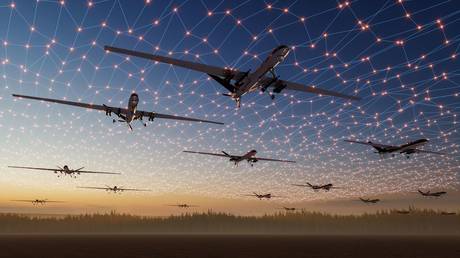
There is also the problem of scale. Drone swarms—dozens or hundreds of small, interconnected aircraft coordinating their movements to overwhelm enemy air defenses—cannot be piloted individually by humans. One operator cannot manually steer fifty drones at once while dodging anti-aircraft fire. The swarm only works if software handles the navigation, formation, and target allocation. For major militaries preparing for high-intensity conflicts, giving up autonomy means giving up the ability to fight at scale.
Advocates of autonomous systems also make a controversial humanitarian argument. They claim machines do not get tired, angry, scared, or vengeful. A human soldier operating under extreme stress after watching a friend die might misidentify a civilian and pull the trigger out of panic or rage. Proponents argue that a well-calibrated sensor suite could theoretically hold its fire until a target is verified with mathematical certainty, reducing collateral damage and civilian casualties.
The Myth of Meaningful Human Control
To bridge the gap between a total ban and a technological free-for-all, diplomats and ethicists coined the phrase meaningful human control. The idea sounds reassuring. Humans remain in charge, algorithms merely assist, and accountability stays intact.
In practice, the concept falls apart under operational pressure.
Psychology researchers have long documented a phenomenon known as automation bias—the tendency of human operators to over-rely on automated decision-making systems and ignore contradictory information. When a targeting screen flashes a red box around a vehicle and displays a 94 percent confidence score that it is an enemy tank, a fatigued operator has seconds to decide whether to override the machine. In a high-tempo combat environment, "human control" easily degrades into a human rubber-stamping whatever the algorithm suggests.
Speed compresses the decision cycle even further. When both sides deploy AI-enabled sensors and automated weapons, engagements happen faster than human cognition can process. A commander might technically remain "on the loop," watching data scroll across a screen, while having zero realistic ability to intervene before a kinetic strike occurs. Relying on meaningful human control as a regulatory silver bullet ignores how humans actually behave when plugged into high-speed machines.
The Accountability Vacuum
When an autonomous weapon makes a fatal mistake, who goes to prison?
Under current international law, military commanders and individual soldiers are held responsible for war crimes. If a pilot bombs a hospital, investigators examine the pilot's actions, the intelligence provided, and the orders given by superior officers.
Autonomous systems fracture that chain of accountability. Suppose an AI-powered loitering munition misidentifies a bus full of civilians as a troop transport due to an edge-case lighting condition that never appeared in its training data. The commander who launched the drone did not select the bus. The software engineer who trained the neural network three years earlier did not intend to strike civilians. The defense contractor built the system to military specifications.
Without clear legal liability, mistakes become nobody's fault. Critics warn that this accountability gap lowers the political threshold for going to war. Leaders are far more willing to authorize military strikes when they do not have to send human soldiers home in body bags, and even more willing when legal responsibility is diffused across lines of code.
A Two-Tiered Future
While the UN talks remain mired in procedural debates, reality on the ground is moving ahead without a treaty. We are not heading toward a clean global ban, nor are we heading toward complete anarchy. Instead, the world is fracturing into a two-tiered regulatory environment.
In the first tier, a coalition of Western democracies—led by the United States—is establishing voluntary political declarations on the responsible military use of AI. These frameworks emphasize rigorous testing, clear chains of command, and compliance with existing laws of war. They are designed to set behavioral norms without legally tying the hands of allied militaries.
In the second tier, authoritarian regimes, rogue states, and non-state militant groups operate outside those norms entirely, buying cheap commercial components and stripping away safety guardrails to build the most lethal systems possible.
Diplomatic treaties work best when nations share a mutual fear of catastrophic destruction, as they did with nuclear, chemical, and biological weapons. Autonomous weapons do not trigger that same existential dread among military planners—they trigger a fear of being left behind. Every year the talks in Geneva stall, the algorithms get smarter, the sensors get sharper, and the hardware gets cheaper. By the time diplomats finally agree on how to define a killer robot, the machines will already be running the battlefield.


