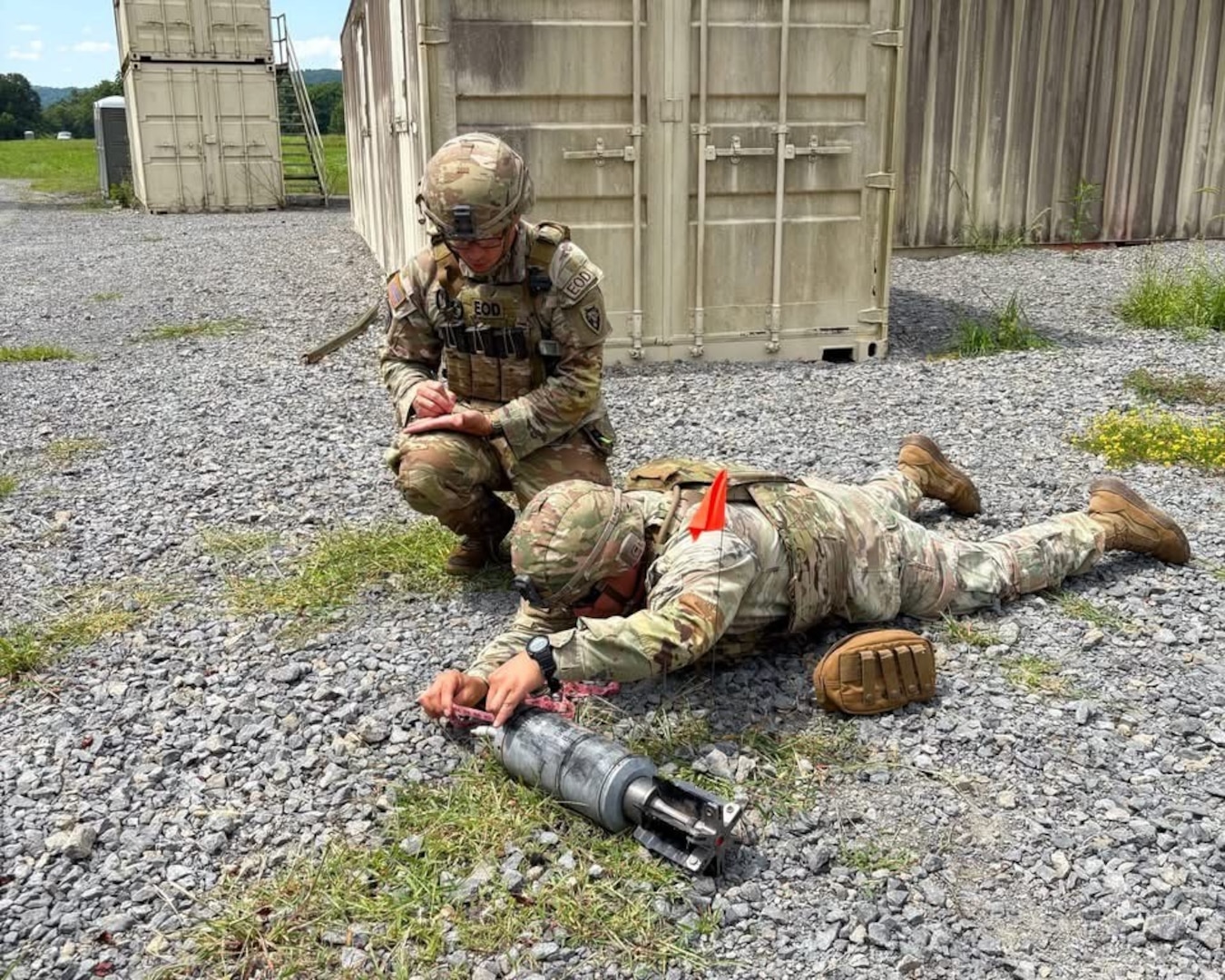
The discovery of a mid-twentieth-century naval mine in a populated municipal zone triggers an immediate operational response characterized by extreme asymmetry between the physical asset and the collateral disruption it generates. A rusted, half-century-old ordnance weighing several hundred kilograms contains an energetic payload capable of structural annihilation, yet the primary logistical challenge is not the physics of detonation. It is the management of uncertainty across urban supply chains, mass transit networks, and municipal evacuation corridors. When civil authorities execute a controlled demolition of legacy wartime munitions, the operation exposes the fragility of modern infrastructure systems when confronted with historical externalities.
The Threat Matrix of Legacy Munitions
Legacy ordnance from major twentieth-century conflicts presents a persistent operational hazard across European and Pacific theaters. These devices, primarily aerial bombs, artillery shells, and marine mines, degrade chemically over decades. The stability of high explosives such as RDX, TNT, or Amatol depends heavily on the integrity of the casing and the sensitivity of the fuze mechanism.
Chemical Degradation Pathways
- Fuze Corrosion: Mechanical fuzes utilizing spring-loaded strikers and percussion caps suffer from metal fatigue and oxidation. Corrosion can either jam the firing pin, rendering the device an inert anchor, or bind the components under tension, creating a highly sensitive state where minimal thermal or mechanical shock triggers a high-order detonation.
- Explosive Desensitization vs. Sensitization: Secondary high explosives generally become chemically stable over time unless exposed to moisture infiltration. However, weeping TNT can recrystallize into metal styphnates or lead azides around threads and seals, drastically lowering the activation threshold.
- Casing Breach: As the outer steel casing thaws and rusts through, groundwater infiltration creates internal chemical reactions with the explosive fill, altering its density and detonation velocity profile.
EOD technicians evaluate these variables under conditions of extreme informational deficit. Radiographic imaging and non-destructive testing provide structural insights, but the internal chemistry of a degraded munition remains a probabilistic assessment rather than a known quantity. Consequently, standard operating procedures dictate maximum safety radiuses that treat every legacy device as an unmitigated worst-case scenario.
The Logistics of Municipal Evacuation and Perimeter Control
Executing a controlled demolition in a densely populated sector requires a coordinated multi-agency framework. The operation functions as a temporary shock to the local economy and social structure, demanding precise spatial control.
[Threat Identification] ---> [Radius Calculation] ---> [Exclusion Zone Enforcement] ---> [Mitigation Infrastructure] ---> [Controlled Detonation]
The exclusion zone is a direct function of the net explosive quantity and the local topography. Blast wave propagation in urban environments does not follow uniform radial decay; it channels through concrete canyons, reflecting off facades and amplifying overpressure spikes in unexpected vectors.
- Perimeter Hardening: Law enforcement agencies establish concentric cordons to isolate the hazard zone. The inner cordon restricts access exclusively to certified neutralization teams, while the outer cordon manages traffic diversion and public transit suspensions.
- Vertical and Subsurface Mitigation: Urban density introduces vertical risk vectors. High-rise occupants within the blast radius must evacuate or shelter in designated hardened core areas of buildings. Simultaneously, underground utility networks—gas mains, high-voltage electrical conduits, and fiber-optic trunk lines—must be mapped and frequently isolated to prevent secondary cascading failures if ground shock exceeds structural tolerances.
Engineering Countermeasures for In-Situ Neutralization
When transport of an unstable munition presents a catastrophic failure risk, disposal teams must execute in-situ mitigation. Moving a degraded marine mine through congested urban streets introduces unacceptable transit risk, forcing engineers to neutralize the device where it rests.
Mitigation Methodologies
- Cryogenic Cooling and Remote Cutting: Utilizing abrasive waterjet cutting systems infused with garnet abrasives to slice through the casing without generating frictional heat that could initiate the main charge.
- Counter-Charge Placement: Positioning shaped charges to disrupt the fuze mechanism or induce a low-order deflagration rather than a high-order detonation, minimizing the shockwave footprint.
- Mitigation Barriers: Surrounding the device with water-filled blast containment vessels or modular blast mitigation walls to absorb kinetic energy, suppress fragmentation, and contain acoustic overpressure.
The selection of a counter-charge strategy relies on balancing the certainty of complete neutralization against the collateral damage footprint of the mitigation equipment itself. If the munition sits adjacent to critical subterranean infrastructure, engineers must engineer specialized attenuation blankets to direct the explosive vector upward or into the open air.
Economic Externalities of Munitions Disruption
The temporary immobilization of a municipal sector generates quantifiable economic friction. When civil authorities halt commercial activity, suspend regional rail services, and evacuate residential districts to facilitate ordnance disposal, the direct cost extends far beyond the operational expenses of the bomb squad.
- Productivity Loss: Commercial downtime across retail, industrial, and corporate sectors within the exclusion zone creates immediate revenue contraction.
- Transit Re-routing Friction: The redirection of freight and commuter networks introduces logistical delays, burning excess fuel and disrupting tightly synchronized supply chain schedules.
- Municipal Resource Allocation: Diverting police, fire, medical, and municipal engineering personnel to perimeter security incurs opportunity costs, delaying routine public services across the broader metropolitan area.
Urban planners and civil defense organizations must treat legacy munitions mitigation not as an isolated emergency response, but as a recurring operational expenditure inherent to managing historical infrastructure footprints. Mitigating these subterranean liabilities requires continuous investment in sub-surface imaging technology, real-time telemetry, and resilient municipal redundancy to minimize the economic half-life of historical conflicts.