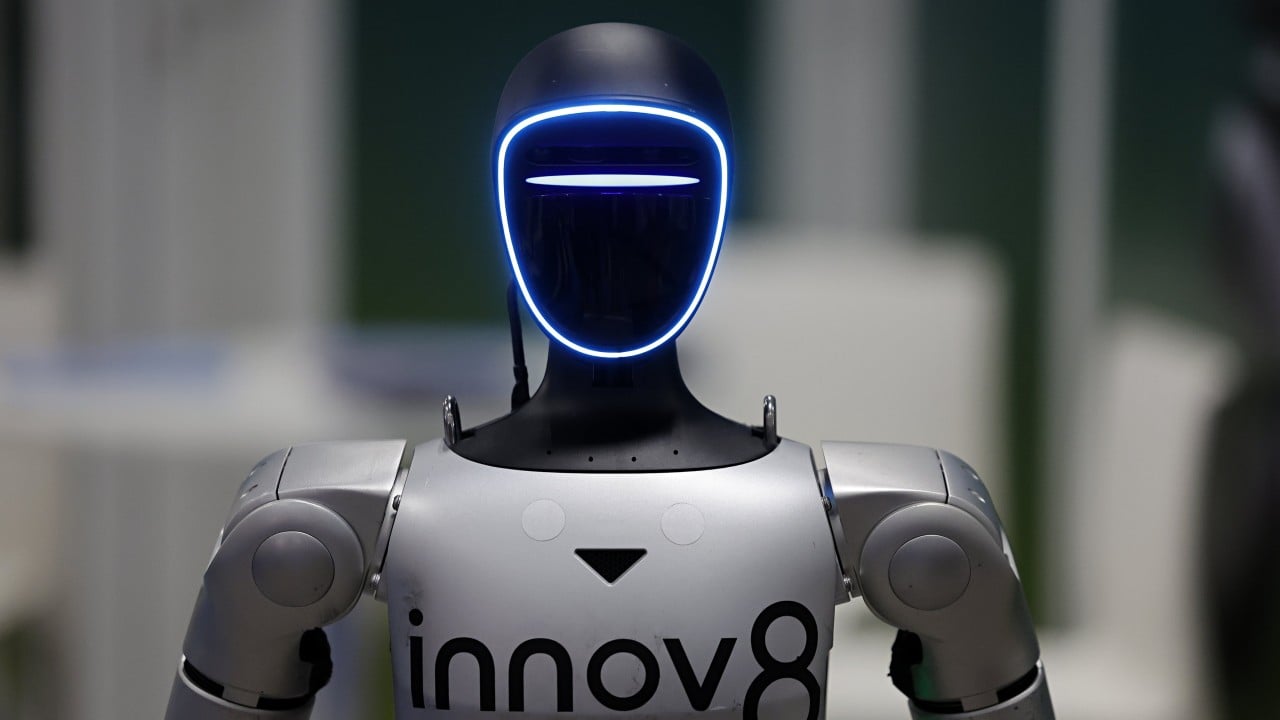
The proposed $610 million IPO of Unitree Robotics marks the transition of humanoid robotics from laboratory curiosity to a high-volume manufacturing commodity. While legacy players like Boston Dynamics focused on hydraulic complexity and peak athletic performance, Unitree’s strategy rests on a fundamental shift in the cost-to-performance ratio. By verticalizing the production of high-torque density motors and prioritizing a "software-agnostic" hardware stack, the company has positioned itself as the Foxconn of the embodied AI era. The valuation is not a reflection of current revenue multiples but a bet on the compression of hardware margins to enable the mass deployment of neural-network-driven labor.
The Triad of Humanoid Scalability
The viability of a humanoid robotics firm is governed by three interdependent variables: mechanical transparency, power density, and the cost of the sensor suite. Unitree’s competitive moat is built on solving these through a specific architectural philosophy.
1. Actuator Verticalization and Torque-to-Weight Optimization
Most robotics firms source planetary gears and brushless DC motors from third-party suppliers, which introduces a "middleman tax" and limits the ability to optimize the motor for specific gait cycles. Unitree produces its own M107 series motors. This vertical integration allows for a tighter coupling between the motor controller and the physical limb, reducing latency in the feedback loop.
In humanoid robotics, the primary constraint is the Power-to-Weight Ratio.
$$P_{ratio} = \frac{\tau \cdot \omega}{m}$$
where $\tau$ is torque, $\omega$ is angular velocity, and $m$ is the mass of the actuator. By reducing the mass of the joints in the upper extremities and concentrating weight in the lower torso, Unitree achieves a center of gravity that allows for more stable bipedal locomotion using less complex balancing algorithms.
2. The Shift from Heuristic to End-to-End Learning
Early iterations of Unitree’s quadrupeds relied on "Heuristic Control"—manually coded rules for how a leg should move when it hits an obstacle. The H1 and G1 models move toward Reinforcement Learning (RL) in Simulation. By creating a digital twin of the robot and running millions of iterations in a physics engine, the robot "learns" to walk. This reduces the need for expensive, high-precision sensors because the software can compensate for mechanical imperfections through adaptive gait.
3. Sensor Suite Rationalization
Unitree has bypassed the trend of using high-definition, long-range LiDAR ($10,000+ per unit) in favor of solid-state LiDAR and depth cameras. This decision reflects a calculated trade-off: lower spatial resolution in exchange for a price point that makes the $16,000 G1 model possible. The objective is not to create a perfect map of the environment, but a "sufficient" map that allows the onboard neural network to navigate.
The Industrial Logic of the $16,000 Price Point
The most significant friction point in the humanoid market is the "Capital Expenditure (CapEx) Barrier." For a humanoid to replace a human worker in a structured environment (like a warehouse), the Total Cost of Ownership (TCO) must be lower than the local annual minimum wage plus benefits.
Unitree’s G1 model, priced at roughly $16,000, represents a structural break in the industry. Previously, "research grade" humanoids cost between $150,000 and $450,000. At $16,000, the robot becomes a disposable asset or a high-turnover tool.
The Cost Function of Humanoid Production
To understand how Unitree reaches this price point, one must analyze the bill of materials (BOM) through a "commodity hardware" lens:
- Actuators (Joints): 20–30 units per robot. By mass-producing these, Unitree drives the cost per unit down from $1,000 to approximately $150.
- Structural Materials: Utilizing aluminum alloys and high-strength plastics instead of carbon fiber or titanium.
- Compute: Offloading heavy processing to edge-cloud hybrids or using integrated mobile-grade chips (e.g., NVIDIA Orin series) rather than custom silicon.
This aggressive pricing strategy forces a "First-Mover Advantage" in data collection. The more robots Unitree has in the field, the more "edge case" data they collect. This data is then fed back into their training models, creating a flywheel effect where their software becomes more resilient because their hardware was cheap enough to be ubiquitous.
Strategic Bottlenecks: Why the IPO is a Risk
Despite the aggressive pricing and engineering efficiency, Unitree faces three existential bottlenecks that the $610 million capital injection must address.
The Battery Energy Density Wall
Current lithium-ion technology limits the operational window of the G1 and H1 to approximately 2 to 4 hours of active movement. In an industrial setting, a 1:4 ratio of work-to-charging is unacceptable. Unitree must either innovate in "hot-swappable" battery systems or wait for solid-state battery breakthroughs. Without a solution to the energy density problem, these robots remain tethered to research labs or intermittent tasking.
Dexterity and the "End-Effector" Problem
Walking is a solved problem. Manipulation—the ability to pick up a soft object, turn a key, or use a screwdriver—is not. Unitree’s current hand designs are rudimentary compared to the multi-linkage tactile hands being developed by competitors like Tesla (Optimus) or Sanctuary AI. The "Degree of Freedom" (DoF) in the hands determines the utility of the robot.
- H1 DoF: High in legs, low in hands.
- Required Industrial DoF: Minimum 12 per hand with haptic feedback.
Developing these end-effectors at scale without tripling the price of the robot is the primary engineering challenge for the next 24 months.
Geopolitical Friction and Supply Chain Vulnerability
As a China-based entity targeting a global IPO and international markets, Unitree is caught in the crosshairs of dual-use technology restrictions. Humanoid robots are inherently dual-use; the same balance algorithms used for carrying a box can be used for carrying a payload in a defense context. The reliance on Western silicon (NVIDIA) for training and inference creates a "choke point" that could be triggered by export controls.
Market Positioning: The "Developer First" Play
Unitree is not selling a finished labor solution; they are selling a development platform. By targeting the $16,000 to $90,000 price bracket, they are capturing the entire university and R&D sector.
This is a classic "Platform Play." By becoming the standard hardware on which roboticists learn to code, Unitree ensures that when those roboticists move into the private sector, they will build their proprietary applications on top of Unitree’s SDK. This mirrors the strategy used by DJI in the drone market: dominate the enthusiast and developer tier to make your hardware the de facto industry standard.
Competitive Matrix: Unitree vs. The Field
| Feature | Unitree (H1/G1) | Tesla (Optimus) | Boston Dynamics (Atlas) |
|---|---|---|---|
| Primary Goal | Mass Production/Price | Vertical Integration (AI) | Peak Performance |
| Actuation | Electric (Proprietary) | Electric (Custom) | Electric/Hydraulic |
| Market Entry | Research/Dev Kits | Internal Factory Use | Industrial Inspection |
| Price Point | $16k - $90k | ~$20k (Target) | >$200k (Estimated) |
The Strategic Path to $610 Million and Beyond
To justify its valuation and succeed post-IPO, Unitree must pivot from being a hardware manufacturer to a "Robot-as-a-Service" (RaaS) enabler. The hardware is a loss-leader or a low-margin entry point. The real value lies in the Foundation Models for Motion.
If Unitree can standardize "Unitree-OS," they can monetize through:
- Software Licensing: Charging for advanced locomotion modules (e.g., "Stair Climbing Pack").
- Simulation Environments: Charging for high-fidelity digital twins.
- Data Marketplaces: Selling anonymized movement data to other AI firms.
The immediate move for the company is to secure partnerships with third-party "End-Effector" manufacturers. By opening their wrist and ankle ports to third-party hardware, they can solve the dexterity problem through an ecosystem rather than trying to engineer every component in-house. This modularity will be the deciding factor in whether the G1 remains a sophisticated toy or becomes a legitimate industrial tool.
The capital from the IPO should be deployed into two specific areas: the acquisition of specialized tactile sensing startups and the build-out of a global maintenance network. A robot that breaks down in a warehouse in Ohio is useless if the only person who can fix it is in Hangzhou. Scalability requires local reliability.
Unitree’s success depends on its ability to maintain its lead in the "Price-to-Torque" metric while rapidly closing the gap in "Intelligence-per-Watt." If they can achieve 85% of the performance of an Optimus or an Atlas at 15% of the cost, they will define the hardware standard for the next decade of automation.
Would you like me to analyze the specific patent portfolio of Unitree's M107 actuators to determine their defensive moat against other low-cost manufacturers?



_(cropped).jpg/440px-Rob_O'Neill_(40543587961)_(cropped).jpg)