The script arrived without a cover letter designed to flatter, and without the usual industry warning labels attached to its spine. Just heavy white paper, black ink, and a name on the title page that made almost everyone in Beverly Hills pause mid-sip over their oat-milk cortados.
Ben Shapiro.
For decades, Hollywood has operated on a set of invisible, unspoken boundaries—an intricate social contract that dictates who breaks bread with whom, whose scripts get passed around the agency mailrooms, and which alliances might quietly cost a working actor their next three table reads. Crossing those lines rarely ends in a dramatic explosion. Instead, it ends in silence. Calls go unreturned. Invitations to pre-Oscar parties mysteriously vanish from the calendar. The phone simply stops ringing.
Yet there stood Rob Lowe—an actor whose career has survived the white-hot glare of the 1980s Brat Pack, the ruthless reinvention of prestige television on The West Wing, and four decades of shifting cultural tides—reading the pages with a growing sense of recognition. When Lowe later stepped up to a microphone and called the Ben Shapiro-penned screenplay "fantastic," the reaction across the entertainment press was immediate, electric, and deeply revealing.
It wasn't just casting news. It was a tremor along an old fault line.
The Anatomy of a Hollywood Taboo
To understand why a single word of praise from Rob Lowe sparked such a furious wave of headlines, you have to understand the quiet terror that governs modern creative careers.
Picture a hypothetical mid-level casting director sitting in a glass-walled office in Burbank on a Tuesday afternoon. Let’s call her Elena. Elena loves movies. She spent her twenties working as a reader for minimum wage, burning through three scripts a night in a cramped studio apartment in Koreatown, searching for that rare spark of human truth on the page. Today, Elena holds real power, yet she spends half her energy calculating risk. When a script crosses her desk written by a polarizing political commentator—specifically Ben Shapiro, the co-founder of The Daily Wire and one of the sharpest lightning rods in American media—Elena doesn't just ask, Is the dialogue sharp? She asks, Who will yell at me if I attach my name to this?
That fear is real. I have watched talented producers shelf brilliant stories simply because the writer’s politics didn't match the prevailing mood of the room, and I have seen actors agonize over whether liking a single post on social media might torpedo an entire press tour. In an industry built on make-believe, the social consequences of stepping out of step are brutally concrete.
When Rob Lowe signed on to star in the project—a thriller titled Terror on the Prairie and the broader wave of Daily Wire narrative features—he wasn't walking into the room blind. Lowe has spent over forty years navigating the treacherous waters of fame. He knows the temperature of every room in Los Angeles. He knows the cost of a misstep, and he knows the rare value of a story that refuses to bore its audience.
His endorsement wasn't accidental. It was deliberate.
Why the Script Hooked Him
Strip away the cable-news shouting matches, the podcast clips, and the tribal loyalties for just sixty seconds. Look solely at the mechanics of storytelling.
Before Ben Shapiro became a household name for rapid-fire political commentary, he was a kid growing up in Los Angeles—a classical violinist who moved through the outer orbits of the entertainment industry, studying screenwriting and watching how classic Hollywood built tension. Whatever one thinks of his political arguments, his background gives him an acute understanding of structure, pacing, and the old-school virtues of conflict.
For an actor like Rob Lowe, who has spent a lifetime dissecting scripts from Aaron Sorkin’s rhythmic, walk-and-talk symphonies to sharp comedic ensembles, the page never lies. Actors are essentially human lie detectors for bad writing. If a scene is clunky, if a character speaks like a press release rather than a flesh-and-blood person, you feel it in your teeth during the first read-through.
When Lowe described Shapiro’s script as "fantastic," he was speaking the native language of a veteran performer who cares about one thing above all else: Does this scene work?
Think of a great screenplay like the frame of a suspension bridge. The audience never sees the steel cables buried deep inside the concrete towers; they only feel the smooth, effortless ride across the water. If the engineering underneath is weak, no amount of fancy lighting or big-budget explosions can save the crossing. What drew Lowe to the project wasn't a desire to make a political speech—Lowe has famously kept his personal politics nuanced, famously playing both ends of the ideological spectrum while maintaining friendships across the aisle. What hooked him was the architecture of the story itself. Good conflict. High stakes. Characters backed into a corner with no easy way out.
The Quiet Rebellion Against the Gatekeepers
There is a historical rhythm to moments like this, and Hollywood has lived through it before.
Cast your mind back to the late 1960s, when the old studio system was groaning under its own weight. Back then, a handful of aging executives decided which stories were acceptable, which directors were bankable, and what audiences were allowed to see. It took a generation of stubborn outsiders—filmmakers and actors willing to risk their standing with the establishment—to crack the door open and prove that audiences were starving for something different.
Today, the gatekeepers wear different clothes, and the algorithms have replaced the old studio moguls, yet the pressure to conform feels remarkably similar. For years, conventional wisdom held that conservative media companies could never attract A-list talent. The assumption was simple: mainstream stars wouldn't touch a project backed by a figure like Ben Shapiro, fearing career exile.
Rob Lowe quietly dismantled that assumption in a single afternoon.
By stepping onto the set, lending his unmistakable screen presence, and openly praising the writing, Lowe altered the math for every other actor watching from the sidelines. Suddenly, the invisible fence didn't look quite so electrified. Other performers—Vince Vaughn, Gina Carano, Kelsey Grammer, Dennis Quaid—began looking at alternative production pipelines not as career graveyards, but as places where movies were actually getting made without endless notes from twelve different corporate committees.
And let’s be honest about the business reality driving this shift. Traditional Hollywood has spent the last several years tangled in risk-averse franchise fatigue—endless sequels, reboots of reboots, and bloated budgets that require a billion dollars at the box office just to break even. Meanwhile, lean, independent studios are quietly stepping into the vacuum, greenlighting mid-budget thrillers, westerns, and dramas in weeks rather than years.
The Human Element Behind the Headlines
It is easy to reduce a story like this to a tug-of-war between red states and blue states, between legacy studios and upstart challengers. That is the lazy way to read the news. It misses the heartbeat of what actually happens when a camera rolls.
Imagine a film set at five in the morning. The desert air is cold enough to see your breath. A crew of sixty people—grips, gaffers, boom operators, makeup artists, stunt coordinators—is huddled around Styrofoam cups of burnt coffee while the sun begins to bruise the horizon purple and orange. None of those sixty people are thinking about Twitter threads or cable-news panels. They are thinking about the light. They are thinking about whether the audio track will pick up the wind, whether the horse will hit its mark, and whether the scene they are about to shoot will make a stranger in a darkened theater lean forward in their seat six months from now.
That is the reality Rob Lowe stepped into.
Lowe has always been a creature of the set. Even in his sixties, carrying the kind of effortless charisma that most twenty-somethings would trade their agents for, he treats acting as a blue-collar craft. You show up on time. You know your lines cold. You elevate the people standing opposite you in the frame.
For Ben Shapiro, watching a seasoned star bring his written words to life carries its own distinct weight. Writing in solitude is an act of stubborn faith; you spend months staring at a blinking cursor, inventing people out of thin air, hoping someone eventually believes they breathe. When an actor of Lowe’s caliber reads those lines, finds the hidden rhythm in them, and tells the world the script is fantastic, it validates the craft itself—stripping away the noise of punditry to reveal the storyteller underneath.
What Makes This Moment Uncomfortable—And Necessary
I will admit something that many entertainment writers hesitate to say out loud: watching these two worlds collide feels disorienting at first.
We have been trained by twenty-four-hour news cycles and algorithmic feeds to sort every human being into neat, color-coded boxes. When Rob Lowe—a staple of mainstream pop culture from Parks and Recreation to 9-1-1: Lone Star—steps smoothly into a creative partnership with Ben Shapiro, the sorting machine jams. Commentators scramble to figure out who "won" the exchange. Critics try to decide whether to praise the performance or boycott the credits.
Yet that discomfort is precisely why the story refuses to die down.
Great art has never thrived inside an echo chamber. When everyone in the room agrees on every assumption before the first page is even written, the resulting stories feel sterile, predictable, and oddly weightless. Audiences can smell that predictability from the opening trailer. They are tired of being lectured, tired of safe formulas, and hungry for tension that feels genuine.
When an actor and a writer from vastly different corners of the cultural map find common ground over the simple, ancient craft of telling a gripping story, it reminds us that creative chemistry doesn't ask for a voter registration card at the door.
The Echo Beyond the Soundstage
Consider what happens next across the hills of Los Angeles and the soundstages of Atlanta, Austin, and Nashville.
Every agent in town took note of Rob Lowe’s candor. When a respected veteran refuses to apologize for liking a script, it gives quieter voices permission to follow their instincts rather than their fear. It forces legacy studios to ask uncomfortable questions about why talented writers are taking their best ideas elsewhere, and why audiences are increasingly willing to follow them outside the traditional gates.
Of course, a great script is only the starting gun. Movies live or die in the edit, in the score, in the fragile alchemy between performance and audience. Plenty of promising projects have stumbled between the table read and opening night. Nothing in filmmaking is guaranteed—not the box office, not the reviews, not the cultural legacy.
Still, something irreversible shifted the moment Lowe put his name on the call sheet and praised the pages in his hand.
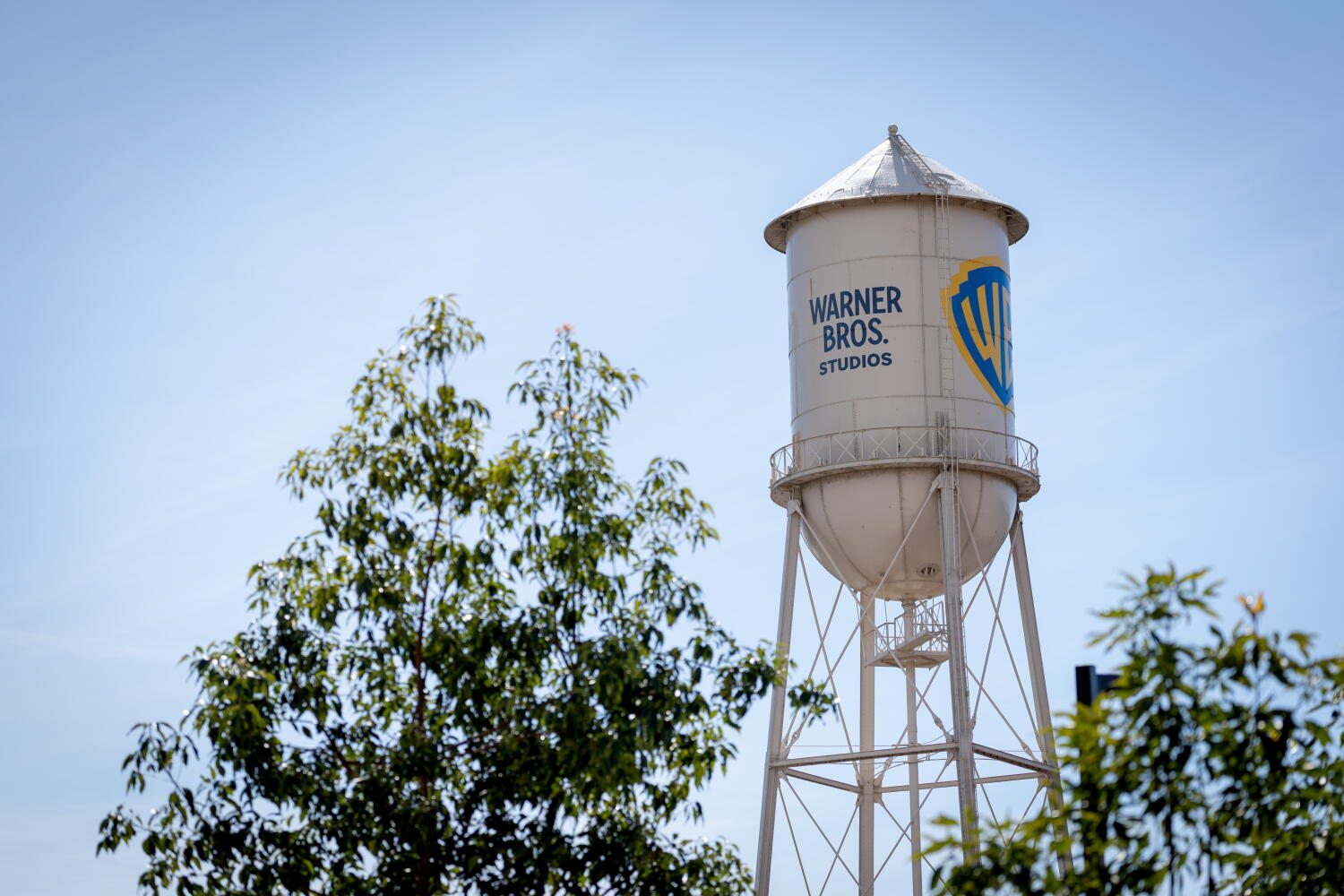
Late on a quiet afternoon in Burbank, the studio gates swing shut as the sun drops behind the San Gabriel Mountains, casting long shadows across empty soundstages where a thousand different stories have been dreamed up over the past century. Inside one of those dark rooms, a freshly printed script sits on a wooden table, a single coffee ring drying on the corner of its cover page—proof that someone stayed late enough to read every single word.