Fluorescent lights hum over a row of cold steel lockers. Keys jingle. Radios crackle with static that sounds like dry leaves scraping across concrete.
If you have ever stood inside a municipal courthouse, a county clerk’s office, or a neighborhood police lobby when the doors unlock at eight in the morning, you know the smell of floor wax and damp wool. You know the quiet weight of people waiting for a piece of paper that proves who they are, where they live, or why they belong in the room. Identity matters there. A badge on a lapel, a laminated card slipped behind plastic, a name stamped across a ledger—those small rectangles of ink and metal hold back chaos. They tell a frightened person whether the hand reaching toward them belongs to a public servant or a stranger with a grudge. You might also find this related article useful: The Escalation Mechanics of Street Unrest in Tirana.
Then came the clash over California’s law—dubbed by its critics the "No Vigilantes Act"—which sought to require visible identification from immigration enforcement agents, and the Ninth Circuit’s decision blocking that requirement.
On paper, it looks like a dry tug-of-war between a state legislature and a federal appellate court. Supremacy Clause. Federal officers. State regulation. Appellate injunctions. Anyone can skim a wire summary and move on before finishing their coffee. As extensively documented in latest articles by TIME, the effects are widespread.
Yet behind every appellate docket number stands a human being trying to read a face in dim light.
What Happens When You Cannot Read the Uniform
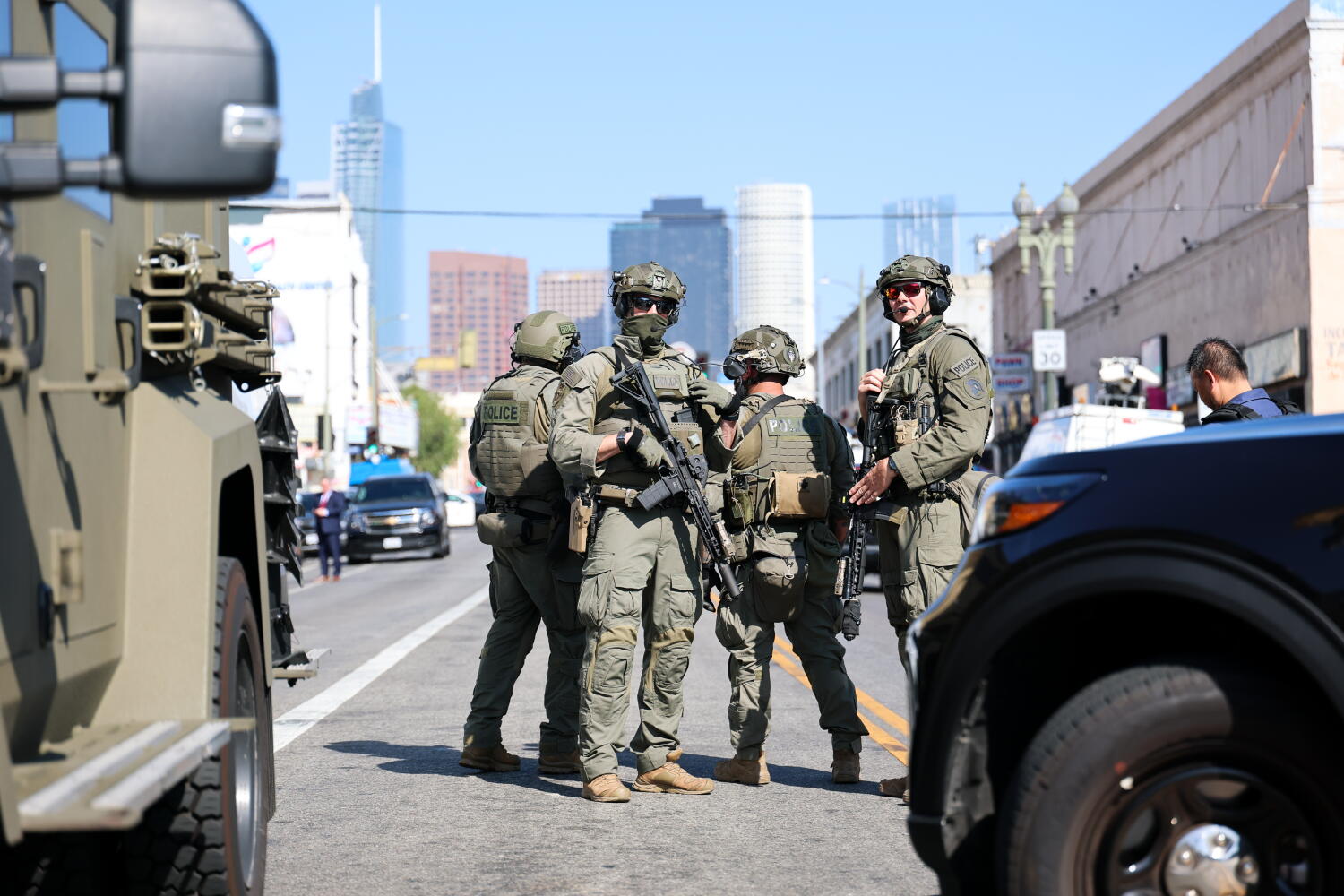
Consider a hypothetical scenario to see why a strip of plastic or a metal shield carries so much weight. Suppose a line cook named Mateo finishes a double shift at a restaurant in Fresno just after dusk. His apron is stained with garlic oil; his calves ache from ten hours on rubber mats. As he walks toward his sedan in a half-empty lot, two people in plain clothes and tactical vests step out from behind a van. One speaks into a shoulder mic. Neither wears a name tag. Neither displays an unmistakable local seal.
Is this a routine federal operation? Is it a local law enforcement sweep? Or is it someone pretending to hold authority over people who rarely feel safe calling for help?
That single second of uncertainty is where fear lives. When authority arrives without clear, uniform identification, the burden shifts instantly onto the person standing on the asphalt. Make the wrong move—run, hesitate, reach for a phone to record—and a tense encounter can spiral into handcuffs or worse. Comply without knowing who is asking, and you surrender basic dignity to an unseen authority.
I have sat in community rooms where neighbors trace the exact contours of that dread. You hear it in the pause before someone answers a knock at a screen door. You feel it in the way parents watch school pickup lines from half a block away, scanning every unmarked SUV that idles near the curb. Even citizens who have never worried about border enforcement start paying closer attention to who carries authority and how that authority announces itself in public spaces.
State lawmakers in Sacramento looked at that anxiety and saw a gap they wanted to close. Their measure aimed to require clear identification from immigration agents operating in the state, framed around deterring impersonators, protecting public safety, and giving communities a basic measure of accountability when armed personnel step into everyday neighborhoods.
Why the Ninth Circuit Stepped In
Courts do not decide cases based on how good a bill’s intentions sound at a press conference. Appellate judges look at constitutional boundaries, statutory text, and who holds power over whom.
When the Ninth Circuit blocked California’s identification mandate, the ruling centered on a classic friction point in American government: federal supremacy over federal officers carrying out federal duties. Under the constitutional architecture of the United States, a state generally cannot impose rules on federal agents that obstruct, burden, or dictate how federal law is enforced—unless Congress clearly authorizes that state control.
Think of it like a metaphor for two musicians playing in the same room without sharing sheet music. One believes the tempo needs to slow down so the dancers in front can keep their footing; the other insists the score itself comes from a higher conductor and cannot be rewritten at the edge of the stage. When the melodies collide, the referee steps in to say which instrument sets the beat.
Here, the appellate court concluded that California’s requirement crossed into regulating federal enforcement operations in a way that federal law—and constitutional principles of federal supremacy—did not permit during the litigation. Blocking the rule does not mean judges are blind to the anxieties of daily life. It means the court drew a line around constitutional authority as it read the law.
Still, legal precision rarely cools emotional heat.
Two Sides of the Same Fear
To understand why this dispute refuses to fade into the background of legal news, you have to look at the two different fears colliding in the courtroom.
One fear belongs to residents, immigrant families, civil rights advocates, and local officials who worry about accountability and impersonation. When officers wear plain clothes, face coverings, or minimal markings, ordinary people lose an immediate anchor of trust. Bad actors have long understood how easily a fake badge or a vague claim of police authority can intimidate vulnerable targets. From that viewpoint, requiring visible identification is not an obstacle to justice; it is basic hygiene for a free society.
The other fear belongs to federal agencies, supporters of strict immigration enforcement, and proponents of constitutional federalism. From their perspective, allowing fifty states to invent separate rules governing how federal agents identify themselves, dress, or operate creates a patchwork of traps. If one state demands one form of ID, another demands a different badge display, and another threatens penalties against officers, federal enforcement could be slowed, chilled, or tangled in local politics.
Both sides claim they are protecting order. Both sides distrust what happens if the other gets its way.
I will be honest: watching these clashes unfold can leave even seasoned observers feeling untethered. The law is full of sharp edges and shifting temporary orders. A rule passes in Sacramento, sparks headlines across the country, gets challenged in federal court, and gets paused or blocked by the Ninth Circuit before most people finish learning what the bill actually said. When legal protection feels provisional—here today, stayed tomorrow—people naturally ask whether rights and rules mean anything solid at all.
The Quiet Stakes Beyond the Headlines
History shows that debates over badges, uniforms, and police powers almost never stay confined to a single group of people.
Look back at how American policing evolved across the nineteenth and twentieth centuries. When early municipal watchmen and officers first began wearing standardized uniforms and numbered badges in cities like New York and Boston, citizens initially resisted them as symbols of intrusive state power. Over time, however, visible identification became a two-way shield. It let the public recognize legitimate authority and hold specific officers accountable when misconduct occurred, while giving genuine officers clear standing when they intervened in public disputes.
That balance has always been delicate. Too little transparency breeds suspicion, rumor, and fear of impersonators. Too much state-by-state interference in federal operations triggers constitutional fights that can paralyze enforcement or pit local police against federal agents on the same street corner.
A hypothetical scene helps clarify what happens when those wires cross on a busy morning. Imagine a local patrol officer responding to a fender-bender outside a grocery store, while federal immigration agents arrive nearby on an unrelated assignment. Nobody on the sidewalk knows the chain of command. Bystanders pull out phones. Voices rise. If rules about identification are contested or unclear, confusion spreads faster than facts—and confusion is the enemy of everyone present, from the shopkeeper watching the glass storefront to the officers trying to keep the peace.
Even when a court blocks a state law, the underlying questions do not evaporate. Communities still ask how to prevent impersonation. Law enforcement agencies still weigh officer safety, operational security, and public trust. Legal scholars still debate where federal immunity ends and state public-safety authority begins.
What Remains After the Ruling
An appellate block freezes a policy. It does not erase the memory of the people who debated it, nor does it settle the deeper tension over how power shows its face in public.
In a democracy stretched across vast geography and sharp disagreements, trust is built in small moments—how a question is answered at a counter, how clearly authority is shown, how calmly people treat one another when the stakes feel high. Laws try to codify that trust, and courts try to keep every branch of government inside its constitutional lane. Yet the friction persists because human beings do not live inside legal briefs. We live in parking lots at dusk, in school drop-off lanes, in courtrooms where hope and worry sit shoulder to shoulder on wooden benches.
A single unmarked vehicle can turn an ordinary Tuesday errand into a test of nerve, and a single clear badge can turn a moment of panic into a moment of calm.