The crisp crunch of a fresh romaine leaf or the burst of a sweet, ripe raspberry is supposed to be the literal definition of health. We are told, from the moment we can chew, to eat our greens. We pack them into school lunches, toss them into sleek glass bowls for dinner, and pay a premium for the word organic stamped across plastic clamshell containers.
Then, the stomach cramps begin.
At first, you dismiss it. It is just a passing bug, you think. A minor disagreement between your digestive tract and last night’s takeout. But day three blends into day seven. Day seven drags into week three. The exhaustion settles into your bones, a heavy, relentless weight that turns the simple act of standing up into a marathon. Your bathroom becomes a prison. The weight drops off your frame. You look at the fresh produce in your refrigerator not with appetite, but with a sudden, creeping dread.
This is not a hypothetical nightmare. It is the reality currently rippling through Michigan, where health officials have quietly watched the tally of a parasitic outbreak climb to terrifying heights. More than 2,600 people across the state have fallen victim to a microscopic intruder known as Cyclospora cayetanensis.
Behind that sterile, clinical number—2,600—are real human beings. Consider a hypothetical resident named Marcus, a high school track coach from Grand Rapids who prides himself on his indestructible immune system. Marcus eats clean, runs five miles a day, and rarely takes as much as an aspirin. When the nausea first hit him mid-stride during an afternoon practice, he figured he was just dehydrated. A month later, he had lost fifteen pounds, his strength was gone, and he was staring at a laboratory report detailing an infection caused by a protozoan parasite most people cannot even pronounce.
The sheer scale of the Michigan outbreak transforms it from a localized food safety footnote into a profound public health crisis. When thousands of people across a single state are stricken by the exact same organism, it exposes the fragile, invisible threads that connect our modern food supply.
The Microscopic Hitchhiker
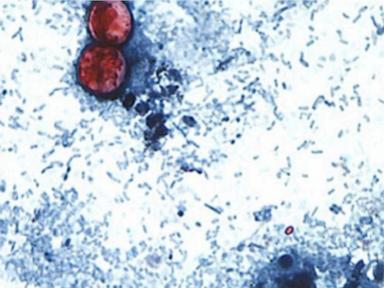
To understand how a community gets poisoned by its own health food, you have to understand the adversary. Cyclospora is not a bacterium like Salmonella or E. coli. It is a single-celled parasite, a tiny protozoan that hitches a ride on fresh produce, most commonly imported berries, basil, cilantro, lettuce, and snow peas.
It enters the agricultural ecosystem through water. When fields are irrigated with water contaminated by human waste, the parasite finds its home on the bumpy textures of leaves and the porous skins of fruit.
Once it clings to a plant, it becomes incredibly stubborn.
Standard kitchen defenses are utterly useless here. You cannot simply rinse Cyclospora away under the kitchen tap. The parasite protects itself inside a tough, microscopic wall that laughs at regular water pressure. Even the chemical washes used in commercial processing facilities often fail to budge it. When you wash your lettuce, you might remove the visible dirt, but the invisible parasite remains, waiting for a human host.
When Marcus, or any of the other 2,600 affected Michiganders, swallows that contaminated leaf, the parasite wakes up. It migrates straight to the small intestine, burrowing into the delicate cellular lining. There, it begins to reproduce, triggering an inflammatory response that completely derails the body's ability to absorb nutrients and water.
The resulting illness, cyclosporiasis, is famous among epidemiologists for its agonizingly long duration. A typical bout of food poisoning from bacteria might lay you low for forty-eight hours, leaving you weak but recovering by the weekend. Cyclospora plays a much longer, crueler game. Left untreated, the symptoms wax and wane for weeks, sometimes months. Just when a patient thinks they have finally turned the corner and conquered the illness, the severe cramps and watery diarrhea return with a vengeance.
The Diagnostic Delay
The true scope of the crisis in Michigan is likely far larger than the official reports suggest. The road to becoming a statistic in a public health report is long, winding, and full of bureaucratic hurdles.
Most people who contract the parasite do not seek medical care immediately. They wait. They drink sports drinks, eat plain toast, and assume their body will sort it out. When they finally swallow their pride and visit a walk-in clinic or a primary care physician, the medical system itself often stumbles.
Standard stool cultures ordered by doctors during routine exams look for common culprits. They screen for Salmonella, Campylobacter, and standard parasites like Giardia. They do not automatically check for Cyclospora.
To catch this specific culprit, a physician must request a highly specialized test, often a molecular PCR panel or a specific acid-fast stain. Because many frontline doctors are not thinking about tropical parasites when a patient walks in with a stomachache in the Midwest, these tests are frequently omitted.
Weeks slip by. The patient remains miserable, absorbing less and less nutrition, while the parasite continues its lifecycle undetected. By the time a laboratory finally confirms the presence of Cyclospora and reports it to the local health department, the contaminated food that caused the infection has long since vanished from grocery store shelves and kitchen pantries. The trail goes cold.
This delay creates a profound sense of isolation for the sick. When you are suffering from a condition that your doctors cannot initially identify, you begin to doubt your own body. You wonder if it is stress, or an underlying chronic condition, or a sudden, severe allergy to everything you eat. The relief of a final diagnosis is often bittersweet, overshadowed by the realization that the recovery process will require heavy-duty antibiotics rather than just rest and hydration.
Tracking the Ghost in the Supply Chain
Public health investigators face a monumental task when trying to pinpoint the source of an outbreak this massive. Our globalized food infrastructure is a marvel of logistics, but it is an absolute nightmare for traceback investigations.
A single bag of mixed greens purchased at a supermarket in Detroit might contain leaves harvested from multiple different farms, processed in a central facility, packaged under a generic brand name, and distributed across hundreds of miles.
Investigators must act like historical detectives. They interview hundreds of sick patients, meticulously documenting every single item consumed in the two weeks leading up to the onset of symptoms. They look for common denominators. Did a statistically significant number of patients buy their groceries at the same supermarket chain? Did they all attend weddings catered by the same company? Did they all buy the same brand of pre-washed salad?
The math is dizzying. If 2,600 people are infected, finding the statistical overlap requires crunching massive amounts of data while the clock ticks down and more people fall ill every day.
Even when a common food item is identified, finding the exact farm where the contamination occurred is like trying to trace a single drop of water back to its source in a rushing river. The water source used for irrigation might have been contaminated months ago during a brief, seasonal runoff event, and by the time inspectors arrive to test the soil and water, the evidence has washed away.
This leaves consumers in a deeply uncomfortable position. We are forced to realize that the systems designed to keep our food safe are reactionary, not preventative. They excel at counting the casualties after the fact, but they struggle immensely to stop the poison from reaching the plate in the first place.
Living with the Aftermath
The physical toll of cyclosporiasis is obvious, but the psychological aftermath lingers long after the parasite has been cleared from the body by a course of trimethoprim-sulfamethoxazole.
Food is inherently tied to safety, comfort, and community. We gather around tables to celebrate, to comfort one another, and to nourish our bodies. When that basic act is corrupted, it changes a person's relationship with sustenance.
People who have survived a severe bout of cyclosporiasis often report a lasting anxiety around fresh food. They find themselves compulsively scrubbing vegetables until the leaves bruise. They avoid salad bars entirely. They look at a plate of fresh fruit offered by a well-meaning friend not as a treat, but as a potential biological hazard.
The physical recovery is not a simple switch that flips back to normal, either. The prolonged inflammation in the gut can disrupt the delicate microbiome for months, leading to secondary issues like temporary lactose intolerance or post-infectious irritable bowel syndrome. The body remembers the trauma of the invasion long after the invader is gone.
As Michigan health officials work alongside federal agencies to map the parameters of this historic outbreak, the rest of us are left to contemplate the true cost of convenience. We demand fresh, out-of-season produce every day of the year, regardless of the weather outside our windows. We want our berries in January and our cilantro in the dead of winter.
Meeting that demand requires a vast, hyper-connected network of international farms, processing hubs, and shipping channels. Every single node in that network represents a potential point of vulnerability. When a microscopic organism manages to slip through the cracks of that massive apparatus, it does not just cause a statistic to rise on a government website.
It disrupts lives, drains human vitality, and turns the simple, communal joy of a fresh meal into a gamble. The next time you reach for a plastic container of pre-washed greens, you might find yourself pausing, looking closer at the leaves, and wondering about the invisible journey they took to reach your kitchen.