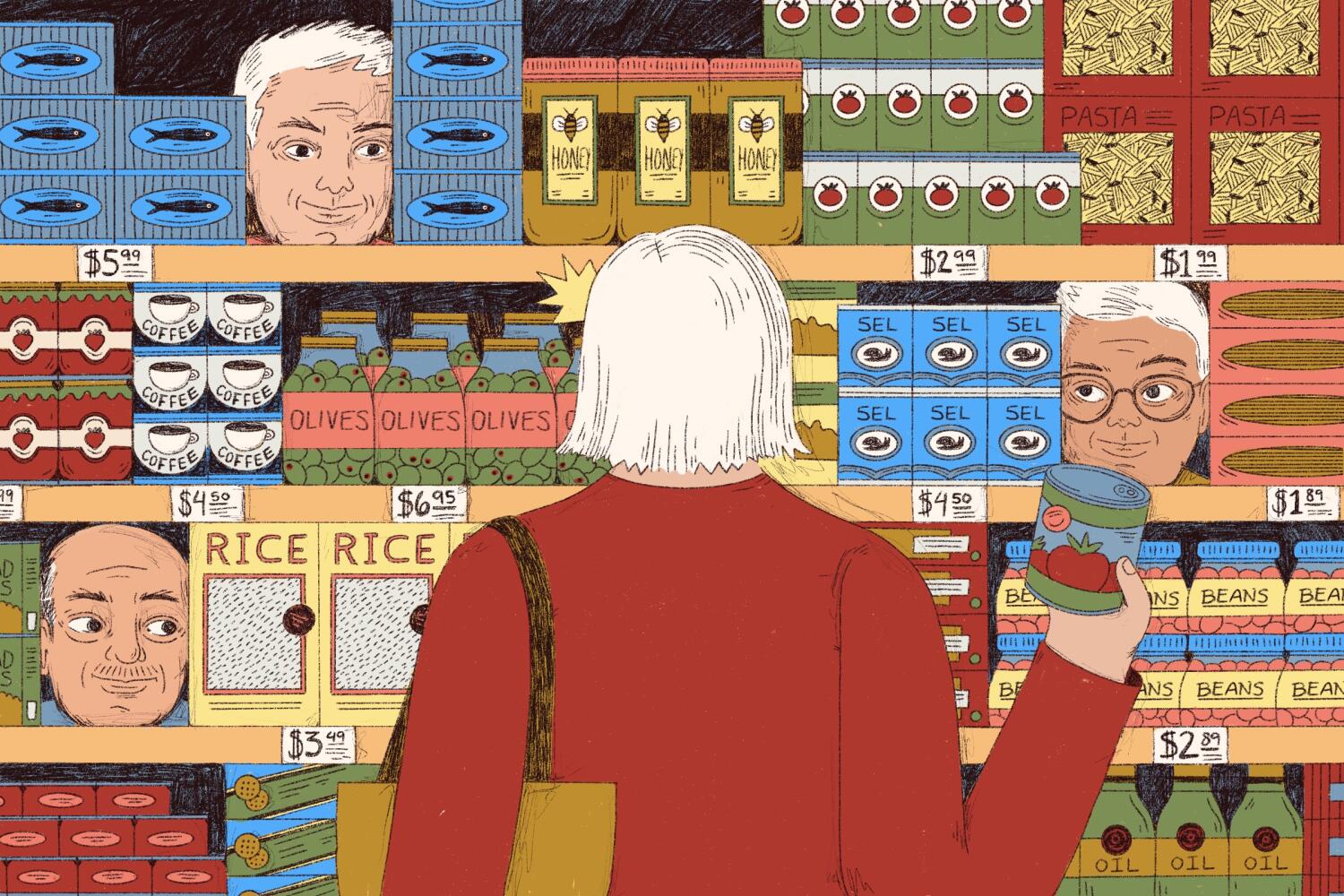
The Low-Risk Arena of the Supermarket Isle
Older men approach younger women in grocery stores because the location lowers the cost of rejection while offering built-in conversation starters. Unlike bars, nightclubs, or dating applications—where romantic intent is explicitly broadcast—a grocery aisle provides total plausible deniability. If a conversational opener fails, the initiator can simply pay for their items and walk away, chalking the brief interaction up to routine neighborly politeness.
For many men who grew up before the dominance of smartphones, physical spaces remain the primary arena for social initiation. Produce sections, coffee lines, and checkout queues function as modern equivalents of traditional public squares. However, the generational disconnect in social expectations creates a sharp tension. What an older initiator views as a harmless, low-stakes chat can feel intrusive or uncomfortable to someone who views public errands purely as tasks to be completed efficiently. In related developments, read about: The Gentle Footprint of a Giant Living in Our Midst.
Why the Grocery Store Works as a Catalyst
The environment of a supermarket is uniquely engineered to lower social defenses. Lighting is bright, staff members are present, and the setting carries no intrinsic romantic expectation. This neutral backdrop changes how people perceive risk.
- Built-In Icebreakers: Every product on a shelf serves as a potential topic. Asking about the quality of a melon, a recipe recommendation, or the location of an obscure ingredient provides an effortless opening line.
- Low Expectations: Because nobody enters a grocery store expecting a formal date, the pressure associated with traditional approaches vanishes.
- Demographic Overlap: Supermarkets are among the few physical spaces where completely different age brackets and socioeconomic groups cross paths on any given Tuesday afternoon.
Consider a hypothetical example: a shopper stands in the organic produce aisle holding a bunch of kale. A nearby customer asks if kale is better for smoothies than spinach. The question is mundane, harmless, and completely tied to the immediate environment. If the shopper gives a one-word answer and turns away, the interaction ends with zero embarrassment for either party. If the shopper engages, a longer dialogue begins. That dynamic makes the grocery store an extraordinarily safe space for initiating conversation. Apartment Therapy has analyzed this important topic in extensive detail.
The Generational Divide in Public Spaces
The core issue driving this phenomenon isn't just about romance; it's a fundamental clash over the function of public space.
Older generations generally treat shared community hubs as zones for casual, spontaneous social friction. Stopping to chat with a stranger in a hardware store or market was standard behavior for decades. Younger generations, raised with digital communication as their default social layer, often view physical public spaces as utilitarian transit zones. When a younger person wears headphones or moves quickly through an aisle, they are signaling a desire for privacy within a public space.
When an older man ignores those subtle visual cues and strikes up a conversation, it rarely stems from an intricate tactical plan. Instead, it reflects a habit formed in a different era. The initiator often believes they are merely being friendly or charming, completely unaware that the recipient might perceive the interaction as an unwelcome boundary violation.
The Dynamics of Denial and Comfort
Plausible deniability works both ways in these scenarios. It allows the person making the advance to retreat without losing face, but it also forces the recipient into an awkward position. Because the approach is masked as routine small talk, calling it out directly can feel overreactive. The recipient is left deciding whether to engage in polite chatter or risk appearing rude by shutting down an apparently innocent question.
This imbalance explains why these interactions generate so much frustration. The initiator benefits from the low-risk environment, while the recipient bears the emotional effort of managing the interaction.
Evaluating the Impact of Real-World Connections
As digital dating fatigue continues to grow, spontaneous real-world encounters are often praised as a healthier alternative to algorithms. However, physical approaches only succeed when both parties share the desire for spontaneous interaction.
Without mutual interest and shared social norms, cold approaches in mundane environments like supermarkets will continue to produce misaligned expectations. Understanding the mechanical incentives behind these interactions—low risk, high convenience, and generational habits—demystifies why the produce aisle remains an active site for unsolicited introductions.


