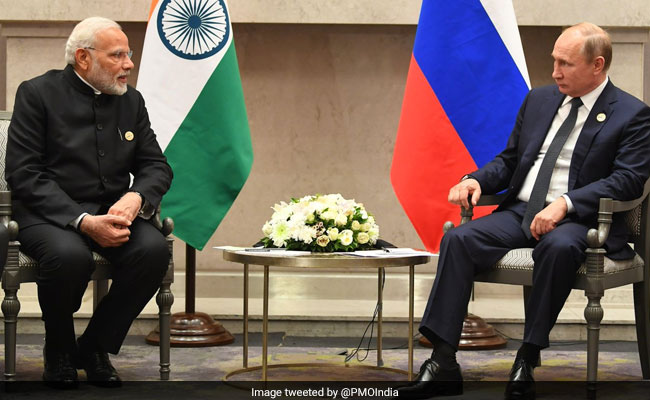
Prime Minister Narendra Modi and Russian President Vladimir Putin are sitting down for high-stakes bilateral talks in New Delhi. The meeting happens right before the 18th BRICS Leaders' Summit kicks off at Bharat Mandapam. Most headlines treat this as a standard diplomatic handshake. They are missing the point entirely.
Beneath the polite photo ops lies a heavy agenda loaded with advanced military tech, nuclear energy negotiations, and massive shifts in how international trade settles its bills. If you want to understand where global alliances are heading, look right here.
The Heavy Hitting Defense and Energy Agenda
Moscow confirmed through presidential spokesperson Dmitry Peskov that the two leaders will tackle major strategic files. At the absolute top of the list is the potential introduction of fifth-generation Sukhoi Su-57 stealth fighter jets to India's military framework. India needs a technological edge in its skies, and Russia wants a premier buyer for its most advanced hardware.
Nuclear energy is another massive talking point. Russia is actively waiting on New Delhi to push forward with negotiations for setting up new nuclear power plants. Energy security drives this relationship, and record-high oil imports mean both countries have billions of reasons to keep the conversation moving.
Let's not forget the financial plumbing holding this trade together. Around 90% of all transactions between Russia and BRICS members are now settled in national currencies. Moscow insists this isn't a radical crusade against the US dollar. It is simply a practical survival mechanism against aggressive Western sanctions. When external powers weaponize financial systems, nations find alternative exits. India and Russia are walking right through them.
The Balancing Act on Ukraine
You cannot talk about Modi and Putin without addressing the elephant in the room. The war in Ukraine casts a long shadow over every diplomatic encounter.
Just weeks ago at the Shanghai Cooperation Organisation Summit in Bishkek, Modi looked Putin in the eye and delivered a blunt public message. He stated clearly that humanity needs an end to endless wars, emphasizing that the path of peace is the only viable option.
Yet, New Delhi refuses to join the Western chorus of absolute isolationism toward Moscow. India buys record volumes of Russian crude while simultaneously maintaining deep strategic and economic ties with Washington and Europe. This multi-alignment strategy frustrates Western foreign policy planners. But from New Delhi's perspective, it is pure pragmatism. India buys what keeps its economy stable. At the same time, it uses its unique leverage to advocate for a peaceful resolution behind closed doors.
Setting the Stage for the Expanded BRICS Bloc
The bilateral sit-down sets the tone for the wider BRICS summit under India's 2026 chairship. India is guiding the bloc through its theme of building for resilience, innovation, cooperation, and sustainability.
The block has grown significantly. With eleven full members now in the core group—including recent additions like Indonesia alongside heavyweights like China and Brazil—the summit carries weight. Chinese President Xi Jinping's expected arrival adds another layer of intense diplomatic maneuvering.
When Modi and Putin wrap up their closed-door discussions, the ripple effects will hit global energy markets, defense supply chains, and multilateral financial systems. Watch the concrete deliverables on defense tech and local currency settlements, not the empty rhetoric. That is where the real story lives.