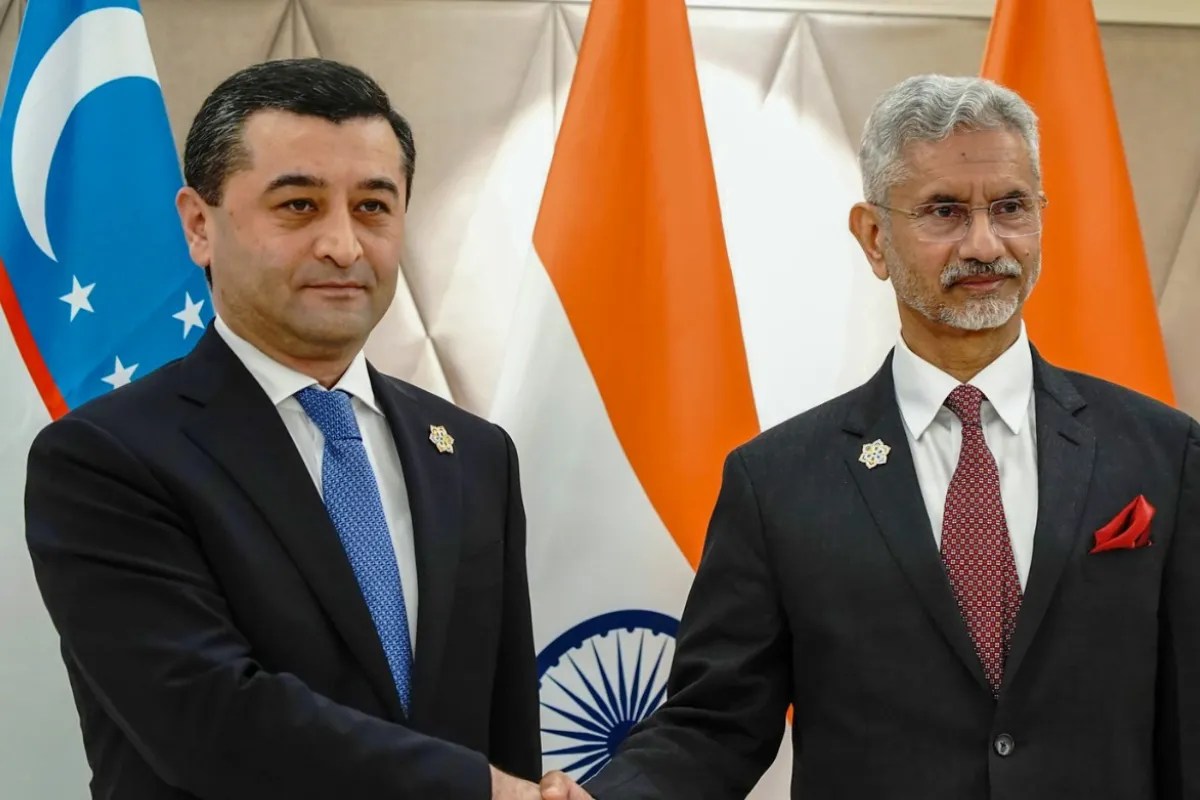
Every mainstream media desk in the capital is currently hyperventilating over the upcoming diplomatic shuffle involving Tashkent. The lazy narrative writes itself. Foreign Minister Bakhtiyor Saidov touches down, shakes hands with S. Jaishankar, exchanges pleasantries with President Droupadi Murmu, and commentators rush to publish breathless editorials about a renewed regional axis, Central Asian connectivity, and strategic breakthroughs. It is diplomatic theater at its finest and most useless.
Stop treating every scheduled transit lounge meeting like a geopolitical earthquake.
I have spent decades watching foreign policy analysts read tea leaves from protocol-heavy ministerial visits, mistaking calendar routines for strategic shifts. The truth nobody in South Block wants to say out loud is that high-level visits between New Delhi and Tashkent have become an exercise in repeating stale talking points while avoiding the massive, bleeding economic realities that actually dictate power in Eurasia.
The Trade Illusion We Refuse To Audit
Look at the bilateral trade numbers. They are embarrassing. For two nations that constantly invoke historical ties, shared heritage, and the glorious days of the Silk Road, our actual economic exchange is a rounding error. We talk about connectivity through the International North-South Transport Corridor or the Chabahar Port as if cargo is magically materializing.
Here is the operational bottleneck nobody wants to acknowledge. You cannot trade effectively across borders when logistics infrastructure is choked by sanctions, unstable regional corridors, and a total lack of private sector risk capital. Uzbek cotton, minerals, and pharmaceuticals face transit hurdles that a handshake in New Delhi cannot dissolve.
When Saidov sits down across from Jaishankar, the photo-ops will capture smiles. The press releases will mention mutual trust. But zero commercial contracts of consequence will be born from that room unless both sides start speaking the language of corporate logistics instead of diplomatic platitudes.
Why Central Asia Is Not Waiting For New Delhi
The lazy consensus assumes India holds natural gravitational pull over Central Asia because of cultural affinity and shared anxiety regarding regional stability. That is historical nostalgia talking, and nostalgia is a terrible foreign policy strategy.
Beijing has already bought the real estate. Moscow still controls the security architecture and labor migration pipelines. Meanwhile, Brussels and Washington are packaging critical mineral agreements with glossy institutional backing. Uzbekistan is diversifying its foreign policy with calculated precision, playing every major power against the other to maximize sovereign leverage.
Expecting Tashkent to align its strategic calculus with New Delhi's regional containment preferences is pure delusion. Uzbekistan wants Indian IT talent, pharmaceutical manufacturing investments, and educational outposts. It does not want a lecture on geopolitical alignment against mutual adversaries.
The Real Question We Should Be Asking
Instead of asking what this bilateral summit means for regional security architecture, ask why Indian corporations still treat Central Asia as an exotic frontier market rather than a core investment destination.
The barrier is not diplomatic willpower. The barrier is institutional cowardice. Indian boardrooms are risk-averse, bogged down by archaic banking restrictions, lack of direct flight connectivity, and the absence of robust bilateral investment protection frameworks that survive local bureaucratic churn.
Until New Delhi builds the financial plumbing required to move capital seamlessly across borders, every foreign minister visit is just expensive tourism.
Stop reading the tea leaves of protocol schedules. Start auditing the balance sheets. Until the capital flows match the rhetoric, this relationship remains an empty frame on an office wall.