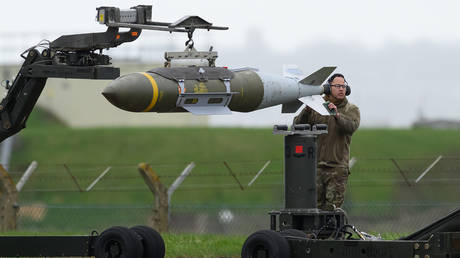
The debate over Western military aid to Ukraine has shifted once again. You're probably tired of the endless back-and-forth about red lines and escalation. I get it. But the recent US approval for a heavy bomb and missile deal marks a real turning point.
This isn't just another routine package of small-arms ammunition. It's a fundamental shift in how the conflict is being fought, and honestly, it's about time.
Let's cut through the noise and look at what this decision actually means on the ground. We need to look past the political posturing. What are the military realities? How will it impact the front lines?
The Strategic Shift Behind the Deal
For months, the Ukrainian military operated under severe restrictions. They couldn't strike deep into Russian territory with Western weapons. The White House feared escalation.
Now? The calculus has changed.
The US greenlight for glide bombs and long-range precision munitions allows Ukraine to target logistics hubs deep behind enemy lines. We're talking about ammunition depots, staging areas, and command centers that were previously safe from long-range artillery.
The core issue was never about the weapons themselves. It was always about the rules of engagement. By lifting these restrictions, the Biden administration has given Kyiv the tools to disrupt Russian supply chains.
I've watched the evolution of this aid package closely. It’s a direct response to North Korean troops entering the conflict and the heavy use of glide bombs by Russian forces. The White House finally realized that a static defense isn't enough. Ukraine needs the ability to hit the source of the attacks.
Understanding the Hardware
What are we actually sending? The package includes precision-guided glide bombs and advanced munitions designed to be dropped from Soviet-era jets or adapted Western aircraft.
These weapons operate using GPS and inertial navigation. They can be deployed from stand-off distances. This means Ukrainian pilots don't have to fly directly over heavily defended Russian positions to drop them.
Let's break down the key tactical advantages:
- Stand-off range: Pilots stay out of the immediate threat envelope of short-range air defense systems.
- Precision targeting: A single munition can destroy a reinforced bunker or a critical bridge, replacing dozens of unguided artillery shells.
- All-weather capability: Advanced guidance systems ensure accuracy even in poor visibility or at night.
Critics argue that these systems won't change the war overnight. They're entirely right, but that's missing the point. It's not a magic bullet. It's a vital piece of the puzzle that allows Ukraine to attrite Russian forces more efficiently.
Addressing the Escalation Fears
You'll hear plenty of talking heads on television warn about World War III. You'll hear that crossing certain thresholds will force a nuclear response from Moscow.
Let's be realistic here.
We've seen these red lines drawn and crossed multiple times throughout the conflict. HIMARS, ATACMS, and even tanks were all supposed to trigger a massive escalation. None of them did. Russia's response has been largely limited to conventional strikes on Ukrainian energy infrastructure.
The risk of escalation exists, absolutely. But failing to provide Ukraine with the means to defend itself carries an even greater risk. It signals weakness and encourages further aggression.
Logistical Challenges Ahead
It's one thing to approve a deal on paper. It's an entirely different challenge to get the equipment to the front line.
Ukraine's logistics network faces immense pressure. The heavy weapons and munitions require specialized transport, secure storage, and maintenance facilities. We also have to consider pilot training. Ukrainian aviators are already flying complex missions, adding new weapon systems to their aging fleet requires rapid adaptation.
Let's look at the numbers. The latest US package is valued in the billions, but the flow of equipment takes time. Supply chains stretch from Western manufacturing hubs to the eastern front. Delays are inevitable.
You should also keep an eye on the transition of US political power. The incoming administration's stance on foreign aid remains a wild card. While this current deal is moving forward, the long-term sustainability of such massive transfers is a major question mark.
What This Means for You
If you're following the conflict or trying to understand the macroeconomic impacts, you need to pay attention to a few specific indicators in the coming weeks:
- Russian supply routes: Watch the frequency of strikes on railway nodes in Crimea and the southern front.
- Air defense consumption: See if Russia shifts more air defense assets away from the front line to protect rear hubs.
- US budget debates: Monitor the next round of supplemental funding in Congress.
This decision proves that the conflict is moving from a war of attrition into a highly technical, long-range contest. We've moved past the days of simple trench warfare. Precision and logistics will decide the next phase of the conflict.
The best way to understand this conflict is to look at the capabilities, not the headlines. The US greenlight for these bombs isn't the end of the war, but it's a major shift in the rules of the game.