The United States and Iran just shook hands on a massive deal to end over 100 days of brutal war, but don't expect the tanks to roll backward in southern Lebanon.
While the diplomatic teams in Washington, Islamabad, and Doha are busy celebrating a historic breakthrough, the actual reality on the ground is fracturing. Hours after the Supreme National Security Council in Tehran declared a comprehensive ceasefire on all fronts, Israel flatly rejected the premise.
If you think a signature in Geneva is going to magically clear out the military buffer zones in the Middle East, you're misreading the entire situation. Israel isn't packing up.
The White House Celebrates a Frictionless Deal That Disregards the Ground War
The memorandum of understanding (MOU) negotiated by Qatari and Pakistani mediators looks incredible on paper. It tackles the massive economic choke points that triggered a global energy crisis when the conflict erupted on February 28. Under the terms of the draft agreement, a couple of major things are supposed to happen simultaneously.
- Iran agrees to an immediate, toll-free reopening of the Strait of Hormuz to all international shipping.
- The United States lifts the aggressive naval blockade it slapped on Iranian ports back in mid-April.
- Hostilities between American and Iranian forces freeze entirely ahead of a formal signing ceremony in Geneva on Friday, June 19.
Crude oil prices plunged instantly. Stock markets surged. From a global macroeconomic perspective, the deal does exactly what President Donald Trump wanted it to do: it stops the bleeding in the energy sector and prevents a broader global depression.
But there is a massive difference between stopping a direct American-Iranian conventional shootout and untangling a localized ground war. Tehran explicitly stated the agreement covers Lebanon. They claim the military operations there must end permanently.
Israel sees it entirely differently. They weren't in the room for the 15-hour marathon sessions with Qatari officials.
Why Israel is Digging In
Defense Minister Israel Katz didn't hold back. In the first official reaction from the top tier of the Israeli government, Katz blew up the idea that an international MOU equals an Israeli retreat.
The military strategy under Prime Minister Benjamin Netanyahu is now explicit. The Israel Defense Forces (IDF) will remain in their newly established security zones in Lebanon, Gaza, and Syria without any time limit.
"We oppose an IDF withdrawal from Lebanon, despite all the existing pressures and those that will still come," Katz stated.
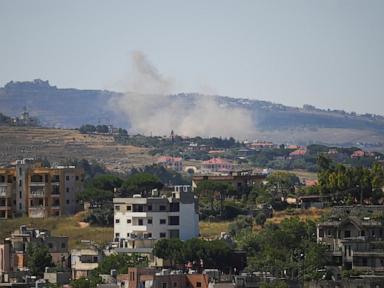
The reality is that Israel spent the last three months pushing more than 10 kilometers deep into Lebanese territory. They didn't take that ground just to give it up because Washington and Tehran wanted to trade oil again. The Israeli defense establishment views these buffer zones as their single greatest achievement of the war.
The plan moving forward isn't a diplomatic handover. The IDF is actively preparing to clear local residents from these contact-line villages entirely. They are systematically destroying all underground tunnels, storage facilities, and houses used as Hezbollah outposts.
Israeli Military Control Plan
────────────────────────────────────────────────────────────────────────
Security Zone Depth:  10+ Kilometers into Southern Lebanon
Operational Timeline: Indefinite / No Time Limit
Local Policy:         Total clearance of residents and outpost destruction
To make matters more complicated, Finance Minister Bezalel Smotrich called the US-Iran deal "bad for Israel and the entire free world." Far-right National Security Minister Itamar Ben-Gvir added that Israel is an independent, sovereign state, not a subordinate to the United States.
The Separate Track Collision
The underlying breakdown here comes down to a total mismatch in diplomatic architecture. The White House has been running two completely separate tracks, and they are now smashing into each other.
While the administration was cutting the secret economic deal with Iran, Secretary of State Marco Rubio and Secretary of Defense Pete Hegseth were managing a completely separate trilateral framework with Israel and the official Lebanese government.
Just two weeks ago, that trilateral group issued a joint statement. The logic of that specific American-brokered track was very clear.
- A ceasefire inside Lebanon is strictly contingent on Hezbollah evacuating every single operative from the South Litani Sector.
- The Lebanese Armed Forces (LAF) must take exclusive control of the territory to the total exclusion of non-state actors.
- The United States explicitly promised Israel that any agreement regarding Lebanon must be reached directly between the two sovereign governments, not through a separate backchannel with Iran.
Now, Iran is trying to use its MOU with the US to protect its main proxy, Hezbollah, from total elimination in the south. Israel knows this. They told the White House directly that they won't play along. Katz even confirmed he laid this out to Pete Hegseth directly.
What Happens Next on the Border
The immediate danger is a massive miscalculation. Iran wants to prove it still dictates the terms of the regional alliance. If the Islamic Revolutionary Guard Corps (IRGC), under the heavy influence of Major General Ahmad Vahidi, decides to test Israel's resolve by launching drone or missile packages from Iranian soil to defend southern Lebanon, the entire Geneva peace track evaporates.
Katz already issued a direct warning on that exact scenario: if Iran strikes because of what the IDF is doing in Lebanon, Israel will hit back inside Iran with full force.
For anyone tracking regional security or maritime trade, the next move isn't watching the diplomats buy pens for the Geneva signing. It's watching the political and security tracks scheduled to reconvene during the week of June 22. That's where the real fight happens.
If you are managing supply chains or monitoring regional risk, don't change your posture based on the Truth Social announcements or the oil market dip. Keep your eyes on the Litani River. The ground war in the buffer zones is completely decoupled from the diplomatic theater in Europe, and the IDF is dug in for the long haul.