The Pentagon footprint across the Persian Gulf used to look like an unassailable insurance policy. For decades, the calculation was simple. Washington got a forward platform to control shipping lanes and check regional adversaries, while host nations received an implicit security umbrella.
That calculus just shattered.
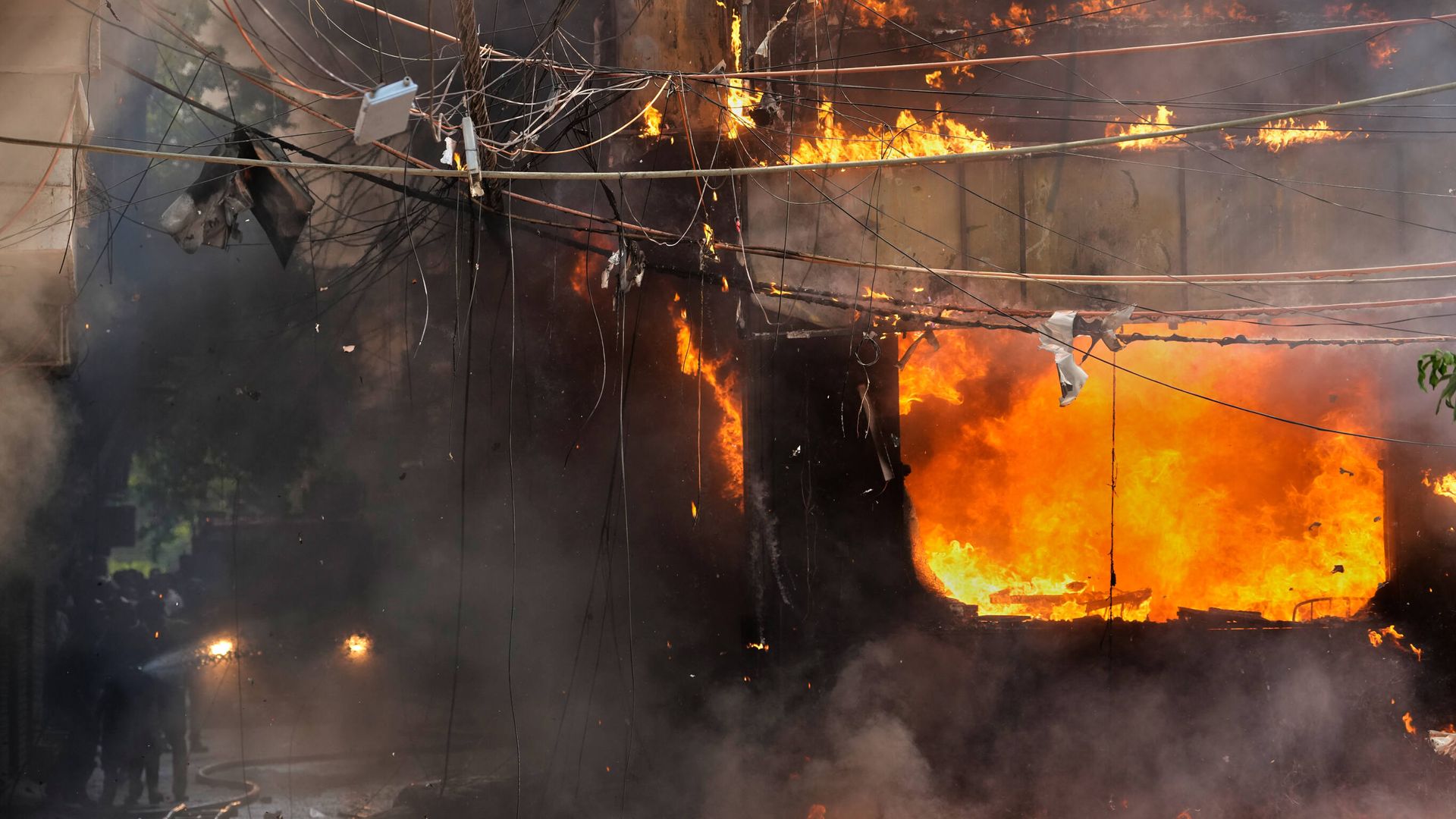
With the conflict involving the US, Israel, and Iran escalating into direct kinetic engagements, those sprawling American installations are no longer just deterrents. They are massive targets. Tehran's recent missile and drone strikes against host nations make one thing clear: the regional presence is facing its most severe stress test since the 1990 Gulf War.
If you want to understand where American forces are actually positioned—and why their host governments are suddenly sweating through their suits—you need to look past the official press releases.
The Big Three Hegemonic Hubs
When people think of American military power in the region, they usually picture carrier strike groups patrolling the Arabian Sea. But the real structural power lies on land. Three specific countries anchor the entire operation.
Qatar: The Nerve Center
Al Udeid Air Base, located southwest of Doha, is the crown jewel of the regional architecture. It houses roughly 10,000 American personnel. It serves as the forward headquarters for US Central Command (CENTCOM) and Air Forces Central.
If an airstrike happens anywhere from Northeast Africa to Central Asia, the command signals probably flowed through here. The sheer scale of Al Udeid means it cannot hide from regional geopolitical crosshairs. When tensions boil over, Al Udeid becomes a primary focus for retaliatory planning.
Kuwait: The Logistics Engine
Kuwait is essentially a massive staging ground. The country hosts over 13,000 American troops spread across several critical facilities.
- Camp Arifjan: Functions as the forward headquarters for US Army Central.
- Camp Buehring: Serves as the primary preparation point for motorized and armored units moving north.
- Ali Al Salem Air Base: Manages tactical airlift operations right near the Iraqi border.
Kuwait has quietly tolerated this heavy footprint since the first Gulf War, but its proximity to both Iraq and Iran makes it incredibly vulnerable during a regional flare-up.
Bahrain: The Maritime Anchor
Right in the middle of the Persian Gulf sits Naval Support Activity Bahrain in Manama. This is the home of the US Navy's Fifth Fleet. The facility oversees maritime security across the Gulf, the Red Sea, the Arabian Sea, and parts of the Indian Ocean.
When the Strait of Hormuz gets choked or oil tankers face missile threats, the response is directed from Manama. However, keeping a fleet headquarters inside a tight, enclosed body of water during an active missile war is highly risky. In response to recent escalations, the US has had to pull major combatants out of port and reduce onshore staff to mission-critical personnel to avoid getting trapped.
Outposts on the Front Lines
Beyond the massive hubs, American forces occupy smaller, more exposed positions designed for air defense, reconnaissance, and training.
United Arab Emirates
Al Dhafra Air Base near Abu Dhabi acts as a major hub for American surveillance aircraft, drones, and refueling tankers. It is a critical node for keeping combat jets fueled and fed with target data. Additionally, Dubai’s Jebel Ali Port functions as the busiest port of call for US Navy vessels outside the United States, even though it isn't an official American base.
Saudi Arabia
The presence here is far smaller than it was during Desert Storm, hovering around 2,000 to 3,000 troops. Personnel operate primarily out of Prince Sultan Air Base south of Riyadh. The mission here is explicitly defensive, focusing heavily on operating Patriot missile batteries and Terminal High Altitude Area Defense (THAAD) systems to protect critical infrastructure from ballistic threats.
Iraq and Jordan
The lines blur as you move inland. In Iraq, roughly 2,500 troops remain split between Ain Al Asad Air Base in western Anbar province and Erbil Air Base in the north. Officially, they are there to advise local forces, but they frequently find themselves trading rocket fire with regional militias.
Meanwhile, Jordan's Muwaffaq Al Salti Air Base has quietly become a massive staging area for American fighter squadrons operating in the Levant.
The Sovereignty Trap Facing Host Nations
The fundamental flaw in the current strategy is the assumption that American bases operate in a political vacuum. They don't.
Local governments are realizing that hosting American assets can compromise their own safety. Iran has openly stated that any country allowing its territory to be used for offensive actions against Iranian interests will be treated as an active combatant.
This leaves Gulf capitals in an impossible position. They cannot easily evict the American military without destroying their defense partnerships with Washington. Yet, keeping the bases active invites direct missile strikes on their own soil.
Gulf states are actively pushing back behind closed doors, demanding veto power over what missions can be launched from their territory. They don't want to get dragged into a major war because of decisions made in Washington.
Navigating the New Gulf Reality
The regional security map is shifting rapidly. If you are tracking assets or managing corporate risk in the region, relying on old defense assumptions will get you caught flat-footed.
- Watch the Restrictions: Pay close attention to host-nation operational limits. If Qatar or the UAE bars the US from using its bases for offensive sorties, the Pentagon will have to rely more heavily on carrier-based aircraft at sea.
- Monitor the Outflows: Look at naval movements out of Bahrain. When the Fifth Fleet clears its ships from port and thins out shore staff, it means intelligence indicators are flashing red.
- Diversify Logistical Routes: If you operate supply chains in the region, recognize that the primary transport hubs in Kuwait and the UAE sit well within drone range of regional flashpoints. Diversifying routes through Oman or the Red Sea—though also risky—is becoming a necessity.
The old era of quiet, comfortable power projection in the Gulf is over. The bases remain, but the security they once guaranteed has transformed into a high-stakes liability.