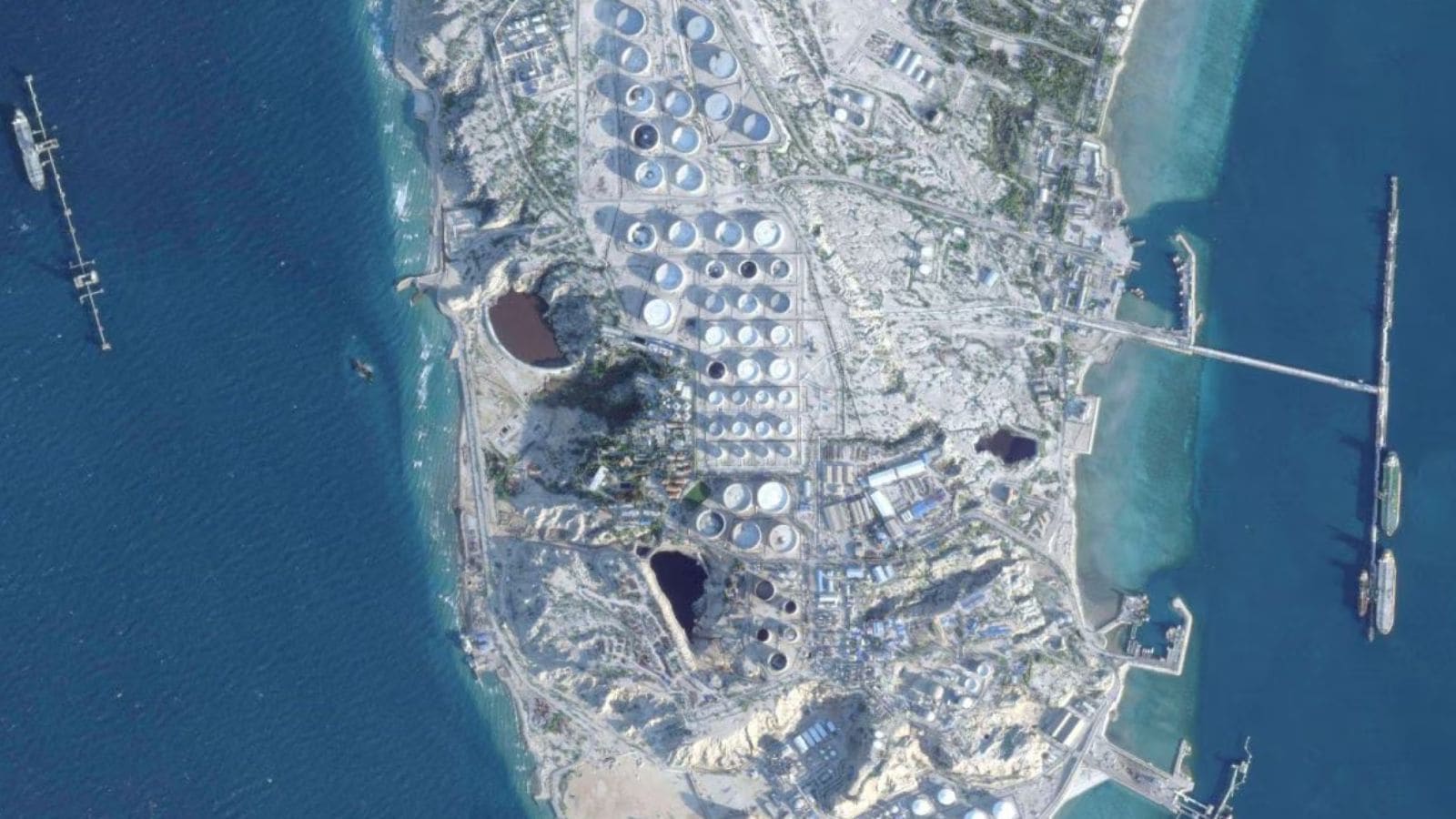
The shadow war just ended. When the US military reportedly hammered over 50 targets on Iran’s Kharg Island, the geopolitical rulebook didn't just get an update—it got shredded. For decades, Kharg Island has been the untouchable heart of Iran's oil economy. It handles roughly 90% of their crude exports. Targeting it was always the "red line" no one dared cross because of the global economic chaos it might spark.
That line is gone now. Meanwhile, you can explore related events here: The Brutal Truth Behind Australia’s Failed War on Mice.
This wasn't some minor skirmish or a symbolic warning shot. This was a systematic dismantling of Iranian military infrastructure on their most sensitive piece of real estate. If you’re trying to understand why this matters more than the usual back-and-forth in the Middle East, you have to look at what Kharg Island represents. It’s a fortress. It’s a piggy bank. And right now, it’s a smoking reminder that the old era of strategic patience is dead.
The Reality of the Kharg Island Strikes
Reports indicate the operation focused heavily on the military assets protecting the island rather than just the oil terminals themselves. That’s a sophisticated distinction. By hitting over 50 specific military targets, the US effectively stripped away the island's skin. Surface-to-air missile batteries, radar installations, and drone launch pads were reportedly the primary focus. To explore the bigger picture, we recommend the recent analysis by USA Today.
Think about the message that sends. The US demonstrated it can blind and deafen Iran's most vital economic hub whenever it wants. It’s the ultimate leverage. The sheer scale of hitting 50 targets in a single coordinated effort suggests a level of intelligence and precision that should make every commander in the Islamic Revolutionary Guard Corps (IRGC) lose sleep.
Most people think these strikes are just about "sending a message." They aren't. This was about capability reduction. When you take out 50 nodes of a defensive network, you aren't just talking; you're declawing. You're making it so the next time you decide to fly over, there's nothing left to shoot back.
Why This Hit Harder Than Previous Escalations
We’ve seen strikes in Syria. We’ve seen drone hits in Iraq. But Kharg Island is different because it’s sovereign Iranian soil of the highest value. This isn't a proxy fight anymore. By striking the island, the US moved from the periphery directly to the jugular.
Critics often argue that hitting such a vital spot will skyrocket oil prices and ruin the global economy. Yet, the markets didn't react with the "thousand-dollar-a-barrel" panic many predicted. Why? Because the world has quietly been preparing for Iranian oil to go offline for years. Between increased US production and shifts in global supply chains, the "oil weapon" Iran once held over the West has lost its edge. The US knew this. They called the bluff.
The Military Math Behind 50 Targets
You don't just stumble into 50 targets. An operation of this size requires months of satellite surveillance, electronic signals intelligence, and probably a few people on the ground with eyes on the prize.
The Layers of Iranian Defense
- Air Defense Systems: These were likely the first to go. You can't hit 50 targets if the S-300s are still active.
- Command and Control: Taking out the "brains" of the island's defense ensures that even if some units survived, they couldn't coordinate a counter-attack.
- Coastal Assets: Iran uses the island to monitor and harass shipping in the Persian Gulf. By destroying these stations, the US reopened the lanes for everyone.
The tech used here—likely a mix of stealth assets and long-range standoff munitions—proves that Iranian air defenses are far more porous than Tehran wants the world to believe. It’s one thing to boast about your "domestically produced" missile shields on TV. It’s another thing to watch them get vaporized in a single night.
The Misconception of Iranian Retaliation
Every time the US or its allies take a swing, the punditry screams about "Total War." They say Iran will close the Strait of Hormuz. They say they'll burn the region down. Here’s the thing: Iran isn't suicidal.
The IRGC knows that if they actually closed the Strait, they would lose the only customers they have left—China and India. They can't afford to alienate their only lifelines. Their retaliation is usually asymmetrical, targeting soft spots or using proxies to save face without triggering a full-scale invasion. But when the US hits 50 military targets on their crown jewel, the traditional "proxy response" looks weak. It puts the Iranian leadership in a corner where they have to choose between a fight they know they’ll lose or a silence that makes them look powerless to their own people.
What This Means for Regional Proxies
Groups like Hezbollah and the Houthis watch these events closely. Their entire strategy relies on the idea that Iran is a big, scary umbrella that will protect them if things get too hot. When that umbrella starts getting poked full of holes by 50-plus precision strikes, the proxies start to feel a bit naked.
If the US is willing to hit Kharg Island, there is nowhere else that is off-limits. Not the ports in Bandar Abbas, not the enrichment facilities, nothing. This strike resets the "deterrence" that everyone loves to talk about. Deterrence isn't about what you say; it's about what you’ve shown you’re willing to do.
The Economic Aftermath for Tehran
Let's be real: Iran's economy was already a mess. Inflation is a nightmare, and the rial is basically wallpaper. Kharg Island is the only thing keeping the lights on. While the US reportedly focused on military targets, the proximity to the oil infrastructure means insurance rates for any tanker brave enough to dock there just went through the roof.
Shipping companies don't like war zones. Even if the pumps are still working, if the island's defenses are gone, no commercial captain wants to be the one sitting at the pier when the next wave of missiles comes in. The US didn't have to blow up the oil tanks to stop the oil flow; they just had to make the island a liability.
Strategic Errors Iran Made
Iran played a high-stakes game of chicken and lost. They assumed the US wouldn't risk a direct hit on such a sensitive target because of the political fallout back home or the fear of a broader war. They miscalculated the current appetite for "unproportional" responses.
For years, the US responded to Iranian aggression with targeted sanctions or hitting a warehouse in the desert. That created a sense of "manageable risk" for Tehran. They thought they knew the price of doing business. The Kharg Island strikes changed the price. Now, the cost of provocation is the potential loss of their entire economic backbone.
Tactical Lessons for the Rest of the World
Other nations are taking notes. The effectiveness of this strike shows that high-end integrated air defense systems (IADS) aren't the invincible bubbles they’re marketed to be. If you have the right electronic warfare suite and enough precision-guided munitions, you can dismantle a fortress piece by piece.
It also highlights the importance of "intelligence preparation of the battlefield." To hit 50 targets and have them stay hit, you need a level of real-time data that most militaries simply don't have. This wasn't just a win for the US Air Force or Navy; it was a massive win for the intelligence community.
Navigating the New Middle East
If you're following this situation, stop looking for a "return to normal." There is no normal anymore. The strike on Kharg Island has established a new baseline for conflict in the region.
Expect more direct engagements. Expect the US to be less worried about "escalation" and more focused on "preemption." If you're an investor or a policy wonk, the takeaway is simple: the era of the shadow war is over. We’re in the era of the direct hit.
Keep an eye on the diplomatic channels, but don't expect much. When 50 targets go up in smoke, the talking usually stops for a while. The next few weeks will tell us if Iran has any cards left to play or if they're truly as vulnerable as this strike made them look. Monitor the movement of the US carrier strike groups in the area. If they stay, the pressure stays. If they leave, it's because they think the job is done—for now.



