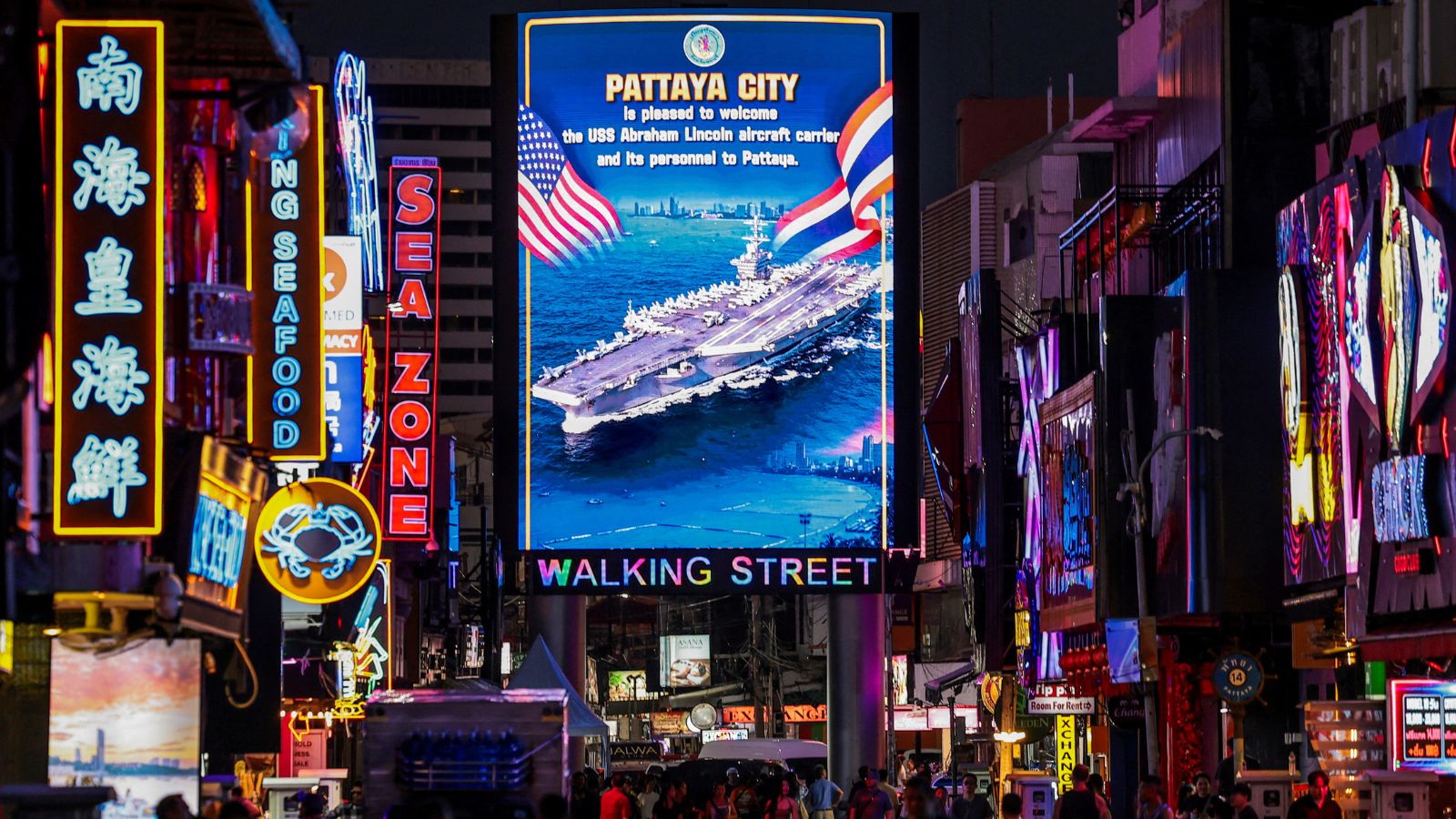
The nuclear-powered aircraft carrier USS Abraham Lincoln just pulled away from Thailand's Laem Chabang port, ending a brief five-day escape from relentless maritime duty. If you've been following naval news, you know this wasn't just another routine port call. This ship and its 5,000-strong crew spent 286 days continuously at sea. That is nearly ten straight months without a proper break, driven by high-stakes combat and blockade operations against Iran in the Middle East.
When the Lincoln docked near Pattaya, photos of its rust-streaked hull shocked observers, bringing public attention right back to the grueling reality of modern naval overreach. Now that the carrier has officially departed, let's look at what this visit actually meant for the crew, the local economy, and a strained military machine.
The Brutal Reality of a 286-Day Deployment
Standard US Navy deployments typically cap out at six to nine months. Breaking past that window creates immense pressure on both human psychology and mechanical hardware.
Before hitting Thailand, the Lincoln spent 264 consecutive days without setting foot in a port. Reports from families and lawmakers surfaced last month pointing to severe fatigue, low morale, and shortages of basic supplies like toothpaste and soap aboard the vessel.
When critics pointed out these crumbling conditions, political figures dismissed them as minor complaints. Yet, looking at the rust bleeding down the flight deck edges and waterlines, defense experts couldn't ignore the visible signs of strategic fatigue. Saltwater eats metal fast. Without stationary drydock time, crews simply cannot perform heavy corrosion control while navigating active combat zones.
What the Five-Day Respite in Pattaya Achieved
For the roughly 5,000 sailors and Marines on board, hitting dry land meant a chance to breathe. Pattaya's local authorities braced for an influx of thousands of military personnel by launching local security sweeps and ramping up police presence.
Despite initial anxieties about rowdy behavior, local police chief Anek Srathongyoo confirmed that the visit went remarkably smoothly. Aside from a minor drunken scuffle between a couple of sailors on Walking Street that required a brief police response, the port stay remained peaceful. Two sailors were sent back to the ship early, but otherwise, the massive crew dispersed peacefully into the local economy.
And that economy needed the bump. Arriving during Thailand's tourism low season, the American crew injected an estimated 100 million baht, roughly three million US dollars, directly into local businesses, hotels, and souvenir shops. Vendors sold everything from toothpaste to custom gifts as sailors rushed to stock up on personal items they had missed for months.
What Happens Next for the Strike Group
The departure from Laem Chabang port signals the end of the line for this specific leg of the Lincoln's historic deployment, but it also highlights a permanent challenge for the Pacific fleet. The USS George Washington has already stepped in to relieve the Lincoln in the Middle East theater, allowing the tired crew to finally steer back toward San Diego.
Naval dominance isn't just about how many aircraft a supercarrier can launch. It's about maintaining the steel and the mental health of the people inside the hull. As the Lincoln heads home, it leaves behind a clear lesson about the hidden costs of perpetual deployment.