Paper trails do not bleed. They do not gasp for breath in crowded emergency rooms, nor do they stand at the front of a crumbling classroom, calculating how many textbooks a single teacher can buy out of pocket before the month's rent becomes impossible. Paper trails are clean. They are stamped, filed, and neatly bound by bureaucrats who never have to look an auditor in the eye.
Ten million dollars. Expanding on this idea, you can find more in: Inside the Middle East Quagmire Nobody is Daring to Name.
Say it out loud. It rolls off the tongue with the effortless grace of a lottery payout. To an individual, it is an impossible galaxy of wealth, enough to buy homes, secure futures, and erase a lifetime of midnight worries. To a state government, ten million dollars is a drop in a vast ocean of ledgers. Yet, when that specific sum vanishes into the fog of administrative redirection, the splash is felt by the people who have the least protection against the tide.
Consider what happens when public funds wander away from their intended destinations. This is not a story about abstract accounting errors or dry spreadsheets. This is about trust. Experts at Reuters have provided expertise on this matter.
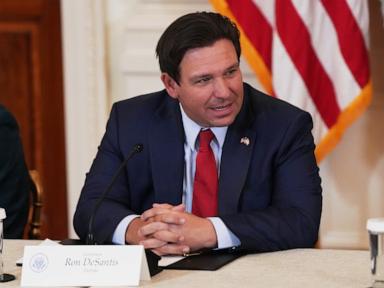
A grand jury recently delivered a sprawling reality check regarding the DeSantis administration in Florida. Their findings pointed to a grim truth: ten million dollars intended for specific public needs was misused. Millions of dollars shifted, filtered, and spent outside the boundaries of the law or public mandate.
And then came the legal silence. No charges filed.
That second half of the headline is where the public stomach turns. No charges. How does a sum large enough to fund community health clinics, repair storm-battered roofs, or pay the salaries of hundreds of educators evaporate without a single courtroom gavel falling?
To understand the weight of this, imagine watching someone borrow your car, wreck it against a telephone pole, and walk away because the local traffic court decided the keys were handed over ambiguously.
The mechanism of this misuse is wrapped in layers of bureaucratic prose. Officials speak of flexible funding pools, emergency transfers, and administrative discretion. These are polite words for shell games. When money is designated for one crisis, but quietly diverted to service another priority behind closed doors, the original victims are left stranded.
Let us look closely at how power works when accountability goes on vacation.
Power loves ambiguity. It thrives in the gray spaces between statutory mandates and executive orders. When an administration faces an urgent political problem, the temptation to borrow from Peter to pay Paul is nearly irresistible—especially when Peter cannot vote and Paul controls the microphones.
Every dollar has a heartbeat. When public funds are diverted, an invisible casualty occurs somewhere downstream. Maybe it is a mental health program that never opens its doors. Maybe it is a public safety initiative that lacks the staff to answer the phone on a Tuesday night.
The grand jury report documented how funds were shifted around like chips on a casino table. The mechanics involved bypassing legislative oversight, utilizing emergency declarations as permanent operating procedures, and treating public coffers like a private discretionary fund.
(Note: While the grand jury detailed these institutional failures and administrative abuses, the absence of criminal indictments highlights the massive chasm between ethical governance and prosecutable crime.)
That chasm is precisely what exhausts citizens.
We live in an era where cynicism is a survival skill. Every time a headline breaks about misused public funds, millions of people shrug, exhausted by the predictability of impunity. We are conditioned to expect the investigation, the sternly worded report, the flurry of cable news commentary, and then—nothing. The vanishing act completes itself.
Transparency is supposed to be the ultimate disinfectant, but sunlight only works if someone is willing to look at the floor.
When leadership treats public wealth as a slush fund, the social contract frays. It tells the single mother working two jobs to pay her property taxes that her contribution is treated with casual indifference by the people sitting in leather chairs downtown. It tells the small business owner struggling to comply with every granular regulation that the rules apply only to those without a title or an immunity clause.
We must ask ourselves what kind of community we are building when institutional accountability becomes optional.
The state level is where governance touches skin. Federal politics is theater, a distant soap opera played out on screens we can turn off. But state government fixes the roads we drive on, funds the hospitals where our parents die, and decides whether our children have clean water to drink. When millions of dollars from those very budgets are mishandled without legal consequence, the damage is not just financial. It is existential.
Look at the silence that follows.
No mugshots. No perp walks. Just a PDF file published on a Friday afternoon, hoping the weekend will swallow it whole. The machinery of state power protects its own, wrapping itself in legal justifications that ordinary citizens could never dream of deploying if they missed a single car payment.
Money tells the truth about our priorities.
If you want to know what a leader values, do not listen to the campaign speeches or the soaring rhetoric delivered beneath the flags. Look at the receipts. Follow the wire transfers. See where the safety nets were pulled taut and where they were deliberately allowed to fray.
Ten million dollars could have built something lasting. Instead, it built a monument to administrative cleverness and institutional cowardice.
The grand jury did its job. They looked at the ledgers, heard the testimony, and mapped the erosion of public trust. But the legal system stopped at the boundary line of indictment, leaving the rest of us to stare at the empty space where accountability used to live.
The paper trail ends here. The human cost does not.
Every unpunished misuse of public trust deposits a heavy stone into the collective soul of a state. Eventually, the weight becomes too great to ignore. Until then, the ledgers remain clean, the offices stay polished, and the quiet theft of public faith continues in plain sight.