Paper trails are rarely just paper. In the sterile hallways of the Department of Justice, they are weight. They are the physical manifestation of secrets that have curdled over decades, tucked into manila folders and digital archives that require specialized keys and high-level clearances to blink into existence. When the subject is Jeffrey Epstein, that weight becomes a gravitational pull, dragging the integrity of a dozen institutions toward its dark center.
The newest chapter in this long-running saga of silence doesn't take place on a private island or a high-rise in Manhattan. It unfolds in a courtroom, where a lawsuit now targets Matthew Whitaker, the man who once held the keys to the kingdom as the acting Attorney General. At the heart of the filing is a simple, devastating accusation: a failure to hand over the full, unvarnished truth of the Epstein files.
Silence has a price. For the survivors who have spent years shouting into the wind, that price is paid in the currency of sanity and closure. Every redacted line in a government document is a door slammed in the face of a woman who was promised that, eventually, the sun would hit every corner of the room.
The Gatekeeper and the Archive
Matthew Whitaker stepped into the role of acting Attorney General during a period of intense political friction. He wasn't just a lawyer; he was the temporary steward of every secret the United States government decided was worth keeping. Among those secrets sat the Epstein files—a collection of evidence, testimonies, and names that supposedly detailed a decade of systemic abuse and high-level complicity.
The lawsuit, filed by a non-profit dedicated to government transparency, suggests that the Department of Justice under Whitaker’s brief tenure failed to comply with federal records laws. Specifically, it alleges a refusal to release internal communications and documents related to the 2008 non-prosecution agreement. That agreement is the original sin of the Epstein case. It was a deal so lenient it defied logic, allowing a prolific predator to serve a brief sentence in a county jail with work release, while effectively shielding potential co-conspirators from federal heat.
Think of a document as a living memory. When the government refuses to release it, they aren't just protecting a "process." They are effectively lobotomizing the public record.
Why the 2008 Deal Still Burns
To understand why this lawsuit matters now, you have to look back at the Florida sun in 2008. Imagine a local prosecutor and a team of high-powered defense attorneys sitting across a table. On one side, you have mountains of evidence provided by local police—disturbing, detailed, and corroborated. On the other, you have a man with friends in every corridor of power from Silicon Valley to the Upper East Side.
The resulting deal didn't just fail the victims; it insulted them. It was a legal bypass that shouldn't have been possible. Years later, when Alexander Acosta—the man who oversaw that deal—resigned from his post as Labor Secretary, the world thought the lid was finally being pried off.
But lids don’t just stay off. They are held down by the weight of bureaucracy and the strategic use of "executive privilege" or "ongoing investigation" loopholes. The lawsuit against Whitaker claims that the DOJ has been sitting on the "complete" files, including the internal back-and-forth that would explain why that 2008 deal was ever signed.
We are looking for the "why." We are looking for the names that weren't Epstein's.
The Human Toll of Redaction
Statistics don’t cry. Legal filings don’t have nightmares. But the people behind them do.
Consider a hypothetical survivor—let’s call her Sarah. Sarah was sixteen when she was first brought into the Epstein circle. For years, she believed that the world was a hierarchy where people like her were fodder for people with private jets. When she finally spoke out, she was told the system would work. Then she watched as the 2008 deal happened. She watched as Epstein returned to his life of luxury. She watched as the files were locked away.
For Sarah, a redacted document isn't a legal necessity. It is a gaslighting tactic. It tells her that what she saw and felt is less important than the reputation of a former official or the "integrity" of a closed file.
The lawsuit against Whitaker represents a refusal to accept this status quo. It argues that the public has a right to know how its justice system was manipulated. If the DOJ was used as a shield for a predator, the people who held the shield need to be identified. Whitaker, as the acting head during a crucial period of record-keeping, is the focal point because he represents the institutional resistance to total transparency.
The Mechanics of Avoidance
How does a government agency "fail" to release files? It’s rarely a dramatic burning of evidence in a basement furnace. It’s much more mundane. It’s a series of missed deadlines. It’s an over-application of FOIA (Freedom of Information Act) exemptions. It’s a "missing" hard drive or a "misplaced" folder.
In this case, the legal challenge points toward a deliberate stagnation. The plaintiffs argue that the DOJ has the records, knows where they are, and simply chooses to keep the door locked. By naming Whitaker, the lawsuit seeks to personalize the accountability. It moves the blame from a faceless "department" to the individuals who were in the room when the decisions were made.
The legal system is built on the idea of discovery. But in cases involving the ultra-wealthy and the ultra-powerful, discovery often feels like trying to find a black cat in a dark room while the landlord is shouting that there is no cat at all.
A Pattern of Protection
This isn't an isolated incident. It is a pattern. Throughout the history of the Epstein investigation, there has been a recurring theme of "lost" opportunities. From the initial 2008 deal to the suspicious circumstances surrounding his death in a federal lockup, the story is defined by what we don't know.
Every time a new lawsuit is filed, a small crack appears in the facade. This specific action against Whitaker is a chisel aimed at that crack. It asks a fundamental question: Who is being protected?
If the files are as benign as the government claims, there would be no reason to fight their release with such vigor. The intensity of the resistance is usually a direct indicator of the sensitivity of the material. We aren't just talking about Epstein’s travel logs anymore. We are talking about the internal mechanics of the United States Department of Justice and whether it can be bought, bullied, or bargained into silence.
The Ghost in the Machine
The ghost of Jeffrey Epstein doesn't haunt a physical house. It haunts the credibility of the American legal system. As long as these files remain under lock and key, the suspicion remains that the law is not a blind goddess, but a creature with its eyes wide open, choosing who to spare and who to strike.
Matthew Whitaker’s role in this is as a representative of the transition. He held the baton for a moment in time, and the lawsuit alleges he used that moment to keep the curtains drawn. Whether he acted on his own volition or was following a pre-existing institutional momentum is almost secondary to the result: the truth remained hidden.
Truth is a corrosive substance for those who built their careers on secrets. It eats through the polish of a resume. It dissolves the comfort of a quiet retirement.
Beyond the Courtroom
While the lawyers argue over statues of limitations and administrative procedures, the cultural demand for transparency has reached a boiling point. We live in an era where the public is no longer satisfied with "trust us." The Epstein case shattered that trust.
This lawsuit is a symptom of a larger movement—a demand for a forensic accounting of power. It’s about more than one man’s failure to release a few boxes of paper. It’s about the realization that if we don't know the full story of how Epstein happened, we cannot prevent the next version of him from rising.
Power without accountability is just a different word for a crime.
The files exist. They are sitting in a temperature-controlled room or on a secure server, their digital bytes holding the echoes of lives shattered and deals struck in the dark. The lawsuit against Whitaker is an attempt to turn on the lights.
Eventually, the shadows have nowhere left to go. The survivors are still waiting. The public is still watching. And the files, despite every effort to bury them, remain a permanent record of what happens when justice decides to look the other way.
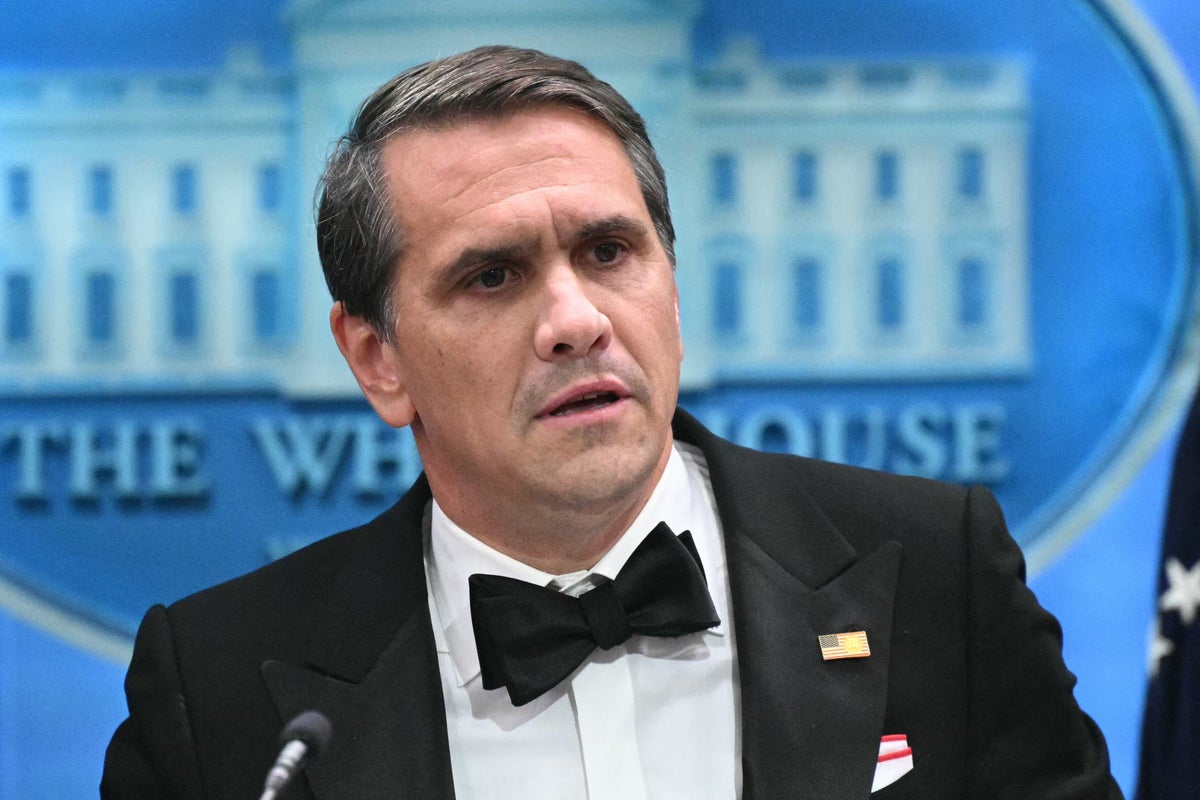
A man stands at a podium and speaks of the rule of law. Behind him, a door is locked. The key is in his pocket. The lawsuit is the sound of someone knocking on that door, louder and louder, until the wood begins to splinter.