Venezuela opposition leader María Corina Machado has returned to Venezuelan soil after spending months in forced exile, stepping straight back into the crosshairs of a regime that has spent years trying to erase her from public life. Her decision is not merely a symbolic homecoming or a photo opportunity for international observers. It is a calculated, high-stakes wager designed to shatter the political paralysis gripping Caracas, force a fractured opposition back into street-level mobilization, and test the real limits of the security apparatus loyal to Nicolás Maduro before international attention drifts permanently elsewhere.
The return catches diplomatic circles in a familiar bind. For months, foreign ministries in Washington, Brussels, and neighboring Latin American capitals have treated the Venezuelan crisis as a slow-burning file to be managed through periodic sanctions reviews and stalled negotiation frameworks. By physically re-entering the country, Machado has stripped away the comfortable distance that allowed both international mediators and domestic political rivals to treat her movement as an abstract government-in-waiting. She is back on the ground, where every rally, every checkpoint, and every arrest carries immediate, irreversible consequences.
The Geography of Exile and the Trap of Distance
Political exile has a predictable lifecycle in Latin America. First comes the dramatic departure, usually framed as a tactical retreat to preserve personal safety and rally international support. Next comes the circuit of think tanks, parliamentary hearings, and diplomatic luncheons. Finally, almost inevitably, comes irrelevance.
Machado watched that exact script play out during the collapse of the interim government experiment led by Juan Guaidó years earlier. When an opposition movement operates primarily from Miami, Madrid, or Bogotá, its connection to the daily survival struggles of ordinary Venezuelans frays. Inflation, rolling blackouts, decaying hospitals, and localized extortion by armed collectives become talking points in foreign briefings rather than lived realities shared with voters.
Stay away too long, and you stop being a leader. You become a lobbyist.
During her months abroad, Machado faced an acute version of this trap. While her absence kept her out of the notorious El Helicoide prison, it also created a vacuum inside Venezuela that the ruling United Socialist Party of Venezuela (PSUV) eagerly exploited. State media portrayed her as an absentee agitator enjoying foreign protection while urging working-class Venezuelans to bear the brunt of economic isolation and street repression. Simultaneously, quieter voices within the broader opposition coalition began floating accommodation strategies—proposals to accept partial electoral compromises or localized power-sharing deals that would effectively sideline her uncompromising platform.
Her return obliterates that narrative overnight. By placing her physical freedom directly on the line, she reclaims moral authority over the opposition base and forces hesitant allies to choose between active confrontation and open capitulation.
Inside the Regime Calculation
To understand why Machado was able to cross back into the country—or why the state has not immediately neutralized her—one has to look past the monolithic image the Maduro government projects to the outside world. The Venezuelan state is not a single, seamless machine. It is a tense coalition of military commanders, intelligence chiefs, civilian bureaucrats, and regional power brokers, all balancing personal survival against institutional loyalty.
Arresting a figure of Machado’s stature carries massive asymmetric risks for Miraflores Palace.
If security forces detain her immediately upon arrival, they risk igniting spontaneous, leaderless protests across working-class neighborhoods that have historically served as Chavista strongholds—areas where economic despair has already eroded ideological loyalty to the breaking point. Worse, a high-profile arrest hands immediate ammunition to hardliners in the United States Congress and European Parliament, instantly freezing quiet backchannel talks over oil licenses, debt restructuring, and diplomatic normalization.
Conversely, allowing her to move freely inside the country exposes the regime’s vulnerability. Every town square she enters and every crowd that gathers around her vehicle publicly demonstrates that the state’s monopoly on fear is broken.
The Intelligence Tightrope
The Venezuelan intelligence apparatus, anchored by the Bolivarian National Intelligence Service (SEBIN) and the General Directorate of Military Counterintelligence (DGCIM), relies heavily on preemptive disruption rather than mass confrontation. Their standard playbook involves:
- Targeted detentions of mid-level campaign coordinators, drivers, and local logistics organizers to paralyze movement without creating a single martyr.
- Administrative suffocation, including freezing bank accounts, revoking passports, and threatening hotel owners or transport operators who provide services to opposition figures.
- Information blackouts, using state telecommunications regulator CONATEL to block independent news portals and throttle social media livestreams during key gatherings.
By returning now, Machado is forcing these agencies to show their hand. If they escalate to direct physical detention against her, they confirm every accusation of authoritarian entrenchment. If they rely solely on peripheral harassment, she retains the space to organize.
Why International Leverage Was Failing
A central, uncomfortable truth behind Machado’s return is that external pressure had hit a wall. For years, opposition strategy rested heavily on the assumption that coordinated diplomatic isolation and targeted economic sanctions would eventually fracture the ruling coalition from the top down.
That theory failed to account for how thoroughly the Venezuelan economy adapted to isolation. Through informal dollarization, opaque maritime oil networks, and deepened commercial ties with sanctioned states like Iran and Russia, the ruling elite built an insulated financial ecosystem. Sanctions hurt the broader population and complicated state budgeting, yet they rarely threatened the personal liquidity or security guarantees of top military brass.
Meanwhile, geopolitical priorities shifted. Energy security concerns following global supply disruptions forced Western governments into pragmatic recalculations regarding Venezuelan crude reserves. Migration pressures at the U.S. southern border and across Colombia, Peru, and Chile turned regional leaders into reluctant pragmatists desperate for any arrangement that might slow the exodus of millions of Venezuelans.
In that diplomatic climate, an opposition leader operating from abroad has virtually zero leverage. Foreign capitals listen politely, issue statements of concern, and continue negotiating behind closed doors with the people who actually control the territory and the oil fields.
Machado recognized that the only currency capable of altering the diplomatic math is undeniable domestic political power. Foreign governments will ignore an exiled spokesperson, but they cannot ignore a leader who can demonstrably command the streets of Caracas, Maracaibo, and Valencia in real time.
The Fractures Within the Opposition
It would be naive to view Machado’s return solely as a battle against Nicolás Maduro. It is equally a battle for control over the opposition itself.
For over two decades, the anti-Chavista movement has been plagued by deep strategic divisions between two camps:
- The Maximalists, who argue that any participation in institutions controlled by the ruling party merely legitimizes dictatorship, and that only sustained civic pressure combined with total political overhaul can succeed.
- The Incrementalists, comprising traditional political parties, regional governors, and business chambers that favor participating in flawed elections, securing municipal footholds, and negotiating gradual openings.
During Machado’s months outside the country, the incrementalist wing gained quiet momentum. Several veteran opposition figures argued behind closed doors that with the primary leader absent, the movement needed to pivot toward pragmatic engagement with state institutions to survive.
Machado’s sudden reappearance ends that debate before it can solidify into policy. Her entire political brand—built through her organization Vente Venezuela and validated by overwhelming support in opposition primaries—rests on a refusal to play by rules written by the ruling party. By returning without asking permission, without a negotiated safe-conduct pass, and without toning down her rhetoric, she has reasserted absolute dominance over the opposition’s strategic direction. Rival factions now face a stark reality: fall in line behind her mobilization strategy, or risk being branded as collaborators by an electorate that has grown fiercely intolerant of political compromises.
What Actually Happens on the Ground
Strip away the diplomatic statements and cable news commentary, and the immediate reality facing Machado is brutal and logistical. Operating inside Venezuela without state protection means navigating a landscape where the law is applied selectively and infrastructure is failing.
Her team cannot rely on commercial airlines, major broadcast networks, or traditional campaign financing. Movement across states requires unmarked vehicles, rotating safe houses, and encrypted communications networks constantly under surveillance. When she arrives in a provincial town, local organizers face immediate intimidation—tax inspections on family businesses, sudden utility cutoffs, and threats of arrest against relatives.
Yet this friction is precisely what makes her presence potent. In a country where cynicism toward all politicians runs deep, physical courage remains the single most persuasive political argument. Voters who have grown weary of manifestos and press conferences pay close attention when a leader shares the exact same checkpoints, power outages, and security risks that define their own lives.
The Hypothetical Flashpoint Scenario
To understand the volatility of the coming weeks, consider a realistic operational scenario that security analysts in the region are watching closely. Suppose Machado announces a major rally in an industrial belt outside Caracas—an area historically loyal to Chavismo where public sector workers have recently staged wildcat strikes over unpaid bonuses.
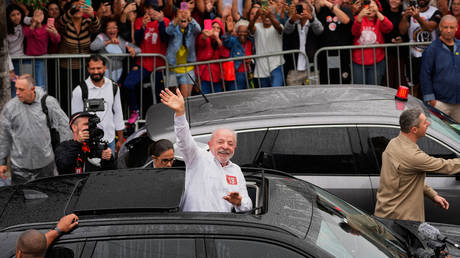
If local police block the main highway with armored vehicles, Machado does not need to breach the barricade to win the day. Simply stepping out of a vehicle, walking past the cordon on foot, and speaking through a megaphone to a crowd of frustrated workers creates an image that bypasses state censorship entirely. Citizen journalists upload the footage via satellite links and mesh networks within minutes. At that point, the local military commander faces an impossible choice: order troops to physically assault an unarmed woman surrounded by cameras and former Chavista supporters, or stand down and watch the state’s authority evaporate on live video.
Multiply that dynamic across twenty states, and the strategic logic of her return becomes crystal clear.
The Limits of Charisma Against Institutional Control
Still, romanticizing the return carries its own analytical danger. History offers plenty of examples where moral courage and massive street crowds failed to dislodge an entrenched authoritarian apparatus willing to absorb international condemnation.
Control over the Venezuelan state ultimately rests on three pillars: the armed forces, the judiciary, and the state oil company PDVSA. None of those institutions respond automatically to street protests alone. For street mobilization to translate into actual political transition, it must eventually fracture the internal calculus of the military high command—convincing mid-level officers and generals that defending the status quo carries a higher personal cost than negotiating an exit.
That threshold has not been crossed. The top brass of the Bolivarian National Armed Forces (FANB) remains tightly bound to the ruling structure through command promotions, control over key economic sectors including mining and food distribution, and shared legal exposure to international investigations. A crowded plaza in Caracas proves that Machado has the people; it does not prove that she has cracked the barracks.
Moreover, sustained street mobilization exacts a heavy toll on ordinary citizens. In an economy where a huge percentage of the population lives hand-to-mouth in the informal sector, taking a day off work to attend a protest means forfeiting daily income. Keeping that energy alive over months—rather than days—requires organizational discipline, financial resilience, and clear milestones that the opposition has repeatedly struggled to maintain in past cycles.
The Diplomatic Domino Effect
Despite those structural hurdles, Machado’s presence back in Venezuela immediately forces a recalibration in foreign capitals that had grown comfortable with inaction.
In Washington, policymakers who favored quiet engagement with Caracas now face renewed pressure from lawmakers demanding concrete benchmarks for democratic guarantees and personal safety protections for opposition leaders. Any move by Venezuelan authorities to detain Machado would make it politically impossible for the White House to justify maintaining existing sanctions waivers or expanding energy sector licenses.
In Latin America, left-leaning leaders who have tried to position themselves as neutral mediators—most notably Brazil’s Luiz Inácio Lula da Silva and Colombia’s Gustavo Petro—find their diplomatic tightrope narrowing. Both leaders have staked significant regional credibility on coaxing Caracas toward credible political standards without resorting to isolation. If Machado is imprisoned or harmed while on Venezuelan soil, Bogotá and Brasília will be forced either to break openly with Maduro or suffer severe domestic and international backlash for enabling repression on their doorstep.
Even European Union officials, often divided over how aggressively to engage Latin American crises, face a sharper binary. You cannot easily preach institutional dialogue when the primary figure representing millions of voters is actively hunted by the state she just re-entered.
A Wager With No Safety Net
María Corina Machado has eliminated every exit ramp for herself, for her allies, and for the government in Caracas. By refusing the relative comfort of exile and stepping back into a territory where she holds no institutional immunity, she has transformed a stagnant diplomatic dispute into an acute, daily test of political will.
Whether this gamble triggers a genuine political opening or ends inside a prison cell depends entirely on what happens in the streets over the next ninety days. If ordinary Venezuelans match her risk by showing up in numbers too large for local security forces to contain, the balance of power in Caracas will shift permanently. If fear and exhaustion keep the streets quiet, the state will wait for the headlines to fade and close the trap quietly.
She has put her freedom on the table; now the rest of the country has to decide what it is willing to stake beside her.