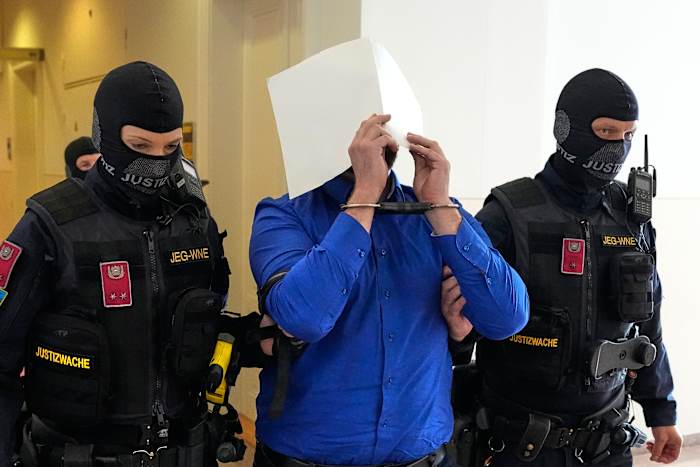
The intersection of massive cultural congregative events and decentralized digital radicalization has created a novel security bottleneck. The August 2024 plot to attack Taylor Swift’s "Eras Tour" in Vienna serves as a case study in modern threat architecture: the exploitation of low-barrier-to-entry weaponry combined with high-velocity extremist recruitment. When an 19-year-old Austrian citizen of North Macedonian descent confessed to plotting a mass-casualty event using explosives and knives, he revealed a vulnerability in European counter-terrorism protocols. This vulnerability stems from the transition from organized cell-based operations to individualized "plug-and-play" radicalization models.
The Recruitment Vector: Algorithmic Radicalization Dynamics
The suspect's trajectory from a standard digital user to an ISIS-pledged operative followed a compressed timeline that modern security frameworks struggle to interrupt. This process is governed by a Tri-Phase Radicalization Model:
- Isolation and Echo-Chamber Ingress: Digital platforms utilize recommendation engines that prioritize engagement. For individuals predisposed to fringe ideologies, these algorithms create a self-reinforcing loop. The suspect’s engagement with extremist content was not a series of random events but a directed path facilitated by algorithmic amplification.
- The Digital Bay’ah: The act of swearing allegiance (Bay’ah) to the Islamic State has shifted from a physical rite to a digital declaration. This lowers the psychological barrier to entry. By recording a video pledge, the individual transitions from a consumer of content to a self-perceived stakeholder in a global insurgency, even without direct human contact from the organization’s leadership.
- Operational Shift: In the Vienna case, the suspect underwent a rapid transformation in outward behavior—quitting his job and altering his physical appearance—which signaled the move from ideology to execution.
Current counter-terrorism efforts are often reactive, focusing on the third phase when physical indicators become visible. The bottleneck exists in the first two phases, where the volume of digital data exceeds the capacity of human intelligence (HUMINT) monitoring.
The Logistics of Localized Threat Actors
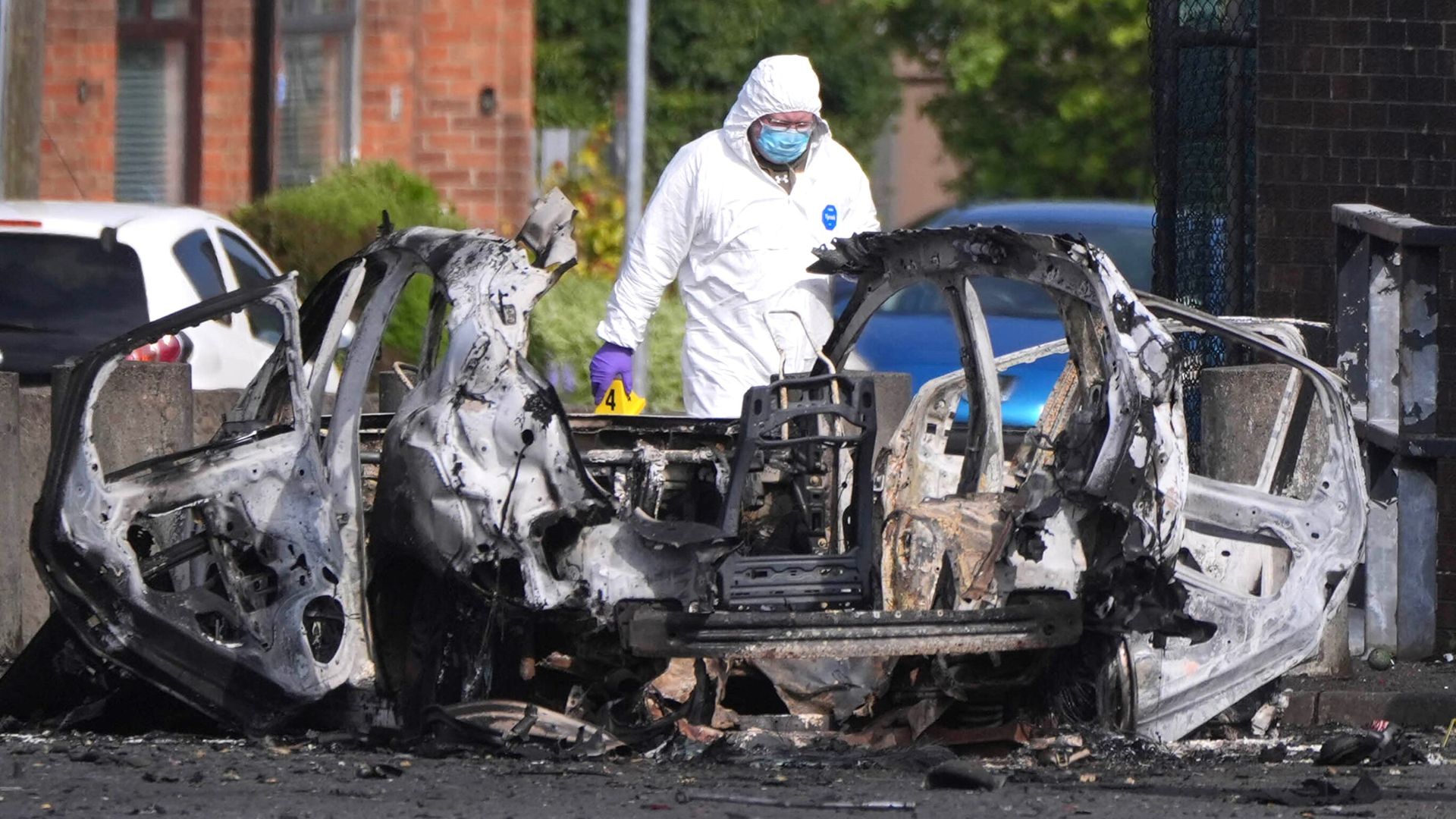
The Vienna plot utilized a Distributed Capability Framework. Unlike the sophisticated, multi-national logistics required for the 2015 Paris attacks, the Vienna suspect relied on localized procurement. The materials seized at his residence in Ternitz—including chemical substances, detonators, and technical instructions for bomb-making—represent a significant shift in threat profiles.
The "Cost Function" of a localized attack is remarkably low.
- Knowledge Acquisition: Instructional manuals for TATP (Triacetone Triperoxide) synthesis are readily available on encrypted channels.
- Material Procurement: Household chemicals and industrial precursors are difficult to regulate without disrupting legitimate commerce.
- Personnel: The suspect’s accomplice, a 17-year-old employed by a facility service provider working at the Ernst Happel Stadium, provided internal access.
This internal access variable is the most critical failure point in the security stack. When the threat actor is part of the logistical infrastructure—the very people hired to secure or service the venue—traditional perimeter defense becomes secondary to insider threat detection.
The Economic and Cultural Calculus of Targeted Disruption
Taylor Swift’s "Eras Tour" is not merely an entertainment event; it is a massive economic engine. The cancellation of three sold-out shows in Vienna resulted in an immediate loss of revenue for the local hospitality, transport, and retail sectors, estimated in the tens of millions of euros. However, the secondary objective of the threat actor was the Psychological Market Shock.
Terrorist strategy against large-scale cultural events targets the "Soft Target Density." By threatening a venue with 65,000 internal attendees and an additional 15,000 to 20,000 fans gathered outside the stadium (a phenomenon known as "Taylor-gating"), the suspect identified a high-return target for terror-based ROI. The density of the crowd outside the stadium creates a vulnerability that is harder to manage than the ticketed interior. Security perimeters are finite; the crowd’s enthusiasm is not.
The decision by Barracuda Music to cancel the events highlights the Risk-Aversion Paradox in modern event management. While Austrian authorities stated they had "minimized the risk" through arrests, the organizers determined that the residual risk—the possibility of remaining unknown accomplices—exceeded the threshold for public safety. This reveals a shift in security philosophy: we are moving from a "detect and defend" model to a "preempt or cancel" model.
Institutional Failures and Foreign Intelligence Interdependence
The detection of the Vienna plot did not originate from domestic Austrian surveillance but from foreign intelligence services, likely the United States. This indicates a Structural Information Deficit within smaller European security apparatuses.
The limitations of the Austrian intelligence community (DSN) are twofold:
- Legislative Constraints: Austrian law historically limits the surveillance of encrypted messaging services compared to five-eyes nations.
- Operational Silos: The suspect’s ability to build a chemical laboratory in a residential area without triggering local law enforcement alerts suggests a breakdown in community-level monitoring and chemical sale tracking.
The reliance on U.S. intelligence suggests that the "Signal-to-Noise" ratio in European domestic security is currently imbalanced. Without external intervention, the Austrian authorities might not have identified the Ternitz cell until the point of detonation.
Technical Analysis of the TATP Precursor Loophole
The suspect focused on TATP, a volatile explosive favored by decentralized actors because it does not require nitrogen-based fertilizers, which are highly monitored. TATP is synthesized using acetone, hydrogen peroxide, and a strong acid—all of which are common industrial or household agents.
The Synthesis Barrier for TATP is low, but its stability is extremely poor. The discovery of 50% hydrogen peroxide at the suspect’s home indicates a high level of intent and a specific stage of the "Attack Lifecycle." At this concentration, the chemical is no longer a household cleaner; it is a military-grade precursor. The failure to flag the acquisition of these precursors represents a gap in the supply-chain monitoring of chemical distributors.
The Security Infrastructure of the Ernst Happel Stadium
Securing a venue like the Ernst Happel Stadium involves three distinct rings of operation:
- The Outer Ring: Traffic control and public space monitoring.
- The Middle Ring: Security checkpoints and ticket validation.
- The Inner Ring: Venue staff, backstage security, and VIP protection.
The presence of a radicalized 17-year-old within the "Inner Ring" (facility services) renders the Middle and Outer rings obsolete. This individual had the capability to bypass metal detectors and physical searches. Future security audits for high-capacity events must prioritize Continuous Vetting Protocols for all temporary and contract staff. Static background checks performed at the time of hire are insufficient to detect rapid radicalization cycles that occur in the weeks leading up to an event.
The Geopolitical Context: Balkan Recruitment Corridors
The suspect’s background connects to a broader geopolitical trend: the radicalization of the diaspora from the Western Balkans. While the suspect was born in Austria, his ideological alignment reflects a persistent recruitment effort by IS-K (Islamic State Khorasan Province) and related entities targeting youth with ties to North Macedonia, Kosovo, and Albania.
This is a Legacy Conflict Variable. The instability and extremist networks established during the Balkan conflicts of the 1990s have evolved into digital recruitment pipelines. For Austrian security forces, this means the threat is not just domestic but linked to a trans-European network of extremist cells that use the Balkans as a logistical and ideological transit point.
The Strategic Shift in Public Assembly Defense
The Vienna plot necessitates an overhaul of how "Soft Targets" are defined and protected. We are seeing a move toward Algorithmic Security Deployments:
- Real-Time Data Integration: Using AI to monitor social media spikes and localized digital chatter in the immediate vicinity of tour dates.
- Biometric Perimeter Control: Moving beyond physical tickets to facial recognition and behavioral analytics for all stadium personnel.
- Precursor Tracking 2.0: Implementing mandatory reporting for the sale of specific concentrations of hydrogen peroxide and acetone, cross-referenced against watchlists in real-time.
The "Eras Tour" plot was a failure of the attacker, not a success of a localized system. It was saved by the global intelligence web. For the live entertainment industry to remain viable under the threat of decentralized terror, the burden of security must shift from the venue to the state’s digital and chemical surveillance infrastructure.
The immediate strategic requirement for event organizers is the implementation of a Tiered Insider Threat Program. This involves the mandatory use of specialized security firms that conduct deep-web and social media sentiment analysis on all contractors who have access to the Inner Ring of a venue. Traditional background checks are a 20th-century solution to a 21st-century problem; the new standard must be a dynamic, ongoing assessment of an employee’s digital footprint. Failure to adapt this logic will result in the continued cancellation of high-value cultural assets, as the risk of "the unknown operative" becomes a permanent fixture of the modern event landscape.