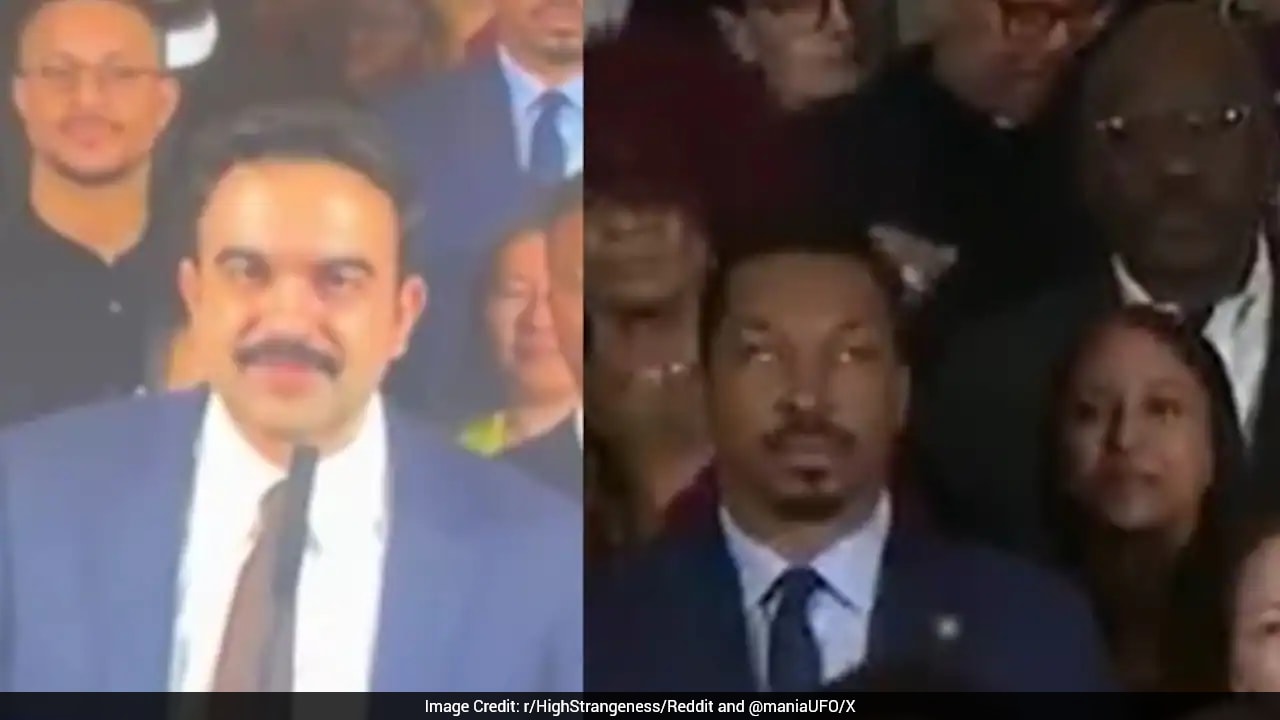
Social media algorithms reward outrage. That much is obvious. Yet when a brief clip of an attendee's unusual eye movement during a Zohran Mamdani speech went viral, mainstream outlets treated it like a quirky internet sideshow. They framed it as a bizarre, isolated flare-up of online conspiracy culture—something to gawk at, briefly debunk, and scroll past.
That framing misses the entire point.
According to media researchers and digital misinformation analysts, viral micro-clips taken out of context are rarely just spontaneous jokes. They function as low-cost, high-yield political distractions that exploit basic human biology, algorithmic amplification, and deep-seated public distrust. When commentators dismiss these moments as mere "internet weirdness," they fail to explain why audiences fall for them—and how political discourse gets derailed in the process.
The Biology Behind the Blink
Most people watching a compressed, low-resolution video on a phone screen are primed to look for anomalies. Neuroscientists and vision researchers have long documented how involuntary eye movements—such as nystagmus, fatigue-induced ocular flutter, or simple reactions to bright stage lighting—occur naturally in everyday life.
Under harsh camera flashes or crowded event lighting, the human eye makes rapid, involuntary adjustments. When captured at 24 or 30 frames per second and cropped tightly around a single face in the background of a political rally, a completely normal physiological reflex suddenly looks unnatural.
Digital forensics experts point out two technical realities that fuel these illusions:
- Frame-rate distortion: Standard video compression drops micro-frames between movements, making a normal glance or blink appear jerky or mechanical.
- Pareidolia and pattern-seeking: Cognitive psychologists note that the human brain is wired to detect threats and anomalies in facial expressions, often assigning intent or malice where none exists.
Why Political Clips Become Conspiracy Fuel
When a video involves a polarizing or high-profile political figure like New York State Assemblymember Zohran Mamdani, the threshold for viral speculation drops to zero. Political communication scholars emphasize that partisan audiences actively scan opposition events for anything that can be weaponized—whether a verbal slip, an awkward crowd reaction, or an out-of-context background gesture.
The mechanics of online conspiracy theories follow a predictable cycle:
- Extraction: A three-second clip is stripped of its audio, setting, and wider camera angle.
- Framing: An anonymous account reposts the clip with a suggestive caption asking "What is going on here?"—a classic tactic known as "just asking questions" that avoids making a direct, falsifiable claim while planting suspicion.
- Amplification: Engagement-driven recommendation engines boost the post precisely because users pause to replay the clip, zoom in, and argue in the comments.
- Mainstream Echo: News aggregators cover the "online buzz," inadvertently giving the baseless theory far wider reach than the original post ever had.
The Real Cost of "Harmless" Distractions
Critics of superficial viral coverage argue that the primary damage of these conspiracy theories is not that millions of people genuinely believe a background bystander is a reptilian, a hologram, or an undercover operative. The real damage is attention displacement.
Every hour spent dissecting a bystander's blinking pattern is an hour not spent examining actual policy proposals, legislative records, or substantive political disagreements. Political strategists across the ideological spectrum recognize that trivial spectacles crowd out serious debate. Meanwhile, individuals who happen to stand behind a podium at a public event face sudden, unwarranted harassment and doxxing from online sleuths trying to "identify" them.
There is a legitimate flip side to public skepticism: audiences have grown rightfully wary of manipulated media, deepfakes, and heavily choreographed political appearances. Pretending that public distrust comes out of nowhere ignores years of genuine media failures and institutional missteps. However, channeling healthy skepticism into baseless scrutiny of strangers' faces does nothing to hold institutions accountable.
How to Read Viral Political Clips
Navigating modern political media requires rejecting both naive gullibility and knee-jerk paranoia. Media literacy advocates recommend a strict baseline before sharing or reacting to any viral anomaly:
- Check the uncropped source: Never judge a clip that lacks wider spatial context or original audio.
- Look for mundane explanations first: Fatigue, medical conditions, bright lights, and video compression account for virtually every "unexplained" physical tic on camera.
- Watch the framing, not just the footage: Notice when captions use leading questions designed to trigger curiosity and outrage rather than provide verifiable facts.
Viral conspiracy theories do not thrive because people are uniquely foolish; they thrive because modern platforms monetize confusion faster than facts can catch up. Treating a manufactured spectacle around a political speech as mere entertainment only guarantees the next three-second clip will work just as well.