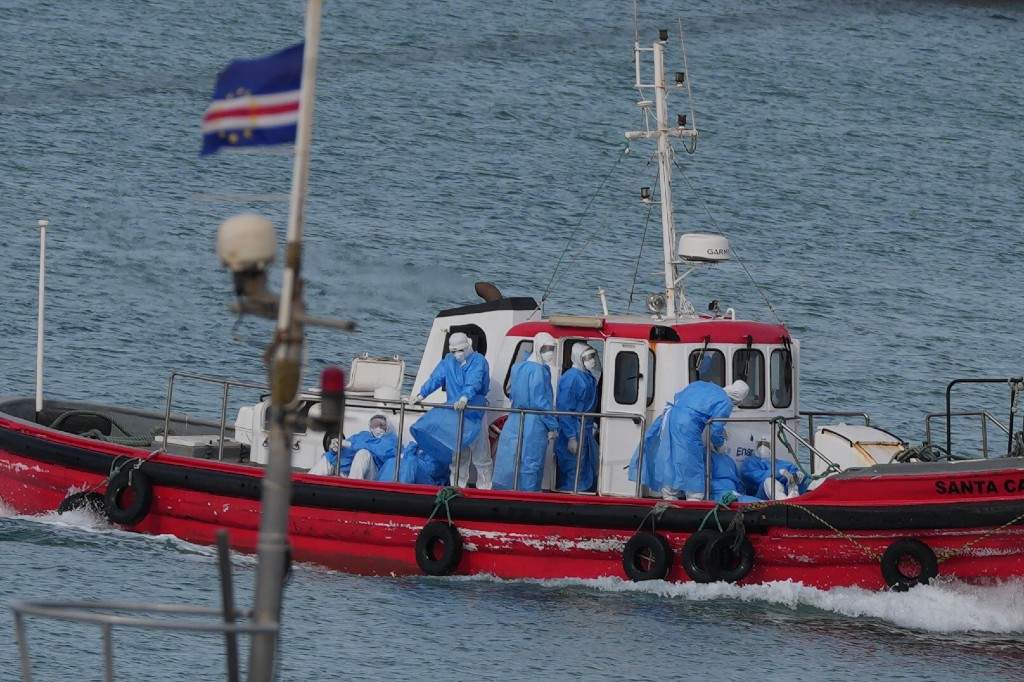
The shift from zoonotic spillover to human-to-human transmission represents a fundamental change in the risk profile of any pathogen. While most Hantaviruses operate within a strict "dead-end host" logic—where the virus enters a human but cannot exit effectively to infect another—the Andes orthohantavirus (ANDV) deviates from this pattern. The recent exposure of 62 individuals following a confirmed case is not a statistical anomaly; it is a manifestation of specific viral proteins and social proximity factors that create a unique transmission window. Understanding the threat requires moving past sensationalist reporting toward a structural analysis of viral shedding, the basic reproduction number ($R_0$) in localized clusters, and the physiological barriers that usually prevent such outbreaks.
The Triad of Hantavirus Transmission Logic
To analyze the risk posed by ANDV, one must categorize the transmission cycle into three distinct phases. Most Hantaviruses, such as the Sin Nombre virus common in North America, fail to progress past the first phase. Recently making news in related news: The Price of a Second Chance.
- Primary Zoonotic Spillover: This is the traditional route. Humans inhale aerosolized excreta (urine, feces, saliva) from infected rodent reservoirs, typically the long-tailed pygmy rice rat (Oligoryzomys longicaudatus). The virus enters the lungs, targeting endothelial cells.
- Secondary Intraspecies Adaptation: In the case of ANDV, the virus exhibits a rare capacity for inter-human transfer. This occurs during the prodromal phase or early symptomatic stage. Unlike respiratory viruses that rely on high-volume coughing (droplet nuclei), ANDV transmission is linked to intimate or prolonged contact, suggesting a requirement for high viral loads in bodily fluids.
- Tertiary Cluster Expansion: Once the virus moves from "Index Case" to "Contact A," the risk shifts to healthcare workers and family units. The "62 feared exposed" metric indicates the breadth of the contact tracing net required when the barrier between phase one and phase two is breached.
Structural Deviations in Andes Orthohantavirus
The biological mechanism that allows ANDV to spread between humans while its cousins cannot is rooted in the viral glycoprotein structure. Specifically, the Gn and Gc surface proteins facilitate entry into human cells by binding to $\beta_3$ integrins.
Research indicates that ANDV may achieve higher titers in the upper respiratory tract or persist in saliva more effectively than other strains. This creates a "shedding window" that aligns with the onset of fever. The pathology of Hantavirus Cardiopulmonary Syndrome (HCPS) is characterized by a "vascular leak" where the immune response causes capillaries to become permeable, flooding the lungs with fluid. In ANDV cases, the presence of the virus in the blood (viremia) and potentially in respiratory secretions during this leaky phase provides the physical medium for transmission. More insights into this topic are explored by World Health Organization.
Quantifying the Exposure Net
The reported number of 62 exposed individuals serves as a denominator for calculating the secondary attack rate (SAR). In epidemiological modeling, SAR is defined as:
$$SAR = \frac{\text{Number of new cases among contacts}}{\text{Total number of at-risk contacts}} \times 100$$
Historical data from outbreaks in Argentina and Chile suggest that ANDV has a low but significant $R_0$ in household settings, often calculated between 0.7 and 1.2. If the $R_0$ stays below 1.0, the outbreak will naturally fizzle out. However, "superspreader" events—often defined by one individual infecting more than eight others—can temporarily push the local $R_0$ well above the epidemic threshold. The 62 individuals currently under monitoring represent the "at-risk" population that will determine if this specific strain has undergone further mutational adaptation toward increased transmissibility.
The Prodromal Bottleneck
The primary challenge in containing ANDV is the "Prodromal Bottleneck." The initial symptoms—fever, myalgia, and gastrointestinal distress—are indistinguishable from common influenza or other endemic fevers.
- The Diagnostic Gap: During the first 3 to 5 days, the patient is often ambulatory and socially active, yet they are already potentially infectious.
- The Critical Pivot: The transition to the "Cardiopulmonary Phase" happens rapidly, often within hours. Once the patient enters respiratory distress, they are usually hospitalized, which shifts the transmission risk from the community to the clinical environment.
- The Asymptomatic Variable: A significant unknown in the current exposure of 62 people is the rate of subclinical or asymptomatic infection. If a portion of these individuals carries the virus without manifesting HCPS, they become "silent" links in the transmission chain, complicating containment efforts.
Clinical Realities and the Case Fatality Rate
The clinical severity of ANDV cannot be overstated. Unlike more common viral infections, the Case Fatality Rate (CFR) for Hantavirus Cardiopulmonary Syndrome typically ranges from 25% to 40%. The pathophysiology is not a result of direct viral destruction of tissue, but rather an "immuno-pathogenic" event. The body's T-cell response to the infected endothelium is so aggressive that it triggers the massive capillary leak mentioned earlier.
The strategy for those 62 exposed must focus on early detection of the viral genome via RT-PCR (Reverse Transcription Polymerase Chain Reaction) before the immune system triggers the catastrophic pulmonary phase. Current medical protocols offer no specific antiviral cure; treatment is restricted to "supportive care," which frequently involves extracorporeal membrane oxygenation (ECMO) to oxygenate the blood mechanically while the lungs are incapacitated.
The Logistics of Containment and Monitoring
When 62 people are flagged for exposure, the public health response must operate across three tiers of intervention.
Tier 1: Household and Intimate Contact Isolation
This group is at the highest risk. Logic dictates that transmission is most likely during sleep or close-quarters interaction where respiratory droplets are shared. These individuals require mandatory isolation for the duration of the incubation period, which can extend up to 42 days, though 14 to 21 days is the standard window of highest concern.
Tier 2: Community and Occupational Trace
This involves individuals who shared space with the index case but did not have intimate contact. The risk here is significantly lower unless the virus has evolved a more stable aerosolized form. Monitoring involves twice-daily temperature checks and immediate reporting of any febrile symptoms.
Tier 3: Environmental Reservoir Management
Containment is useless if the zoonotic source remains active. This requires a systematic "rodent census" and exclusion strategy in the area where the index case was originally infected. Failure to address the environmental source leads to a "rolling outbreak" where new primary cases continue to feed the human-to-human chain.
The Economic and Strategic Burden of Hantavirus Surveillance
The cost of monitoring 62 individuals for 42 days is significant. It involves lost labor, the deployment of specialized diagnostic kits, and the potential strain on local intensive care units (ICUs) if multiple individuals transition to the cardiopulmonary phase simultaneously.
From a strategic consulting perspective, the "Hantavirus Problem" is one of low probability but extreme consequence. The infrastructure required to manage these clusters is disproportionate to the number of cases, yet it is the only barrier preventing a zoonotic spillover from becoming a localized epidemic. The reliance on "supportive care" highlights a critical failure in the global pharmaceutical pipeline: the lack of broad-spectrum antivirals for Hemorrhagic Fevers and Hantaviruses.
Necessary Pivot in Public Health Response
The 62 exposures currently under watch represent a stress test for local health systems. The focus must shift from reactive treatment to proactive viral load monitoring.
- Immediate Implementation of Longitudinal PCR Testing: Testing the exposed group once is insufficient. Serial testing every 48 hours for those in high-risk contact categories is the only way to catch the "viremic window" before symptoms escalate.
- Ribavirin Re-evaluation: While the efficacy of the antiviral Ribavirin is debated for HCPS, some data suggests that early administration during the prodromal phase may reduce viral replication. In a high-risk exposure cluster, the risk-benefit analysis shifts toward early intervention.
- Genomic Sequencing of the Index Strain: It is imperative to determine if the specific strain involved in this cluster possesses mutations in the M segment of the viral genome, which encodes the glycoproteins. Any deviation from the "standard" Andes sequence could indicate an increased affinity for human respiratory receptors.
The containment of this cluster depends entirely on the speed of the "Detect-Isolate-Verify" cycle. If the virus has successfully transitioned to a human-to-human model within this group, the incubation period of the 62 exposed individuals will serve as the lead indicator for a broader regional health crisis.
Maintain strict quarantine protocols for all 62 contacts, regardless of initial negative PCR results, until the 42-day upper limit of the incubation period is reached. Any febrile event in this cohort must be treated as a confirmed HCPS case until proven otherwise by a multi-target diagnostic panel.