The tea was still steaming when the phone rang. For Margaret, a seventy-two-year-old retired schoolteacher in Surrey, the sound was a welcome interruption to a quiet Tuesday. She recognized the voice immediately. It was her grandson, Jamie. He sounded frantic, his breath coming in short, jagged gasps that made her chest tighten in sympathy. He told her he had been in a car accident. He was at a police station. He needed money for legal fees, and he needed it now, before his phone was confiscated.
Margaret didn't hesitate. She didn't check the news. She didn't call her daughter. She went to her computer, logged into her banking portal, and sent £4,000 to an account Jamie dictated over the line. If you liked this post, you might want to check out: this related article.
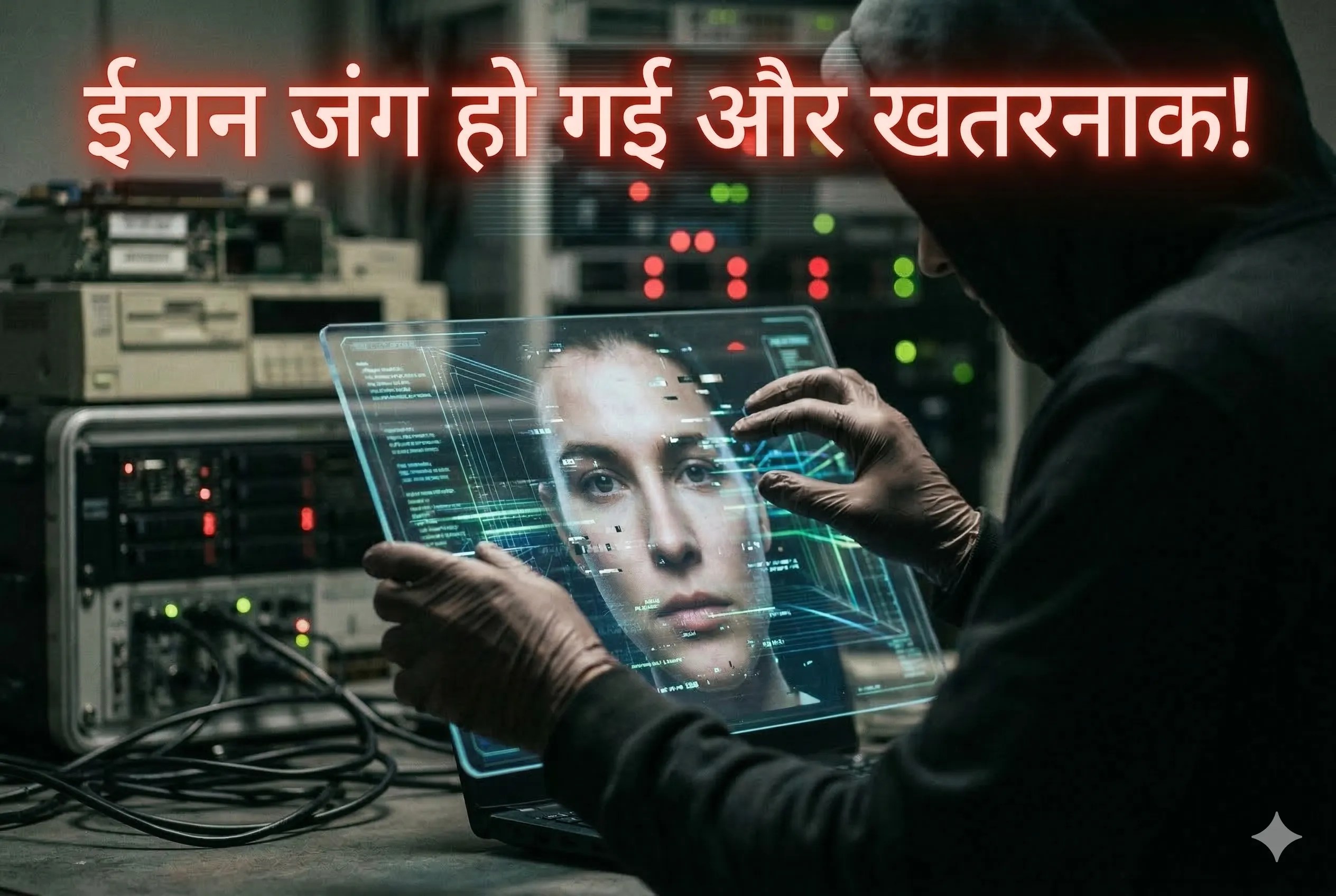
The real Jamie was actually in a lecture hall at Bristol University, his phone silenced in his pocket. The person Margaret had spoken to—the person who laughed like Jamie, paused like Jamie, and used his specific nickname for her—did not exist. He was a mathematical approximation. He was a ghost in the machine.
Margaret is now a single data point in a staggering new reality. Last year, fraud cases in the United Kingdom climbed to a record 444,000. That is not just a number. It is a stadium full of people being stripped of their safety, four times over. While the headlines focus on the "record-breaking" volume, they often miss the terrifying engine driving this surge: the democratization of deception. For another perspective on this development, check out the latest update from TechCrunch.
The Death of the Clumsy Con
We used to be able to spot a lie. There was a certain comfort in the "Nigerian Prince" emails of the early 2000s, with their broken English, erratic capitalization, and grandiose promises. They were the digital equivalent of a carnival barker with a fake mustache. You had to be exceptionally vulnerable or remarkably naive to fall for them. The friction of language and the clumsiness of the delivery acted as a natural filter.
That filter has evaporated.
Generative artificial intelligence has gifted the world’s most cynical actors a universal translator and a master mimic. When 444,000 cases of fraud are logged in a single year, we are seeing the results of an industrial revolution in crime. Fraudsters no longer need to speak the language of their victims. They no longer need to know how a British bank formats its urgent alerts or how a son sounds when he’s panicked. They simply feed a few seconds of audio or a handful of text samples into a model, and the machine handles the rest.
The sophistication is breathtaking. In many of these 444,000 cases, the "hook" wasn't a cold call. It was a perfectly punctuated email from a "supplier" that used the exact industry jargon of the victim’s business. It was a WhatsApp message from a "child" who had supposedly lost their phone and needed a quick transfer to pay a bill.
The friction is gone. The tell-tale signs are buried under layers of synthetic perfection.
The Psychology of the High-Frequency Hit
To understand why the UK has become such a fertile ground for these 444,000 incidents, we have to look at how we live now. We are a nation that runs on "one-tap" logic. We buy groceries with a thumbprint. We approve mortgages on a train ride. We have been conditioned to prize speed above almost any other digital virtue.
Fraudsters understand this Pavlovian response. They don't just use AI to create a believable voice; they use it to create a believable urgency.
Imagine a small business owner in Manchester. Let’s call him David. David manages a construction firm. He receives an invoice that looks identical to the hundreds he’s paid to his primary timber supplier. The email address is off by a single character—a "v" instead of a "u"—but the tone is perfect. It references a real project. It mentions a delay at the docks that David actually discussed with the supplier a week ago.
David pays. He pays because he is busy. He pays because the AI-generated text was scrubbed of the linguistic "noise" that used to trigger his internal alarm.
This is the "Industrialization of Social Engineering." In the past, a scammer might spend days researching a single high-value target. Today, an AI script can scan thousands of LinkedIn profiles, scrape public data about company hierarchies, and send out five hundred bespoke, highly targeted phishing attacks in the time it takes to brew a pot of coffee.
Out of those five hundred, they only need one David to click. And they are finding hundreds of thousands of them.
The Invisible Infrastructure of Theft
When the UK's fraud statistics hit the 444,000 mark, the immediate reaction is often to blame the banks or the police. And while there are systemic failures to address, the problem is deeper. We are fighting an asymmetric war.
The criminals are using 21st-century tools, while our primary defense remains 20th-century intuition.
The British government and financial institutions are caught in a permanent game of catch-up. For every security patch, there is a new "jailbroken" AI model designed specifically to bypass fraud detection. There are "dark" versions of popular large language models that have had their ethical guardrails stripped away. These models don't care about "generating helpful content." They are built to generate convincing lies.
But the real tragedy of these 444,000 cases isn't just the money. It’s the erosion of the social fabric.
Fraud is a "low-contact" crime with "high-impact" emotional consequences. When Margaret realized the voice on the phone wasn't Jamie, she didn't just feel poorer. She felt violated. She felt she could no longer trust her own ears. She stopped answering the phone. She stopped using online banking. She retreated from the digital world entirely, her confidence shattered by a ghost.
This "trust tax" is the hidden cost of the record-breaking fraud wave. When we stop trusting the "Hi Mum" text or the "Urgent Bank Alert," we lose the efficiency that the digital age promised us. We become a society of the paranoid, squinting at our screens, wondering if the person we love is actually a sequence of code being run in a server farm halfway across the world.
The Script is the Weapon
The most chilling aspect of the modern fraud landscape is how little "skill" is now required. In the past, a great con artist was a performer. They needed charisma, nerves of steel, and a deep understanding of human psychology.
Now, the charisma is outsourced.
You can buy a "fraud kit" on the dark web for less than the price of a cinema ticket. These kits include AI-generated scripts that are A/B tested for maximum emotional impact. They include voice-cloning software that requires only thirty seconds of audio—often harvested from a public Instagram story or a YouTube video—to create a near-perfect vocal deepfake.
The victim isn't being outsmarted by a genius. They are being processed by an algorithm.
This is why the number 444,000 is so significant. It represents the moment when fraud moved from "boutique" to "mass production." The UK, with its high density of English speakers and its highly integrated digital economy, has become the world’s leading laboratory for these experiments.
The Mirror and the Mask
We often think of AI as a mirror, reflecting our own intelligence back at us. But in the hands of a fraudster, it is a mask.
Consider the "Romance Scam," perhaps the most devastating subset of these records. In 2024, the "lonely heart" isn't just chatting with a fake profile. They are chatting with an AI that never sleeps, never forgets a detail, and can maintain hundreds of simultaneous "relationships."
The AI can write poetry. It can remember the name of your first dog. It can mirror your political views and your sense of humor. It creates a bespoke soulmate designed to eventually ask for a "loan" to cover a medical emergency or a flight to come see you.
When the money vanishes, the victim loses more than their savings. They lose a future they thought was real. They lose the belief that they are worthy of love, because the love they felt was generated by a processor.
Redefining the Defense
If the problem is a lack of friction, the solution must be the intentional reintroduction of it.
We have spent the last decade trying to make the internet "seamless." We wanted the "robust" systems that the tech giants promised us. But "seamless" is exactly what a fraudster wants. If there is no gap between an impulse and an action, there is no time for critical thought.
The 444,000 cases are a signal that we need to slow down.
The defense against AI fraud isn't just better AI. It’s a return to the analog. It’s the "call-back" rule. It’s the "secret word" shared between family members. It’s the radical act of hanging up the phone and calling the official number on the back of your bank card, even when the voice on the other end sounds like your child, and even when they are begging you to stay on the line.
We are entering an era where biological authentication—the sound of a voice, the look of a face on a video call—is no longer proof of identity.
The Weight of the Digital Record
As we look at the wreckage of the last year’s statistics, we have to acknowledge the vulnerability of the human heart. We are hardwired to help. We are hardwired to respond to the distress of those we love. The fraudster isn't hacking our bank accounts; they are hacking our empathy.
The 444,000 cases recorded in the UK are not just a failure of cybersecurity. They are a map of our connections to one another. Every successful scam is a testament to a relationship that someone was willing to protect, a business someone was trying to build, or a future someone was trying to secure.
The technology will only get better. The voices will become more indistinguishable. The emails will become more poetic. The "proof" will become more visual.
But the machine lacks one thing: the ability to actually care.
Margaret eventually got some of her money back after a grueling six-month battle with her bank's fraud department. But she still doesn't like the phone. When it rings, she doesn't see a grandson calling to say hello. She sees a doorway. And she knows now, with a cold certainty, that she has no way of knowing who—or what—is standing on the other side.
The tea on her table went cold a long time ago. The silence that followed the scam was louder than the frantic voice had ever been. It is a silence being felt in 444,000 homes across the country, a quiet, growing realization that the most dangerous thing in the digital age isn't a virus or a hack. It’s the sound of a familiar voice telling a perfect lie.
Think about the last time you heard a voice you loved over a digital connection. Can you be absolutely sure it was them?