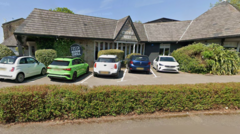
Age-related physiological decline combined with public venue dynamics creates a high-probability vector for catastrophic physical injury. When a violent incident targets a centenarian in a public house, the event transcends a standard criminal occurrence. It exposes systemic failures in environmental safety design, patron monitoring protocols, and emergency triage efficacy. The core objective here is to deconstruct the risk mechanics that permit severe violence against extreme-age demographics in commercial hospitality spaces, mapping the variables that transform a routine altercation into a critical medical emergency.
The Triad of Vulnerability
Physical security in public hospitality venues relies on the management of human density, lighting, and behavioral friction. When an individual of advanced age enters this ecosystem, three distinct biological and situational thresholds shift dramatically.
Structural Bone Density and Kinetic Energy Transfer
The primary driver of critical injury in elderly assault cases is the inverse relationship between age and skeletal resilience. Cortical bone mass decreases significantly after the fifth decade, accelerating sharply past age eighty due to osteoporosis and reduced osteoblastic activity.
When a kinetic impact occurs, whether via a direct strike or a fall resulting from a push, the force absorption capacity of the skeletal structure is severely compromised.
- A young adult absorbs impact energy through muscular contraction and elastic deformation of bone.
- An elderly individual experiences brittle fracture mechanics.
The kinetic energy required to fracture a hip or cause a traumatic intracranial hemorrhage drops exponentially. In a pub environment, where hard flooring materials such as treated wood, tile, or concrete predominate, the ground reaction force during a fall routinely exceeds the threshold for catastrophic skeletal failure.
Environmental Friction and Spatial Monitoring
Public houses function as high-entropy environments characterized by fluctuating crowd densities, acoustical saturation, and obstructed lines of sight. These factors create severe operational vulnerabilities for elderly patrons.
Spatial awareness diminishes with age due to progressive degradation in peripheral vision, contrast sensitivity, and auditory localization. Consequently, an elderly patron cannot reliably track rapid trajectory changes of adjacent patrons or anticipate physical conflicts.
Venue operators frequently fail to account for these sensory deficits in their spatial design. Common failure points include:
- Inadequate illumination in transition zones between brightly lit bars and dimly lit seating areas.
- High-density seating arrangements that restrict egress and increase collision frequency.
- Absence of designated low-risk zones separated from high-traffic circulation pathways.
Response Latency in Staff and Intervention Protocols
The velocity of violence in a sudden altercation outpaces standard hospitality staff response times. Most venue staff are trained in hospitality service, basic conflict de-escalation, and responsible beverage service, not kinetic threat neutralization.
When an assault initiates against a frail individual, the window for mitigating secondary injury is measured in seconds. Staff response latency involves three distinct phases:
- Perception Delay: The time required for an employee to visually or aurally register that an interaction has shifted from verbal disagreement to physical violence.
- Decision Latency: The cognitive pause required to evaluate liability, safety risk, and the appropriate intervention vector.
- Action Execution: The physical movement to separate the combatants or protect the vulnerable party.
In environments lacking active security personnel, total response latency routinely exceeds ten to twenty seconds. For a centenarian, this delay is terminal or life-altering, as cumulative trauma accumulates within the first three seconds of a physical altercation.
The Economic and Legal Calculus of Venue Liability
Commercial hospitality operators function under a legal duty of care that mandates the protection of patrons from foreseeable harm. The occurrence of a critical assault on premises triggers a rigorous liability review that examines operational negligence across several parameters.
Foreseeability and Historical Incident Mapping
Liability hinges heavily on the concept of foreseeability. Courts and regulatory bodies evaluate whether the venue operator knew or should have known about the potential for violence based on historical data.
- Frequency of prior police calls to the location.
- Time of day and day of week risk weighting.
- Demographic shifts in the local patron base.
When an establishment operates in an area with a documented history of alcohol-fueled altercations yet fails to implement enhanced security measures, the legal exposure shifts from simple negligence to gross negligence.
Duty of Care and Special Populations
Standard safety protocols assume an average adult patron profile capable of self-preservation and quick egress. The presence of vulnerable populations, including the elderly or mobility-impaired, alters the baseline duty of care.
Operators must calibrate their risk mitigation strategies to accommodate the most vulnerable individuals lawfully on the premises. Failing to provide physical buffers, clear sightlines, or proactive monitoring for elderly regulars represents a systemic failure in risk governance.
Clinical Cascades Following Kinetic Trauma in Advanced Age
Understanding the severity of an assault on a centenarian requires analyzing the post-incident physiological cascade. The transition from acute physical trauma to critical condition involves a predictable sequence of systemic failures.
Traumatic Brain Injury Mechanics
Blunt force trauma to the head in elderly patients carries a disproportionately high mortality rate due to physiological changes in the intracranial space.
As the brain atrophies with age, the bridging veins spanning the subdural space stretch and become more susceptible to tearing. An impact that might cause a mild concussion in a thirty-year-old frequently results in a subdural hematoma in a centenarian.
The accumulation of venous blood exerts progressive pressure on cerebral tissue, leading to:
- Rapid neurological decline.
- Herniation syndromes.
- Irreversible brain stem compression if surgical intervention is delayed.
Systemic Inflammatory Response and Comorbidity Amplification
Even when a physical injury is non-lethal in isolation, the systemic stress response triggers a cascade of complications in geriatric patients.
The neuroendocrine response to trauma induces a hypermetabolic state. In an individual aged one hundred, homeostatic reserves are near zero.
The introduction of acute trauma disrupts baseline management of chronic conditions such as hypertension, renal insufficiency, or cardiovascular disease.
- Immobility resulting from fractures rapidly induces deep vein thrombosis and pulmonary embolism.
- Hospitalization exposes frail immune systems to nosocomial infections.
- The psychological shock of violent victimization precipitates acute delirium, further complicating medical stabilization.
Systemic Interventions for High-Risk Hospitality Spaces
Mitigating the risk of violence against vulnerable populations in public venues requires shifting from reactive policing models to proactive environmental engineering.
Algorithmic Crowd Density Management
Venue operators must utilize spatial analytics to monitor crowd density and emotional escalation markers in real time.
- Installing computer vision systems capable of detecting rapid kinematic movements indicative of fighting.
- Establishing maximum occupancy thresholds per zone to prevent bottlenecking and reduce tactile friction between patrons.
- Enforcing strict separation between high-volume alcohol consumption areas and quiet seating zones utilized by vulnerable demographics.
Advanced Staff Training Protocols
Hospitality staff must transition from passive observers to active risk managers. Training programs must incorporate tactical awareness modules derived from security operations rather than standard customer service guidelines.
- Training staff to identify micro-expressions of aggression and escalating verbal disputes before physical contact occurs.
- Establishing clear escalation pathways that prioritize immediate physical shielding of vulnerable patrons over verbal de-escalation of aggressive actors.
- Implementing rapid emergency medical notification protocols that bypass standard management reporting chains during critical injury events.
Architectural Hardening of Public Venues
Design principles for inclusive hospitality spaces must incorporate trauma-informed architecture.
- Utilizing impact-absorbing flooring materials in high-risk circulation zones to mitigate the severity of accidental or induced falls.
- Eliminating blind spots through strategic mirror placement or digital surveillance integration.
- Designing egress routes that allow elderly or mobility-impaired patrons to exit the primary risk zone within five seconds of perceived disturbance.
Implement an immediate moratorium on unsupervised mixing of high-volume alcohol consumption zones with low-mobility patron areas, mandate the integration of real-time optical crowd-monitoring systems in high-risk hospitality venues, and tie commercial liquor license renewals directly to verifiable security staffing ratios.