Silence.
That is the first sound a mother hears when a rumor travels faster than a telephone wire across a continent.
Before a single official briefing is read aloud, before a radar screen flickers with a confirmed return or a press officer adjusts a collar before the cameras, words are already moving through living rooms, tea stalls, group chats, and newsrooms. One claim lands like a stone in still water. Ripples widen. By the time the first counter-statement arrives, people are no longer arguing over what happened on the water; they are arguing over who they trust enough to believe.
Consider what happens next when a headline declares that hundreds of soldiers were killed in a flash, and the opposing military answers back with a flat refusal: the claims are false, hundreds of service members did not die, and control over the Strait of Hormuz remains intact. On paper, it looks like a neat clash of denials. In reality, it is a collision between two different kinds of pressure—the physical reality of a narrow waterway where global commerce squeezes through a bottleneck, and the psychological reality of families and markets reacting to stories they cannot verify with their own eyes.
I have spent years watching how crises near chokepoints ripple outward into ordinary lives far from any coastline. You do not need to stand on the deck of a destroyer to feel the tremor. You feel it when a freight broker in Singapore stares at an amber alert on a screen at three in the morning. You feel it when a parent in Ohio or Tehran or Hanoi checks their phone before their coffee cools, wondering whether a number thrown into the air carries someone they love.
When a Number Becomes a Weapon
Numbers have a strange authority over human fear.
Say "some troops were injured" and people pause, asking how many, where, and under what circumstances. Say "hundreds" and the mind fills in the blanks with dread. Grief does not wait for forensic confirmation. When a sweeping casualty claim circulates online or across broadcast channels, families on every side of a geopolitical fault line experience a surge of dread long before any official roster is checked or any verification occurs.
A denial from a military command—stating clearly that hundreds of soldiers were not killed—is meant to steady the room. Yet in moments of high tension, a denial rarely erases the shockwave on its own. Skepticism is human nature when stakes are high. People ask themselves a quiet, nagging question: in an era of instant spin, how do you tell a genuine correction from damage control?
To understand why the military's pushback matters, it helps to separate two things that often get tangled together in crisis reporting: what a rival claims happened, and what can actually be substantiated on the ground and at sea. Information warfare thrives on ambiguity. If a narrative can convince enough people that a catastrophic blow occurred—or that a vital maritime passage has slipped out of an adversary's grip—it achieves a psychological effect even before a single shipping lane is physically closed.
Let us use a hypothetical scenario to make the fog of war easier to picture. Imagine a crowded train station during a sudden power flicker. Someone near the back shouts that the tracks ahead have collapsed. Nobody has walked to the platform edge to look, yet half the crowd surges toward the exits while others freeze, unsure whether to run or stay put. A stationmaster steps onto a bench and announces the tracks are clear. Some believe him immediately; others look at the flickering lights and wonder if he is trying to keep order. That gap between the shout in the crowd and the announcement on the platform is where anxiety lives.
In real maritime crises, the stakes are vastly heavier than a delayed train. Still, the human reflex is remarkably similar. Fear moves at the speed of a tap on a screen; verification moves at the speed of confirmed reports, satellite imagery, naval tracking, and accountable command statements.
The Narrow Throat of the World
Why does a strip of water between Iran and Oman carry enough weight to make global markets flinch at a single rumor?
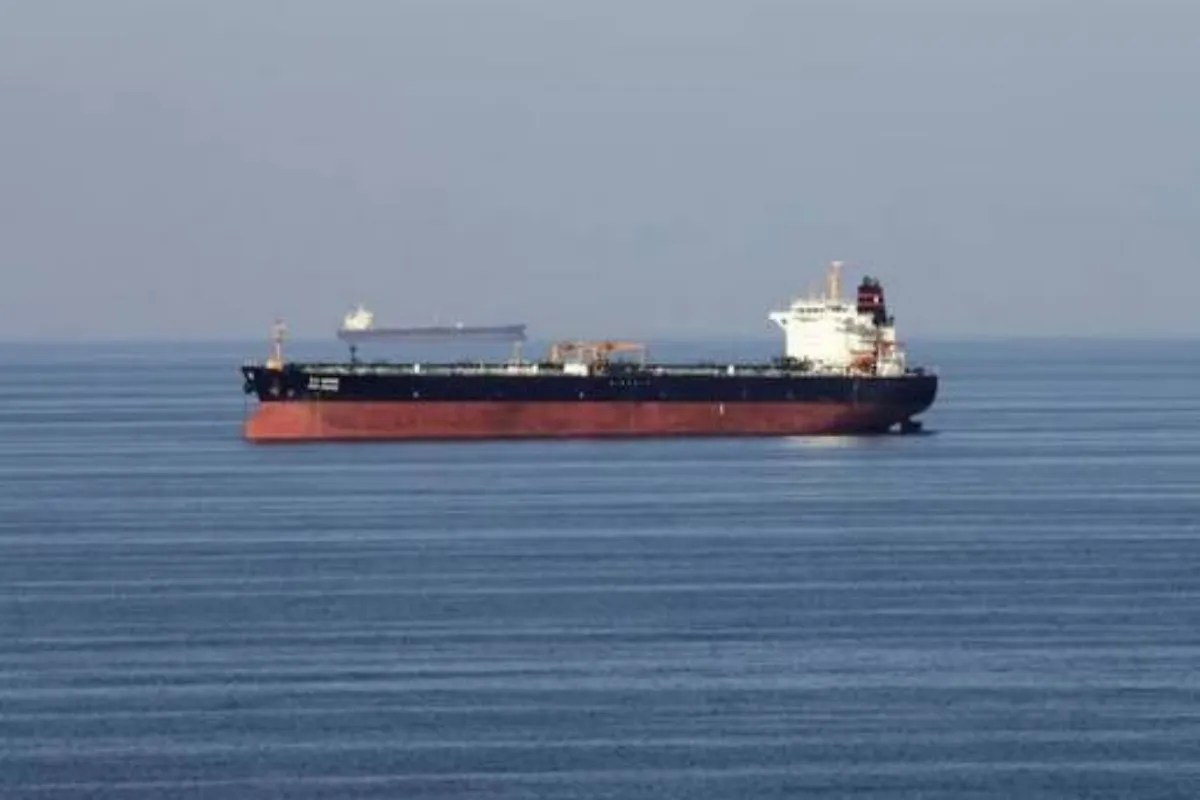
Think of the Strait of Hormuz as the narrow throat of a glass bottle. Pour liquid slowly and it flows smoothly. Shake the bottle or crowd the neck, and every drop backs up. Roughly a fifth of the world's petroleum passes through this relatively narrow passage connecting the Persian Gulf with the Gulf of Oman and the open Arabian Sea. When tankers move steadily and naval patrols maintain order, the world barely notices the geometry of the map. When threats, clashes, or conflicting claims of control enter the picture, insurance premiums climb, shipping routes are re-evaluated, and the price of energy feels suddenly fragile.
When the U.S. military asserts that it maintains control over Hormuz, it is speaking directly to that geometry of risk. Control at sea is rarely a single dramatic snapshot; it is a continuous posture of presence, surveillance, deterrence, and freedom of navigation. A ship captain navigating these waters is reading radar, listening to maritime advisories, watching patrol patterns, and weighing risk minute by minute. A headline claiming the waterway is lost or paralyzed can spook a crew or a charterer long before physical blockades exist. Conversely, an assertion of control aims to reassure mariners and markets that the passage remains under active watch and open to transit.
Yet asserting control and keeping every vessel completely immune to harassment or miscalculation are not the same thing. Even in waters patrolled by heavily armed forces, a narrow channel remains tense by nature. Shallow depths, busy traffic lanes, and close proximity between opposing forces mean that small incidents can look larger from afar—and small rumors can grow into monsters in retelling.
Characters in the Quiet Hours
To see what a headline like "hundreds of soldiers were not killed" actually touches, step away from podiums and press releases and look at three people whose days are shaped by the same storm. (These characters are hypothetical, created to ground the human stakes of real-world tensions.)
Nadia, Six Time Zones Away
Nadia works the night shift at a logistics coordination desk in Rotterdam, tracking cargo schedules and fuel cost adjustments. At 4:10 a.m. local time, her phone buzzes with a breaking alert about clashes and massive casualties near the Gulf, followed minutes later by a counter-report insisting the casualty figures are false and Hormuz remains under U.S. control.
Her brother is a marine engineer contracted aboard a commercial vessel operating in the wider region. He is not a combatant, yet a spike in regional hostilities means hazard pay reviews, rerouted schedules, and anxious messages sent whenever satellite coverage allows. Nadia reads both statements twice. Relief washes over her when she sees that the claimed mass deaths are disputed as untrue, yet her stomach stays tight. In volatile waters, reassurance on paper never quite silences a sister's worry until she sees his timestamped message pop up.
Tariq, Watching the Ticker
Three hundred miles inland from any coast, Tariq runs a small delivery fleet and transport business. He is not an oil trader or a foreign policy analyst. He is a man who budgets diesel by the week so he can make payroll on Friday.
When rumors fly about attacks, troop losses, and control over Hormuz, commodity desks react before dawn. Even if prices swing and then settle as contradictory claims are sorted out, volatility punishes small operators who have no cushion against sudden fuel spikes. Tariq does not care about rhetorical point-scoring between capitals. He cares whether a rumor becomes a price hike at the pump next Tuesday.
Elena, Writing at Midnight
Elena is a junior desk editor trying to make sense of fast-moving reports without feeding panic. A rival outlet runs a dramatic angle first; an official military statement pushes back hard, calling the rival narrative false on both casualty counts and maritime control.
Elena knows the hardest part of her job is restraint. Readers crave certainty. They want a neat villain, a tidy hero, and a final verdict before they finish their morning coffee. Telling them the truth often sounds less thrilling: certain claims are contested or unverified, official denials are on the record, and the full picture takes time to confirm. That honesty can feel frustrating to an audience hungry for answers, yet rushing to amplify an unverified claim does far more harm than waiting for solid ground.
Why Conflicting Narratives Stick
Why do false or inflated claims keep resurfacing even after a military command explicitly calls them lies?
Part of the answer lies in how human memory works. A shocking number sticks like burrs on wool. A sober correction—especially one that says something did not happen—often slips past us because the human brain is wired to pay closer attention to threat than to reassurance. Saying "hundreds were not killed" asks the listener to subtract an image they have already pictured. Subtraction is harder work for the mind than addition.
Another reason is distrust. Many people have lived through eras where official statements from various governments were sometimes incomplete, overly optimistic, or shaped by political framing. When someone already carries baseline skepticism toward institutions, a flat denial can trigger a reflex of "they would say that, wouldn't they?" That reaction is understandable, even when it makes clear-headed judgment harder.
A third reason is the temptation to treat every rumor as a preview of escalation. When tensions run high, people sometimes confuse fear of what could happen with proof of what has happened. A tense standoff in a strategic strait can easily be misread—or deliberately framed—as total collapse or massive slaughter when the reality on the water is different.
"In a crisis over a chokepoint, the first casualty of a viral claim is rarely a ship—it is calm judgment."
Navigating Uncertainty Without Losing Your Bearings
I will admit something openly: even when you follow maritime security and geopolitical news closely, moments like these can feel disorienting. Conflicting statements arrive in rapid succession. Every side has an incentive to project strength or expose vulnerability. Anyone trying to stay grounded can end up feeling whiplash—swinging from alarm to dismissal and back again.
So how does a thoughtful reader keep their footing when claims clash over troop losses and control of Hormuz?
Start by looking for specificity and corroboration. Broad, dramatic claims—like sweeping casualty numbers—deserve extra scrutiny when they appear without verifiable rosters, independent observation, or consistent detail. At the same time, treat any blanket assertion from any side as one piece of evidence rather than the entire universe, asking what is demonstrated, what is disputed, and what remains unconfirmed.
Next, watch the actual physical indicators rather than just the loudest rhetoric. Commercial shipping movement, maritime advisories, port operations, and insurance market behavior often reveal practical reality more plainly than heated exchanges of accusations. If a waterway is truly sealed or a force is truly broken, physical disruptions tend to leave footprints that cannot be hidden behind a press release.
Finally, give yourself permission not to form a permanent emotional verdict on the first wave of news. A headline is a snapshot in motion, not the final chapter of a story.
Out on the dark water between two shores, radar sweeps continue, engines hum in the salt air, and crews keep watch through the night. A single phrase—not true—cuts through the noise, carrying the weight of lives, trade routes, and fragile calm.
And somewhere on shore, a phone lights up in the dark with three simple words: I am okay.