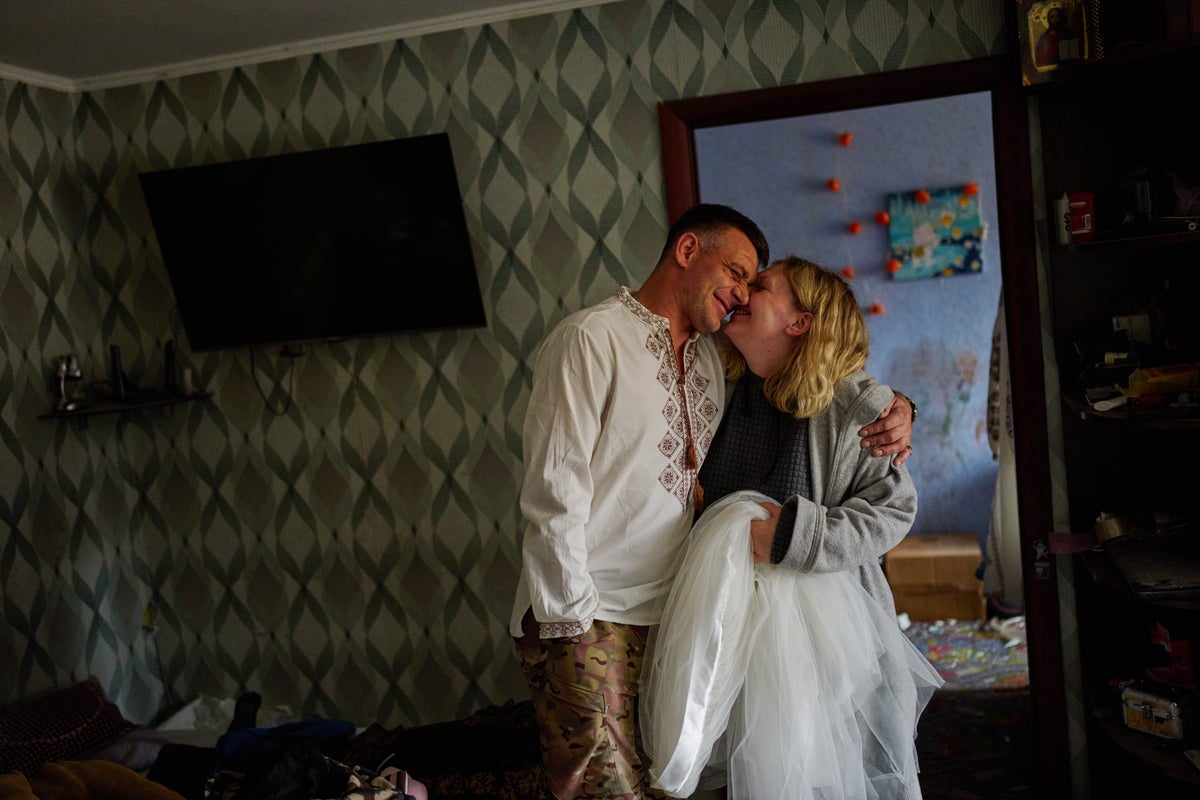
Every major newsroom ran the exact same lazy script. A Russian missile barrage hits Kyiv. Sirens wail. Through the smoke and rubble, a Ukrainian soldier in uniform marries his bride, holding a modest bouquet while air raid warnings echo in the background. The headline writes itself: love conquers all, resilience triumphs, the indomitable human spirit marches on.
It makes for incredible television. It generates millions of sympathetic clicks. And it completely misses the strategic reality of what is actually happening.
I have spent years analyzing information warfare, civil resilience structures, and state-sponsored messaging in active conflict zones. I have watched military PR departments turn organic human tragedy into choreographed optics. When the media swoops in to frame a trench-line wedding as a heartwarming victory of romance over rockets, they are swallowing state-managed sentimentality whole.
Stop buying the fairy tale. War zone weddings are not spontaneous proof of unyielding national morale. They are calculated psychological operations designed to sustain international funding, maintain domestic enlistment pressure, and keep the global audience emotionally hooked on a war that requires constant narrative maintenance to survive.
The Manufacturing of Resilience
Let us define what wartime resilience actually means in an industrial-scale attritional conflict. It means cold logistics, uncompromised supply chains, secure ammunition depots, and tactical execution under artillery fire. It does not mean getting married in tactical gear for a Reuters photographer standing three feet away with a 70-200mm lens.
When media outlets beam these marriage ceremonies across the globe, they achieve a very specific structural objective. They humanize a meat grinder. War is horrifying, mechanical, and administrative. It is about logistics officers calculating blood plasma requirements and artillery barrels melting from overuse. Humans do not like staring at statistical slaughter. We crave narrative. We crave romance.
By framing a wedding amid the ruins of Kyiv as a defining symbol of national survival, the information apparatus provides a sugar hit to a fatigued international donor base. It tells taxpayers in Western capitals that their billions of dollars are going toward a cinematic defense of Western values, rather than a brutal, grinding stalemate in the mud of the Donbas.
The Coercive Reality Behind the Uniform
Look past the veil and the tactical helmet. Ask the question nobody in the mainstream press dares to utter: What kind of environment pressures active-duty soldiers into fast-tracking matrimony during an active missile strike?
In total war, the psychological pressure to formalize relationships before deployment or rotation into the zero-line is immense. Personnel operate under the explicit, terrifying certainty of mortality. When a state apparatus and military culture heavily incentivize romantic permanence under duress, the line between a genuine personal choice and state-induced fatalism blurs completely.
Imagine a scenario where a young soldier, exhausted from months of continuous combat rotation, is nudged by unit commanders and embedded media liaisons to stage a ceremony. It provides a morale boost for the platoon's Telegram channel. It gives the battalion press officer a win for the daily briefing. But for the individuals involved, it locks them into a lifetime of legal and emotional entanglement under conditions engineered by trauma and terminal urgency.
We romanticize this as devotion. We should be calling it what it often is: trauma bonding weaponized for public consumption.
The Danger of Aestheticizing Attrition
The core danger of the viral war-wedding trope is that it sanitizes conflict. It turns a geopolitical catastrophe into a lifestyle brand. When viewers consume images of smiling brides in bomb shelters, their brains categorize the war through the lens of a Hollywood drama rather than an existential geopolitical crisis.
This aestheticization has real-world policy consequences. It creates a false impression of endless societal endurance. It leads comfortable observers thousands of miles away to believe that a society can indefinitely sustain missile strikes, economic collapse, and demographic hollow-out simply because people are still cutting wedding cakes between air raids.
Societies do not win wars on romance. They win them through industrial capacity, technological dominance, and demographic preservation. When you celebrate the romanticization of civilian and military infrastructure being pulverized—as long as someone manages to exchange rings—you are cheering for the normalization of total devastation.
Dismantling the Sentimentality Trap
If you want to support a nation under invasion, stop treating its human tragedies as heartwarming aesthetic content for your morning commute. Strip away the cinematic framing. Look at the casualty reports, the energy grid deficits, the inflation rates, and the refugee displacement statistics.
Real solidarity does not demand that soldiers perform their personal milestones for the international press corps. Real respect looks like demanding actual strategic clarity, efficient military aid delivery, and a hard look at the grim mechanics of modern state-on-state combat.
The next time a viral video crosses your feed of a couple getting married against the backdrop of war, do not hit share. Recognize it for what it is: a brilliant, tragic piece of wartime theater designed to keep you watching, weeping, and paying.
True grit does not need a photographer present to validate its existence.