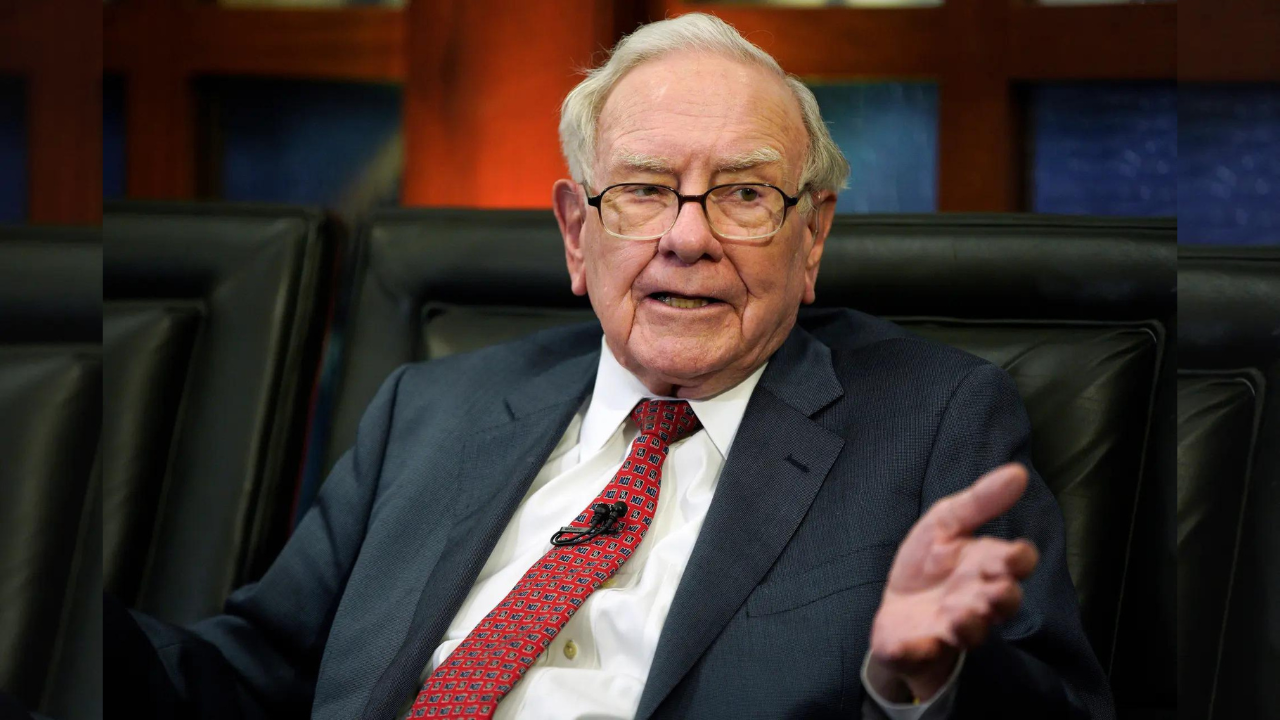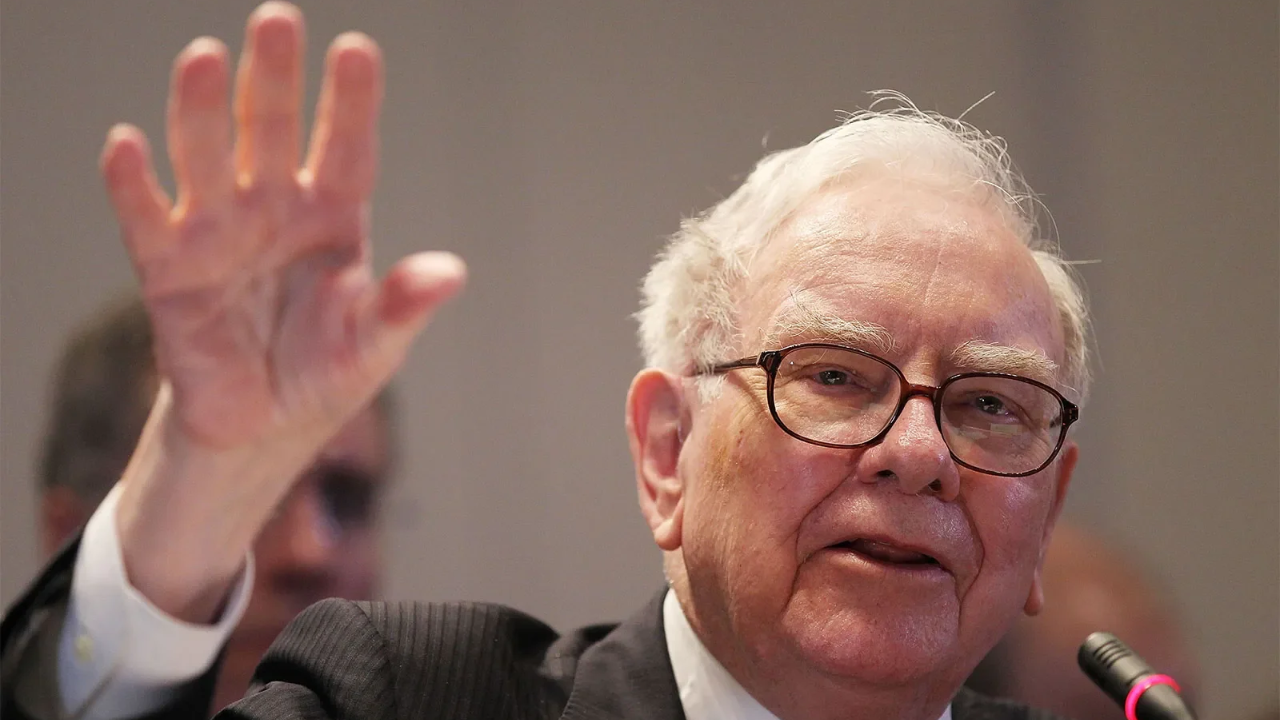
Every financial journalist on the planet just tripped over themselves to applaud Warren Buffett for saying that kindness compounds. He dropped over $5 billion in Berkshire Hathaway shares into five foundations—including the Gates Foundation and four run by his own children—and the business press immediately treated his platitude like a newly discovered law of thermodynamics.
They missed the entire point. Again.
Kindness does not compound. Capital compounds. Tax exemptions compound. Concentrated power compounds. When the mainstream media regurgitates a billionaire’s folksy aphorism without interrogating the underlying financial mechanics, they are not reporting the news. They are doing public relations for an estate-planning strategy.
I have spent two decades advising ultra-high-net-worth families, sitting inside the boardrooms of private foundations, and watching well-intentioned capital turn into bureaucratic sludge. I have seen families burn tens of millions of dollars on overhead while patting themselves on the back for their generosity. The narrative surrounding Buffett’s annual summer stock dump is the ultimate example of lazy consensus. Everyone looks at the headline number, sheds a tear for the Oracle of Omaha’s humility, and completely ignores what actually happens to that money once it leaves his brokerage account.
To understand why the "kindness compounds" framing is dangerously misleading, you have to strip away the grandfatherly charm and look at the cold, hard math of mega-philanthropy.
The Dangerous Illusion of Compounding Kindness
In finance, compounding has a strict, mathematical definition. You invest principal, it generates a return, and that return is reinvested to generate its own earnings. It is exponential, predictable, and entirely indifferent to human emotion.
Kindness is an action. It is a behavioral choice. It does not sit in an index fund earning eight percent annually. When you give someone five dollars for a cup of coffee, that gesture might inspire them to hold the door open for a stranger, who might then tip their server twenty percent. That is a positive social ripple, not compound interest. Calling it compounding is a semantic trick designed to make cold capital allocation feel warm and fuzzy.
Here is the reality that financial writers refuse to print: when Buffett transfers $5.3 billion in Class B Berkshire shares to the Susan Thompson Buffett Foundation, the Sherwood Foundation, the Howard G. Buffett Foundation, the NoVo Foundation, and the Bill & Melinda Gates Foundation, he is not injecting $5.3 billion of immediate kindness into the economy. He is moving equity from a taxable corporate environment into tax-exempt holding tanks.
Let us define the exact mechanism at play here. Under United States tax law, private foundations are only required to distribute 5 percent of their net investment assets annually to maintain their tax-exempt status. Read that number again. Five percent.
Imagine a scenario where a foundation receives $1 billion in stock. In year one, it is legally obligated to push $50 million out the door to actual operating charities. Meanwhile, the remaining $950 million stays invested in the market. If that endowment earns a standard 8 percent return, the foundation ends the year with $1.026 billion. The foundation grew richer. The endowment compounded. The actual relief reaching the ground was capped at the bare legal minimum.
This is not an accident. It is the structural design of modern institutional philanthropy. By framing this transfer as compounding kindness, observers confuse the growth of the foundation’s balance sheet with actual social impact.
What Buffett Actually Built A Dynasty of Capital Allocators
Buffett famously stated years ago that he wanted to leave his children enough money so they could do anything, but not enough so they could do nothing. The press loved that line too. They took it to mean his kids were getting a modest inheritance and would have to pull themselves up by their bootstraps.
They forgot to read the fine print of his estate plan.
Buffett did not leave his children billions in personal spending money. Instead, he made them the permanent, unchecked stewards of billions in philanthropic capital. By routing over $1 billion each year into the Sherwood, Howard G. Buffett, and NoVo foundations—and recently announcing that his remaining fortune will go into a new charitable trust overseen exclusively by his three children after his death—he handed them something far more potent than a trust fund for yachts and private jets. He handed them institutional power.
Power to dictate public policy. Power to fund specific agricultural initiatives across Africa. Power to reshape local education systems in Omaha. Power to bankroll massive social engineering projects without ever facing a single voter or shareholder.
When you control a billion-dollar foundation, you do not need a personal bank account stuffed with cash. Every door in Washington, Davos, and Brussels swings open for you. Governors take your calls. Nonprofits bend their missions to match your pet theories just to survive. You become an unelected shadow government with a permanent, tax-subsidized endowment.
Let us look at the actual track records of these family vehicles, because the data tells a far more complicated story than the press releases suggest.
- The NoVo Foundation, run by Peter Buffett and his wife Jennifer, received billions in Berkshire stock to focus on girls and women, indigenous communities, and local economies. In 2020, after burning through massive sums with notoriously opaque results, the foundation abruptly laid off staff, shuttered major programs, and admitted its bureaucratic approach was failing. Even with billions in the bank, capital allocation proved brutally difficult.
- The Howard G. Buffett Foundation focuses heavily on global food security and conflict mitigation. While it has funded legitimate infrastructure, it has also faced intense scrutiny over massive, capital-intensive agricultural projects in developing nations that struggled to sustain themselves once the foundation’s direct oversight faded.
- The Gates Foundation, which has absorbed the lion's share of Buffett’s lifetime giving, has undeniably moved the needle on global vaccines and malaria. Yet even this gold standard of mega-philanthropy has drawn sharp criticism from global health experts—including researchers cited by the World Health Organization and independent development economists—for centralizing global health agendas around technological fixes while neglecting basic public healthcare infrastructure.
None of these outcomes are evil. Some are genuinely helpful. All of them prove that throwing billions of dollars at complex human problems does not automatically compound into good results. Often, it compounds into administrative bloat, mission drift, and unintended consequences.
Dismantling the Lazy Consensus on Billionaire Giving
If you search online for details about Buffett’s donations, you will run into the same recycled questions from readers trying to understand how the ultra-wealthy operate. The conventional answers are usually sanitized PR fluff. Here is the brutal truth behind the questions people actually ask.
Why does Warren Buffett give away his money slowly instead of all at once?
The polite answer is that giving it away gradually maximizes the compounding growth of Berkshire Hathaway, creating a larger pool of money for charity later. The ruthless reality is that holding onto the stock until death—or slowly trickling it out—allows him to retain absolute voting control over Berkshire Hathaway while he is alive, avoids triggering massive market disruptions that would tank the share price, and maximizes the tax deductions he can claim against his personal income each year. It is as much a corporate governance and tax optimization strategy as it is a charitable one.
Does Buffett pay taxes on the billions he donates to his kids' foundations?
No. In fact, he gets a massive tax break. When you donate appreciated stock directly to a qualified charity or foundation, you completely bypass the federal capital gains tax you would have owed had you sold the shares. On top of dodging capital gains, you can deduct the fair market value of the shares from your taxable income, up to strict IRS limits. Had Buffett sold that $5 billion in stock and donated the cash, the U.S. Treasury would have collected over a billion dollars in capital gains taxes to fund public infrastructure, defense, and social safety nets. By donating the shares directly, he legally routed that tax revenue away from the public treasury and into his family’s private foundations.
Is billionaire philanthropy actually better than government spending?
This is the core ideological battleground, and both sides usually lie about it. Government programs are frequently slow, politically compromised, and inefficient. Private foundations can move fast, take high risks, and fund unpopular ideas that politicians will not touch. However, private foundations suffer from zero democratic accountability. When a government program fails, voters can throw the politicians out. When a billionaire’s foundation wastes $500 million on a flawed educational theory—as happened with the Gates Foundation’s disastrous small-schools initiative in the 2000s—nobody gets fired. The foundation simply pivots, rebrands, and writes another check.
The Structural Flaw of Perpetual Foundations
The biggest misconception in modern wealth management is that a foundation should last forever.
Walk into any private bank in New York, Zurich, or London, and the wealth advisors will immediately pitch you on setting up a perpetual family foundation. Why? Because perpetual foundations generate perpetual management fees for the banks, perpetual salaries for the executive directors, and perpetual prestige for the family name.
I have sat across the table from third-generation heirs who treat their family foundation like a country club membership. They spend three days a year in a resort town, rubber-stamp grants to their alma maters and local symphony orchestras, collect their trustee fees, and convince themselves they are saving the world. Meanwhile, 95 percent of the capital sits untouched in Wall Street equities, paying fees to asset managers.
If kindness truly compounded, the smartest move a billionaire could make would be to deploy 100 percent of the capital immediately into high-impact, front-line interventions. Solve the problem today. Eradicate the disease now. Build the water system this year.
Think about the logic of waiting. If you believe a problem like childhood malnutrition or preventable blindness is urgent, hoarding 95 percent of your cure in the S&P 500 so it can grow slightly larger ten years from now is morally backwards. Every year a dollar sits in an endowment waiting to compound, a child goes without medicine today. When you delay deployment to chase market returns, you are prioritizing the preservation of the institution over the urgency of the human need.
Buffett himself originally recognized this trap. In 2006, he stipulated that his money given to the Gates Foundation had to be spent within ten years of his estate being settled. He understood that perpetual endowments eventually get captured by their own bureaucracies. Yet by continuing to feed massive annual tranches into his children's foundations without strict, immediate spend-down mandates enforced right now, the accumulation phase drags on for decades.
The Dark Side of the Spend-Down Alternative
To be completely transparent, the contrarian approach—aggressive, immediate spend-down—has real, painful downsides. Anyone who tells you otherwise has never managed a large-scale grantmaking operation.
When you try to push hundreds of millions of dollars out the door rapidly, you hit an immediate absorptive capacity wall. Most grassroots nonprofits are fragile organizations running on shoestring budgets. If you drop $50 million onto a local charity that normally operates on $2 million a year, you will not scale their impact. You will destroy them. They will drown in compliance requirements, hire the wrong people too fast, lose touch with their community, and implode within thirty-six months.
Furthermore, rapid deployment invites massive fraud and waste. Without rigorous vetting, monitoring, and multi-year accountability, fast money attracts grifters who know how to write slick grant proposals without delivering real-world results. Chuck Feeney, the legendary co-founder of Duty Free Shoppers who gave away his entire $8 billion fortune while alive through Atlantic Philanthropies, proved that giving while living works. Yet even Feeney’s team struggled fiercely in their final years to find enough competent, vetted organizations capable of absorbing massive checks responsibly before the clock ran out.
Slow, compounding endowments solve the absorptive capacity problem by pacing the capital. They allow foundations to build institutional expertise over decades. That is the steel-man argument for Buffett’s method.
How to Actually Make Generosity Compound
If you want your money, time, or influence to create genuine, exponential change—whether you are managing a fifty-million-dollar family office or donating five hundred dollars from your paycheck—you have to stop copying billionaire tax structures and start operating like a ruthless capital allocator.
- Eliminate the Middleman Endowment. Stop parking money in donor-advised funds or private foundations where it sits idle for years. If you commit to giving money away, deploy it immediately to direct-action operators. Cash in the hands of a competent local leader today is worth infinitely more than stock sitting in an endowment waiting for a bull market.
- Fund General Operating Expenses, Not Pet Projects. The most arrogant habit of wealthy donors is restricting grants to specific, shiny new programs while refusing to pay for rent, electricity, IT infrastructure, and competitive salaries. You cannot build a functional business while starving its overhead, and you cannot build an effective charity that way either. Write unrestricted checks and let the people on the ground decide where the money is needed most.
- Set Hard Sunset Clauses. If you ever establish a charitable vehicle, write a mandatory ten-year liquidation clause into its founding charter. Force the trustees to spend every single dime—principal and interest—before the decade ends. Nothing sharpens a board’s focus like knowing the bank account hits zero on a fixed date. It eliminates careerism, prevents mission drift, and forces the team to hunt for permanent solutions rather than perpetual band-aids.
- Measure Outcomes, Not Intentions. Stop celebrating the size of the donation. Writing a $5 billion check is an input, not an output. Track cost-per-outcome with the same obsessive rigor a private equity firm uses to track EBITDA. If a program is not measurably changing lives after three years, cut the funding ruthlessly and reallocate the capital to something that works.
Warren Buffett is arguably the greatest capital allocator in modern history. His mastery of financial compounding turned a failing textile mill into a trillion-dollar conglomerate. Give him full credit for his discipline, his frugality, and his decision not to leave his fortune to idle trust-fund heirs.
Just stop pretending that moving billions of dollars from a corporate balance sheet into tax-exempt family foundations is a fairy tale about compounding kindness. It is an exercise in dynastic power, tax efficiency, and institutional longevity. And until we start judging philanthropy by the problems it permanently eliminates rather than the size of the endowments it leaves behind, the only thing truly compounding will be our own delusion.