Blink.
In the time it takes your eyelids to close and open again on the southbound 101, a mounted camera bolted to a weathered utility pole has already read the stamped aluminum on your rear bumper, converted the characters into searchable text, logged your GPS coordinates, stamped the exact millisecond of your passing, and beamed the entire packet to a remote server. You never felt a flash. You never heard a shutter click. You just kept driving toward your morning coffee, entirely unaware that your routine Tuesday commute had just become a permanent data point in a sprawling, municipal memory bank.
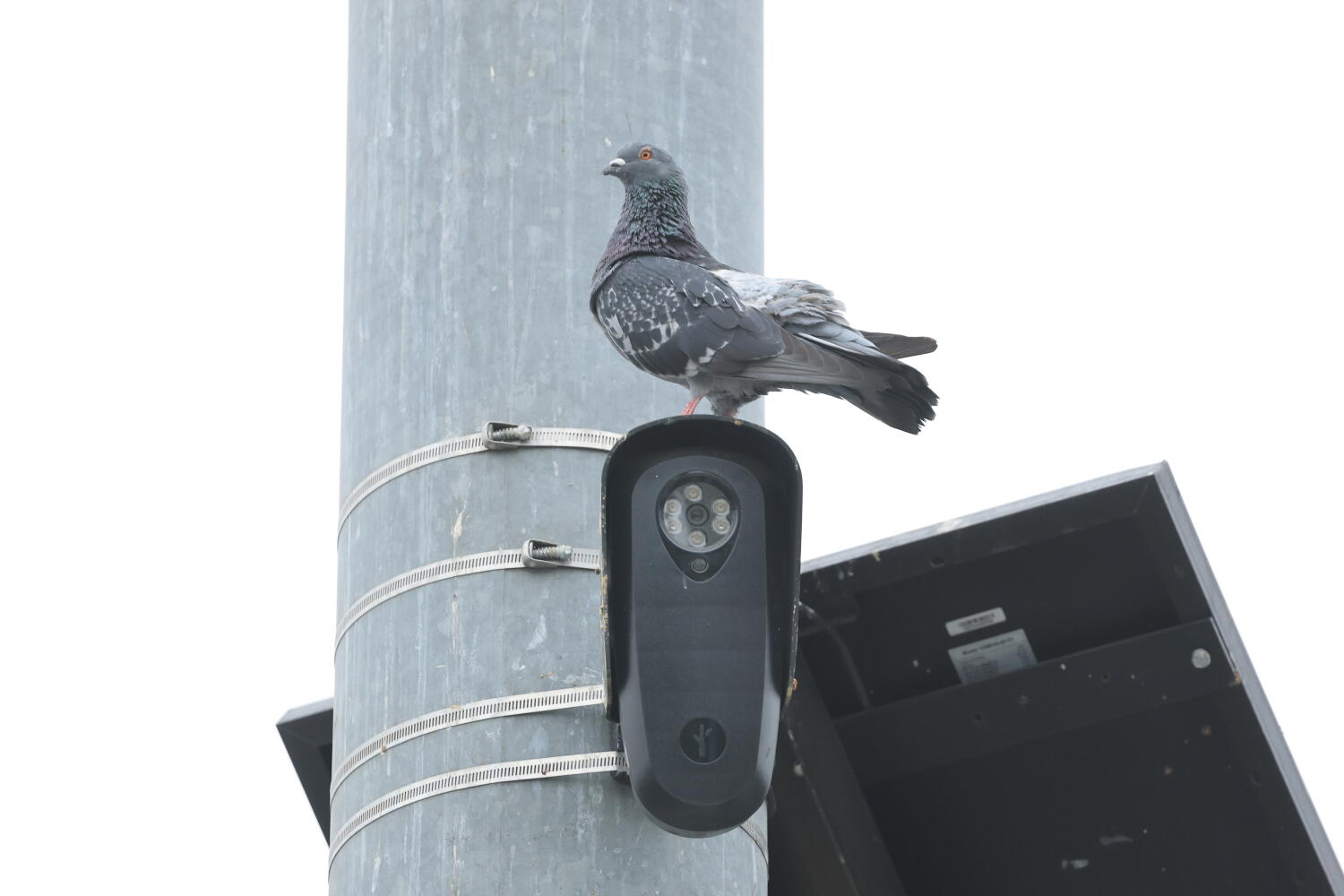
I remember the first time I truly noticed them. It was a humid evening in Silver Lake, the kind where the twilight turns the bruised purple of a healing shin, and I was idling at a red light behind a dented Honda Civic. Mounted high above the intersection, angled downward like a brooding crow, sat a sleek, solar-paneled box with a dark glass eye. For years, I had treated those fixtures as part of the urban wallpaper—no different from a rusted parking sign or a tangle of overhead trolley wires. Then a friend of mine, an investigative journalist who spent months filing public records requests in Southern California, showed me a printout of his own vehicle’s movements over a thirty-day period. Every trip to the grocery store. Every late-night drive to a pharmacy. Every weekend visit to a friend’s apartment across town. Laid out on white paper in neat, chronological columns, those timestamps didn't look like traffic enforcement. They looked like a biography written without his consent.
That visceral jolt—the sudden realization that anonymity in public space has quietly expired—is the emotional fault line running straight through Los Angeles right now. And it explains why a seemingly bureaucratic procurement decision by the Los Angeles Police Department has erupted into one of the most revealing battles over privacy, policing, and corporate power in modern American cities.
The Vendor Swap That Wasn't a Retreat
On paper, the headline sounds like a victory for civil liberties advocates. Amid mounting public backlash against Flock Safety—the Atlanta-based surveillance giant whose automated license plate readers have blanketed thousands of neighborhoods nationwide—the LAPD is moving forward with license plate recognition technology from a different vendor.
Stop there for a second. Read that sentence again, slowly, because the devil lives in the distinction between changing a brand name and changing a system.
For the past several years, Flock Safety became the lightning rod for everything critics feared about privatized dragnet surveillance. Unlike traditional police cameras bought outright by a city and stored on municipal servers, Flock built an empire on a subscription model. Homeowner associations, private businesses, and local police departments leased the solar-powered cameras, and in exchange, their feeds flowed into a massive, interconnected network. Critics, privacy watchdogs, and investigative reporters documented how easily data from one jurisdiction could be queried by agencies hundreds of miles away—raising alarms about out-of-state police departments searching California plate logs for women seeking reproductive healthcare, or federal immigration authorities tapping into local feeds despite municipal sanctuary policies.
The blowback in Los Angeles grew loud enough to rattle City Hall. Community coalitions packed commission meetings. Digital rights groups like the Electronic Frontier Foundation and the ACLU of Southern California pointed out a glaring contradiction: how could a city proclaim itself a sanctuary for immigrants and reproductive freedom while wiring its streets into a nationwide data-sharing web that operated beyond local oversight?
So the LAPD pivoted. Instead of expanding its footprint with Flock, the department pushed ahead with contracts and deployments through an alternative provider—turning toward established law enforcement hardware and software vendors such as Motorola Solutions, which owns Vigilant Solutions, alongside existing city-managed infrastructure.
To the casual observer, swapping out a controversial vendor feels like a course correction. It looks like accountability in action.
It isn't.
Why Changing the Logo Doesn't Change the Lens
Consider a hypothetical scenario to make the mechanics plain. Imagine a fictional resident named Elena—a thirty-four-year-old pediatric nurse living in Boyle Heights who commutes to a clinic in Santa Monica. Elena has never had so much as a speeding ticket. She cares for sick children, pays her parking meters on time, and calls her mother every Sunday afternoon.
Now trace Elena’s week through the lens of an Automated License Plate Reader, or ALPR.
On Monday morning, a camera mounted on a patrol cruiser rolling down Cesar Chavez Avenue scans her plate. On Wednesday evening, a fixed pole camera near the Santa Monica Pier logs her car parked three blocks from an evening demonstration she didn't even attend—she was just picking up takeout. On Friday night, another reader captures her pulling into a clinic parking lot in Culver City.
Does Elena’s digital footprint care whether the plastic housing on that pole carries a Flock Safety decal or a Vigilant Solutions serial number?
Not in the slightest.
The underlying technology—optical character recognition paired with high-speed infrared photography—performs the exact same alchemy regardless of the corporate logo stamped on the casing. Infrared sensors pierce through nighttime darkness and blinding headlight glare, capturing crisp, high-contrast images of reflective license plates at highway speeds. Within fractions of a second, algorithms strip away the visual context of the street and isolate the alphanumeric string, appending latitude, longitude, date, and time.
What changes between vendors isn't the gaze. It is the plumbing behind the wall.
When a police department shifts away from Flock Safety toward another contractor, the debate moves from the visible hardware on the street corner to the invisible architecture of data governance. Who owns the servers? How long are the scans retained before deletion? Can a detective in Texas or a federal agent run a "hotlist" query against Los Angeles plates without a warrant? And perhaps most crucially, what happens when a private corporation builds a proprietary database of billions of vehicle sightings and sells access to law enforcement agencies across the country?
Vigilant Solutions, acquired by Motorola in 2019, has spent years assembling one of the largest commercial license plate databases in the world—combining scans from municipal police cruisers with cameras mounted on private tow trucks and repossession vehicles. Even when a city like Los Angeles enforces strict local retention policies on its own department-owned cameras, the broader ecosystem of commercial and law enforcement data sharing remains a labyrinth of memoranda of understanding, third-party cloud hosting, and shifting administrative rules.
The Architecture of a Dragnet
To understand why civil liberties attorneys lose sleep over this, you have to discard the old Hollywood image of police surveillance. We are trained by television dramas to imagine a detective sitting in a dimly lit room, focusing binoculars on a specific suspect after a judge signs a warrant. That is targeted surveillance. It requires probable cause, human labor, and legal friction.
ALPR networks operate on the exact opposite logic. They invert the Fourth Amendment's traditional sequence. Instead of suspecting someone of a crime and then gathering evidence, automated plate readers collect the movements of everyone—millions of innocent drivers every single day—and store that haystack in case a needle ever needs to be found later.
Think of it like this. Suppose the post office didn't just deliver your letters, but steamed open every envelope in the city, photocopied the contents, filed them in a massive warehouse, and promised not to look inside unless a crime happened on your block. You might trust the current postmaster. You might even admire their commitment to solving mail fraud. But the warehouse still exists. And postmasters change. Laws change. Political climates shift overnight.
History offers plenty of warnings about what happens when surveillance infrastructure outlives the benevolent intentions of the officials who installed it. In the aftermath of 9/11, technologies rolled out under urgent promises of counterterrorism quietly migrated into routine municipal policing, immigration enforcement, and protest monitoring. Once cameras are bolted to light poles and integrated into dispatch software, they almost never come down. Budgets absorb their maintenance costs. Detectives grow dependent on the convenience of typing a plate number into a search bar and watching a map light up with a suspect's historical whereabouts.
And there is a human cost when that convenience collides with algorithmic fallibility.
Across the country, documented cases have revealed what happens when an automated reader misreads a single digit—mistaking a smudged "8" for a "B," or reading a plate from the wrong state—and flags an innocent family’s minivan as a stolen vehicle. In Aurora, Colorado, police held a Black mother and her four children face-down on hot asphalt at gunpoint because an ALPR camera misidentified their SUV as a stolen motorcycle from another state. In San Francisco, a woman was pulled over at gunpoint by officers acting on a faulty plate hit. When machines whisper certainty into an officer's ear, human skepticism tends to evaporate.
What Police Say They Need—And Why It Resonates
It would be dishonest to pretend that law enforcement officials are pushing for these cameras out of some cartoon villainy. Spend an afternoon talking to a seasoned detective in South Los Angeles or a patrol sergeant working the graveyard shift in the San Fernando Valley, and you will hear a very different, deeply human story.
You will hear about the mother whose car was jacked at gunpoint outside a laundromat, with her toddler still strapped into the back seat. You will hear about organized retail theft rings hitting pharmacies in coordinated waves and vanishing onto the labyrinth of Southern California freeways within ninety seconds. You will hear about hit-and-run drivers who leave cyclists dying in the gutter and disappear into a metropolis of nearly four million residents and more than six million registered vehicles.
In a city as sprawling and car-dependent as Los Angeles, police argue, asking detectives to solve crimes without license plate readers is like asking them to investigate homicides without fingerprint dusting. When an Amber Alert goes out or a shooting suspect flees a scene, an ALPR hit can shave hours off a search—turning a cold trail into a live interception before anyone else gets hurt.
Those arguments carry real emotional weight. Nobody wants a stolen car with a child inside to slip through an unmonitored intersection. Nobody wants violent predators exploiting the sheer geographic scale of Los Angeles County to evade capture.
Yet that tension—between immediate public safety and long-term democratic freedom—is precisely why the LAPD's vendor switch deserves scrutiny rather than applause. When officials frame the issue as a technical upgrade or a vendor replacement, they bypass the fundamental question that residents actually deserve to answer: how much of our daily, lawful movement are we willing to surrender to permanent digital storage in exchange for faster police response times?
The Oversight Gap in City Hall
Los Angeles is supposed to have guardrails for this exact dilemma. In 2020, following years of community organizing, the City Council passed a surveillance technology ordinance requiring city departments to submit detailed usage policies, privacy impact reports, and public disclosures before acquiring or expanding surveillance tools.
In practice, critics argue, the reality has looked far messier.
Public records litigation by privacy advocates has repeatedly uncovered gaps between what police departments promise in policy documents and how data actually flows behind the scenes. Over the past decade, audits of California law enforcement agencies—including investigations by the California State Auditor—found widespread failures to comply with state laws governing ALPR systems. Agencies lacked written privacy policies, failed to audit who was accessing the databases, retained millions of scans of innocent drivers for years without justification, and shared data with outside entities without proper oversight.
Even when a department drops a lightning-rod vendor like Flock Safety, the institutional habits remain intact. Moving to another contractor allows officials to tell angry constituents that they listened to feedback about Flock's controversial network—while quietly preserving and expanding the city's capacity to track vehicles across every major corridor from Venice Beach to Downtown.
I confess that wrestling with this topic leaves me divided in ways that resist easy slogans. Part of me understands the cold panic of a parent whose car has been stolen, praying that a camera somewhere catches the plate before the freeway swallows it whole. Another part of me remembers walking past those silent, dark-eyed boxes in Silver Lake, feeling the subtle, unmistakable chill of knowing that simply existing in public space now generates a permanent dossier.
Both truths live side by side on the asphalt of Los Angeles.
The Quiet Normalization of Being Watched
The greatest danger of automated surveillance isn't a dramatic, overnight collapse into authoritarianism. It is habituation.
You stop noticing the cameras on the light poles. You stop thinking about the patrol cruisers sweeping parked cars along residential streets at three in the morning. You accept, without ever voting on it, that driving to a therapist's office, a union meeting, a mosque, a protest, or a friend's house leaves behind a breadcrumb trail stored on servers you will never see, governed by rules you didn't write.
By swapping out Flock Safety for another vendor, the LAPD has executed a classic bureaucratic maneuver: changing the messenger while keeping the architecture intact. The cameras will still blink in the California sun. The infrared flashes will still pierce the midnight smog along the 405 and the 10. Millions of ordinary Angeleno commutes will still be sliced into timestamps, coordinates, and searchable rows of text.
Somewhere tonight in Los Angeles, a driver will sit at a red light, tapping their fingers against the steering wheel to a song on the radio, thinking about groceries or rent or tomorrow's commute. Above the intersection, bolted high against the dark sky, a small glass lens will catch the reflection of their headlights, read the letters on their bumper, and quietly file them away.