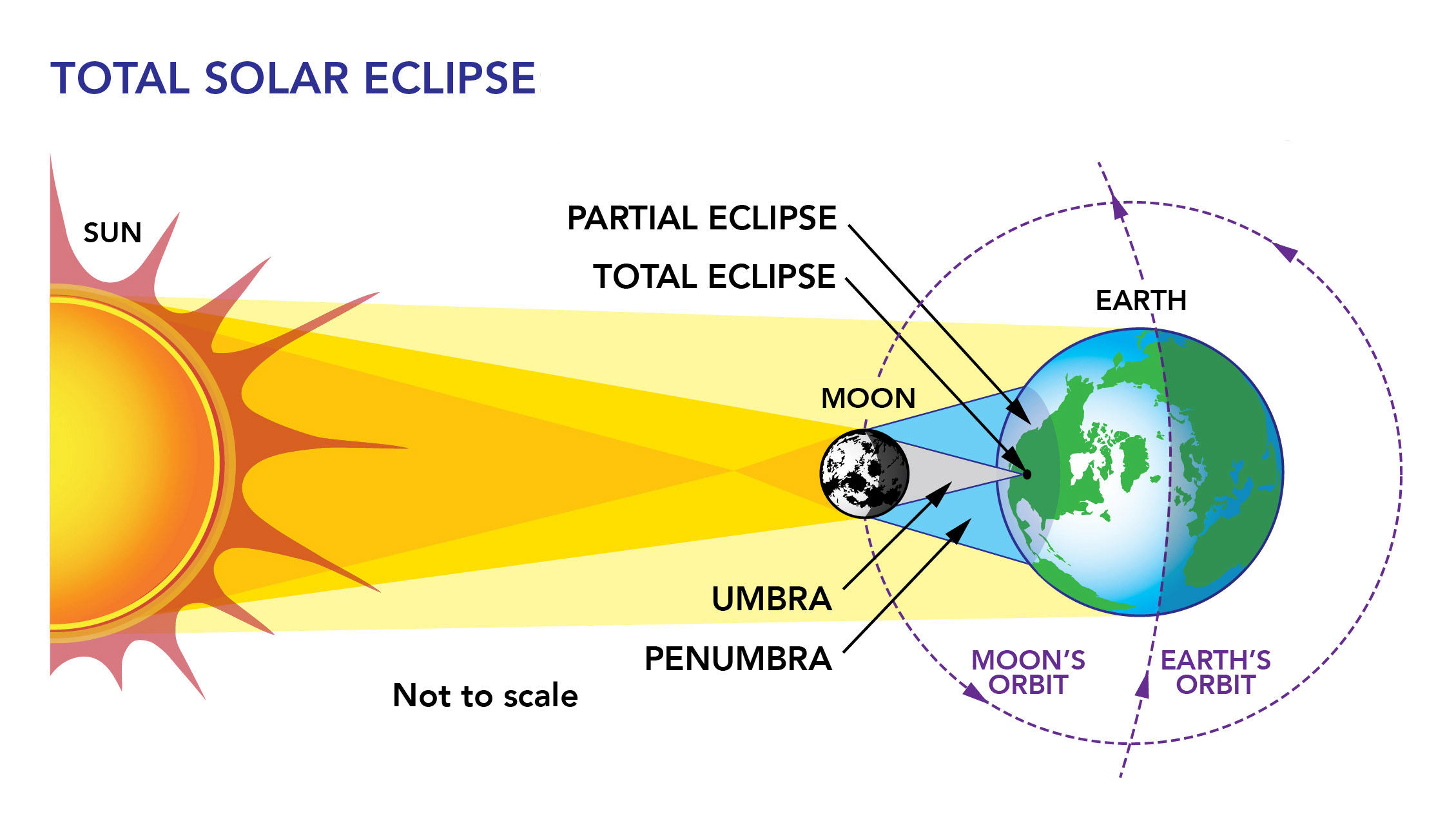
Look, most people think you need to stand in a muddy field with specialized glasses to appreciate a total solar eclipse. You crane your neck upward, pray the clouds part, and marvel for a few fleeting minutes as day turns to night. That ground-level view is classic. It is iconic. It is also completely missing the bigger picture. When you watch a total solar eclipse from space, the entire event transforms from a local astronomical curiosity into a planetary-scale spectacle.
Satellites and spacecraft orbiting Earth capture angles that completely rewrite how we understand our solar system. You get to watch the Moon's shadow race across continents at thousands of miles per hour. You see the ethereal glow of the solar corona stretching far beyond what our eyes can register from the surface. If you have only ever seen ground-based photography, seeing the eclipse from orbit feels like discovering an entirely different event.
The Unique Perspective of Orbital Observation
Orbiting hundreds of miles above Earth gives spacecraft an unfair advantage. There is no weather to ruin the shot. There are no sudden cloud banks rolling in off the ocean to obscure the climax. Agencies like NASA, ESA, and commercial operators deploy advanced optics that track the Moon's umbral shadow with terrifying precision.
When the eclipse happens, the view from above reveals a dark, ominous disk cast directly onto the blue and green canvas of our home planet. It looks like a giant bruise moving across the globe. That shadow travels at supersonic speeds, driven by the orbital mechanics of the Moon swinging between Earth and the Sun.
Most ground observers miss the scale of this movement because they are trapped in a tiny fraction of that shadow path. Space assets show you the totality path in its entirety. You realize just how localized the phenomenon really is. It is a tiny footprint of darkness sweeping across a massive, bright world.
Capturing the Invisible Corona
The Sun's corona is notoriously difficult to study. Its faint, million-degree plasma is normally washed out by the blinding glare of the solar disk. During a total solar eclipse, the Moon acts as a natural occulter, blocking the bright face of the Sun and letting the corona flare outward into view.
From the ground, you get a breathtaking glimpse of these shimmering magnetic tendrils. From space, instruments take it a step further. Without atmospheric distortion, space telescopes and high-altitude cameras map the solar wind and coronal mass ejections with crisp clarity.
Researchers rely on these orbital snapshots to answer fundamental questions about solar physics. Why is the corona so much hotter than the surface of the Sun? How do solar storms accelerate particles toward Earth? These are not academic puzzles. They have real consequences for our power grids, satellite communications, and GPS networks. Every time the Moon blocks the Sun, spacecraft capture data that helps us protect our technological infrastructure from space weather.
Why Ground Views Still Matter
Space might give you the grand macro view, but it lacks the visceral punch of being there. Honestly, standing in the path of totality hits differently. The temperature drops. Crickets start chirping, confused by the sudden dusk. The horizon glows with a 360-degree sunset effect because you are looking at sunlight refracting through the atmosphere just outside the shadow zone.
Spacecraft cannot feel the drop in temperature. They do not capture the collective gasp of thousands of people looking up together. That emotional resonance belongs exclusively to us down here on the dirt.
The smartest approach combines both worlds. Use the ground-level experience to feel the raw power of the cosmos, and then turn to orbital imagery to understand the mechanics behind the magic.
How to Follow Orbital Eclipse Missions
If you want to catch these space-based views for yourself, you have to know where to look. Space agencies do not just hoard this data; they stream it live and release high-resolution imagery shortly after major events.
Keep an eye on official mission feeds from agencies operating Earth-observation satellites. Look for specialized solar physics campaigns that pair ground-based observations with orbital assets. When the next major alignment occurs, skip the generic news aggregation sites and head straight to the telemetry and imagery archives provided by aerospace operators.
You will see Earth in a completely different light. Literally. Once you witness the shadow of the Moon sliding across our oceans from the vantage point of the stars, you will never look at an eclipse the same way again.