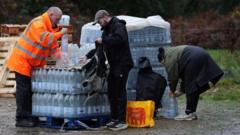
Thousands of people woke up recently with dry taps and no clear idea when the water would come back. It’s not just a minor annoyance. For families with young kids or elderly relatives, it's a genuine crisis. When water bosses stood before MPs to explain these recent mass outages, the message was clear. They failed. They didn’t just fail to keep the pipes flowing; they failed to communicate, failed to provide bottled water fast enough, and failed to treat their paying customers like human beings.
The reality of our current infrastructure is messy. We’re dealing with a Victorian-era pipe network that’s screaming for help, yet the response from the top often feels like a series of rehearsed excuses. You pay your bills every month. You expect a basic level of service. When that service disappears for days on end, a simple "sorry" in a committee room doesn’t cut it.
Why Recent Water Outages Happened and What Went Wrong
The recent grilling of water company executives by the Environment, Food and Rural Affairs Committee exposed some ugly truths. We aren't just looking at "acts of God" or unpredictable weather. We're looking at systemic brittleness.
During the hearings, it came out that thousands of households were left without supply during recent peak demand periods and infrastructure failures. The bosses admitted their response was inadequate. One of the biggest stumbles was the "bottled water stations" meant to be a lifeline. In many cases, these stations were located miles away from the hardest-hit communities. If you don't have a car or you're disabled, you're basically stuck.
That’s a massive oversight. It shows a total lack of boots-on-the-ground understanding. You can't manage a water crisis from a spreadsheet in a glass office. You need to know which streets are cut off and who lives there. The communication was equally disastrous. Customers reported getting conflicting text messages or, worse, total silence for twelve hours straight.
The Problem With Our Crumbling Pipe Network
Let's talk about the physical stuff. Most of the pipes under your feet are ancient. We’re talking about cast iron and clay systems that were never designed for a population of this size or the extreme weather swings we see now.
When the ground gets too dry, it shifts. When it gets too wet, it shifts. Those old pipes just snap. Water companies point to this as an excuse, but they’ve known about this fragility for decades. They’ve spent years prioritizing shareholder dividends over the aggressive, boring work of digging up roads and replacing the guts of the system.
- Leakage rates remain stubbornly high.
- Pressure management is often reactive rather than proactive.
- Investment in "smart" monitoring has been too slow.
It’s frustrating because the technology to predict these bursts exists. Acoustic sensors can "hear" a leak before it becomes a geyser. Pressure transients can be mapped in real-time. But deploying this across a whole region costs money, and that money has historically gone elsewhere.
Compensation Is Often a Joke
If your internet goes down, you usually get a credit. If your water goes down for three days, the statutory compensation is often a pittance compared to the actual stress and cost incurred. People have had to check into hotels just to have a shower. Small businesses like cafes and hair salons have had to close their doors, losing thousands in revenue.
The current compensation triggers are too high. Often, the outage has to last a specific number of hours before the "clock" even starts for a payout. And even then, it’s often an automatic payment that doesn't account for the fact that you had to buy twenty cases of Evian just to flush your toilet.
MPs pushed back on this during the session. They asked why the people at the top still get bonuses when the people at the bottom can’t wash their hands. It's a fair question. The "social contract" between a utility provider and the public is broken when the provider gets rich while the service remains unreliable.
What You Should Do When the Taps Go Dry
Don't just sit there and wait for a text that might never come. You need to be aggressive about your rights. Water companies have a legal obligation to provide "alternative supplies" within a set timeframe, usually 24 hours, but often sooner for vulnerable people.
If you have a medical condition or young children, get on the Priority Services Register immediately. Don't wait for a crisis. This list ensures that the company knows you need extra help the second the pressure drops. It’s a free service, and it puts you at the front of the line for home deliveries of water.
Keep a log of everything. Note the exact time the water stopped. Take photos of any discolored water if it comes back briefly. Keep every receipt for water you buy or meals you had to eat out because you couldn't cook. You’ll need this evidence when you inevitably have to fight for a fair compensation claim. Most people just take the £30 or £50 they’re offered. If your loss was greater, demand more.
Demanding Better Standards From the Regulator
Ofwat is the body that's supposed to keep these companies in check. For a long time, they've been seen as too soft. They allow companies to take on massive debt while paying out profits. That tide is slowly turning, but it’s not turning fast enough for the people in the latest "dry zone."
We need to see tougher penalties that actually hurt. If a company fails to provide water to a town for 48 hours, the fine shouldn't just be a cost of doing business. It should be significant enough to make the board of directors sweat.
Public pressure is the only thing that moves the needle here. Write to your MP. Tag the water company on social media with photos of the empty shelves at the local supermarket. They hate bad PR more than they hate small fines. The recent hearing happened because the public outcry was too loud to ignore.
Practical Steps for Your Household Right Now
You can’t control the main water line, but you can control your readiness.
First, find your internal stop tap. It’s usually under the kitchen sink or in a hallway cupboard. Make sure it actually turns. If a pipe bursts inside your house because of a pressure surge after an outage, you need to be able to kill the flow in seconds.
Second, keep a "emergency water kit." I’m talking about two or three 5-liter bottles tucked away in the back of a cupboard. It’s not enough for a week, but it’s enough for that first night when the shops are mobbed and the company hasn't set up their stations yet.
Third, check your home insurance. Some policies cover "loss of metered water" or the costs associated with being unable to live in your home during an outage. Know what you're covered for before the ground breaks.
The days of assuming the water will always be there are over. Our infrastructure is tired, and the companies running it have been caught napping. It's time they started acting like the essential service providers they are, rather than just another corporation chasing a margin.