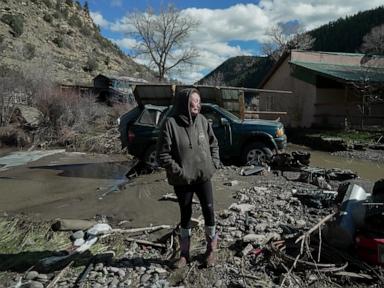
Water does not negotiate.
It does not check your credit score, verify your zip code, or pause at the threshold of a front door to ask whether you remembered to renew a policy before the clouds broke over the Front Range. It simply finds the lowest point in the room and claims it, turning hardwood floors into buckled waves and family photo albums into heavy, grey pulp within the span of a single afternoon.
To understand what happens when the mud finally dries in a Colorado basement, consider a composite portrait drawn from the real testimonies of homeowners along the South Platte and Big Thompson rivers—let us call him Arthur, a retired machinist living twenty miles east of the foothills. When a sudden summer cloudburst overwhelmed the aging storm drains on his street, Arthur did not lose his home to a dramatic, televised wall of water. He lost it to four feet of silent, brown runoff that crept up through his foundation vents while he was at the hardware store buying sandbags. By the time he returned, the water line sat neatly across the middle of his workbench, submerging forty years of tools, a newly replaced furnace, and the drywall of a finished basement he had spent three winters building by hand.
When Arthur called his homeowners insurance provider the next morning, expecting the safety net he had faithfully paid into for three decades, he encountered the most brutal four-word sentence in American personal finance.
Surface water isn't covered.
The Invisible Line Between Rain and Flood
Most people believe that homeowners insurance is a shield against catastrophe. If a tree crashes through your roof during a gale, you are covered. If a pipe bursts behind your kitchen sink and ruins the floorboards, you are covered. If wind drives rain through a shattered window, your policy steps in.
Yet the moment that exact same rainwater touches the soil outside your house and flows across the ground into your living room, the legal definition changes entirely. Under standard homeowners policies across the United States, water coming from above is a covered peril, while water rising from below is classified as a flood—and almost universally excluded.
Think of your standard insurance policy like a wide umbrella. It protects you brilliantly from everything falling out of the sky, from hailstones to falling branches, but it offers zero protection if you are standing in a rising puddle that soaks you from the ankles up. To cover that puddle, you need a separate pair of boots—a standalone flood insurance policy, usually underwritten through the National Flood Insurance Program (NFIP) or a specialized private carrier.
The catch is that millions of Americans do not buy the boots because nobody ever told them they were standing in a creek bed.
In Colorado, this confusion carries a particular sting. Residents live in a high-altitude, semi-arid climate where drought, wildfire, and winter blizzards dominate the public imagination. People in arid states rarely picture themselves needing flood protection unless they live directly beside a rushing mountain river. Yet geography plays a cruel trick along the Front Range. When intense thunderstorms stall against the eastern slope of the Rockies, massive volumes of rain dump onto steep, rocky terrain that cannot absorb the moisture. That water funnels rapidly downward into flat prairie towns, overwhelmed municipal culverts, and suburban cul-de-sacs miles away from any named river.
Even more dangerously, wildfire and flooding are twin sisters in the American West. When severe fires strip hillsides of vegetation, the baked soil turns water-repellent—a condition hydrologists call hydrophobic soil. For years after a burn scar cools, a routine afternoon rainstorm can trigger catastrophic flash flooding and debris flows in neighborhoods that have never seen standing water in recorded history.
The Myth of the Safe Zone
If you sit down with Arthur at his kitchen table—the upstairs one that stayed dry, though it now smells faintly of bleach and damp gypsum—he will show you the mortgage paperwork from when he bought the house in 1998. Nowhere in that thick stack of closing documents was he required to purchase flood insurance.
Why? Because his house sat outside the federal government’s designated 100-year floodplain.
Here lies one of the most misunderstood statistics in modern life. When federal mapmakers draw a "100-year floodplain," they are not describing a neighborhood that floods once every century, like clockwork, leaving ninety-nine peaceful years in between. They are describing an area with a 1 percent annual chance of flooding—which translates to roughly a 26 percent chance over the life of a standard thirty-year mortgage.
More importantly, the lines on those maps are not physical walls. Water cannot read federal cartography. According to data from the Federal Emergency Management Agency (FEMA), more than 40 percent of all NFIP flood insurance claims come from properties located outside high-risk flood zones. In rapidly growing Western states, where new asphalt parking lots and subdivisions pave over absorbent prairie grass every month, rainwater runs off faster and heavier than older maps ever predicted. Many Federal flood maps rely on historical rainfall records that fail to capture modern extreme precipitation events or localized urban drainage failures.
When a homeowner outside a designated high-risk zone asks an agent about flood coverage, the conversation often dies before it begins. The buyer hears that coverage is "optional," sees an extra annual bill ranging from several hundred to over a thousand dollars, and decides to spend that money on a new roof or property taxes instead. Until the afternoon the storm drains back up, skipping that policy feels like prudent thrift. Afterward, it feels like a trap.
The Anatomy of a Financial Aftershock
When the floodwaters recede from an uninsured home, the physical destruction is only the opening act. What follows is a slow-motion financial hemorrhage that catches families completely off guard.
Consider what happens next in a home like Arthur’s. First comes the immediate race against biological decay. In warm summer air, wet drywall and soaked carpet padding begin growing black mold within twenty-four to forty-eight hours. You cannot wait weeks for a contractor's estimate; you must tear out the walls immediately or risk losing the entire structure to toxic spores. Professional water mitigation crews—armed with industrial dehumidifiers, air scrubbers, and moisture meters—charge anywhere from $3,000 to $15,000 for emergency extraction and tear-out alone.
Then come the mechanical losses. In most American homes, the most expensive vital organs of the building live in the basement. A submerged furnace, water heater, electrical panel, and air conditioning compressor rarely survive four feet of silty runoff. Replacing them costs another $12,000 to $20,000 out of pocket. Add ruined flooring, ruined cabinetry, lost heirlooms, and thousands of dollars in ruined tools or furniture, and a moderate basement flood easily crosses $50,000 in uncompensated damage.
Many uninsured survivors assume that if a storm is bad enough, the government will step in to make them whole. They picture federal disaster relief checks arriving to rebuild their basements.
Reality is far harsher.
Federal disaster assistance through FEMA’s Individual Assistance program is only triggered if the event is large enough to earn a formal Presidential Disaster Declaration—a threshold that localized, neighborhood-level flash floods frequently fail to meet. Even when a major disaster is declared, federal grants are designed strictly to make a home safe, sanitary, and livable again, not to restore lost property or cover full repair costs. Historically, average FEMA disaster grants hover around a few thousand dollars—barely enough to replace a single furnace, let alone rebuild a destroyed living space. Beyond those modest grants, the primary federal lifeline offered to uninsured homeowners is a low-interest disaster loan through the Small Business Administration. For a retiree on a fixed income, or a young family already stretched thin by inflation and mortgage payments, "relief" in the form of a brand-new thirty-year debt obligation feels less like rescue and more like an anchor.
The Quiet Grief of Losing Normal
Numbers tell only half the story. The other half lives in the nervous system.
Anyone who has lived through severe water damage knows that the trauma has a very specific smell—a sharp, earthy cocktail of stagnant pond water, wet cardboard, and chlorine bleach that clings to your clothes even after you leave the house. It lives in the constant hum of industrial fans running twenty-four hours a day, vibrating through the floorboards until you can no longer hear yourself think.
For Arthur, the hardest part was not swinging the crowbar to rip out the drywall he had hung himself three winters prior. It was standing in his driveway beside a rented dumpster, tossing waterlogged boxes of his late wife’s gardening journals and his children’s high school trophies into the trash while neighbors drove slowly past.
Disaster recovery experts often talk about the "second disaster"—the period roughly six weeks after the storm when the news vans have packed up, the sympathetic casseroles stop arriving, and the community moves on to the next headline. That is when the isolation sets in. You are living out of plastic totes in your upstairs bedroom. Your savings account has been hollowed out to pay an electrician just to restore safe power to the kitchen. Every time dark clouds gather over the mountains in the late afternoon, your stomach tightens into a knot, and you find yourself walking to the window every ten minutes to check the level of the water in the street gutter.
Normal ceases to be a baseline you take for granted. Normal becomes a distant, expensive destination you are no longer sure you can afford to reach.
How to Build a Firewall Before the Rain
You cannot stop the sky from opening over the Front Range, nor can you re-engineer your city's storm sewers overnight. What you can do is dismantle the blind spots that leave ordinary households exposed to ruin.
Start by separating the myth of flood zones from the reality of water physics. If it rains where you live, it can flood where you live. Rather than relying solely on whether a mortgage lender forces you to buy coverage, look up your property's actual flood risk using independent flood-modeling tools alongside FEMA maps, paying close attention to localized surface runoff and drainage patterns on your street.
If you own a home—or even if you rent an apartment, since renters can buy contents-only flood policies—price out a policy before you ever need it. Under the National Flood Insurance Program, policies for homes outside high-risk zones are often far more affordable than homeowners assume, sometimes costing less than a dollar or two a day. Crucially, however, do not wait until a storm is on the weather radar to make that call: almost all flood insurance policies carry a mandatory 30-day waiting period before coverage takes effect. Calling an agent when the thunder starts is like trying to buy fire insurance while your curtains are already smoking.
Second, inspect the specific endorsements on your existing homeowners policy. Ask your insurance agent directly about water backup and sump overflow coverage. Standard policies typically exclude water that backs up through sewers or drains, yet adding a dedicated water-backup rider often costs under $100 a year and can provide $10,000 to $25,000 in protection when municipal pipes choke during a downpour. If you have a finished basement, check whether your policy limits payouts on below-grade personal property, as many standard policies severely restrict coverage for belongings stored beneath ground level.
Finally, treat water defense as physical maintenance rather than a one-time purchase:
- Grade the soil away from your foundation so rainwater flows at least six feet outward rather than pooling against concrete walls.
- Install a battery-backed sump pump—because the exact storms that flood basements are the ones that knock out neighborhood power grids.
- Elevate vital utilities off the basement floor onto concrete blocks or wall brackets, keeping furnaces, water heaters, and electrical panels above the waterline of a typical runoff event.
- Digitize irreplaceable records and store physical heirlooms upstairs, ensuring that what cannot be replaced by money is never left in the lowest room of the house.
Back in his driveway east of the Rockies, Arthur eventually finished filling the dumpster. With help from his son and a few neighbors from down the block, he stripped the basement down to bare concrete studs, bleached the framing, and hauled the ruined furnace out to the curb. He could not afford to rebuild the finished rooms, hang new drywall, or replace the workshop tools he had spent a lifetime collecting. Instead, he bought a heavy-duty dehumidifier, painted the bare concrete walls with waterproof sealant, and mounted a new water heater onto steel brackets three feet off the floor.
Now, when afternoon thunderheads stack up dark and bruised against the mountains, he no longer rushes to the hardware store looking for sandbags that have already sold out. He simply walks down the wooden steps into his empty basement, checks the green indicator light on his battery-backed sump pump, and listens to the rain begin to fall on the roof overhead.


