The sea does not care about geopolitics. It rises, it falls, it rolls against the hulls of waiting oil tankers with a monotonous, indifferent rhythm. But the men and women standing on the shores of the Strait of Hormuz feel every ripple of the tension humming through the air.
Imagine, for a moment, a narrow watery throat—just twenty-one miles wide at its absolute minimum—through which a massive fraction of the planet's daily petroleum supply must crawl to keep factories humming, trucks moving, and lights burning. When that throat tightens, the entire globe coughs. Tehran sits back, patient and unhurried, calculating the cost of every passing day while ships idle in the blue expanse, their captains staring at horizons that refuse to clear.
There is an inherent gravity to a bottleneck. You do not need a degree in economics to understand what happens when a valve is slowly turned shut. Prices at pumps in distant suburbs spike. Anxiety trickles down from trading floors on Wall Street to kitchen tables where families look at heating bills with quiet dread. Yet, thousands of miles away from those boardrooms, the immediate reality is dust, concrete, and the suffocating weight of uncertainty.
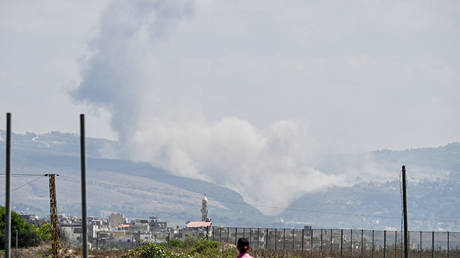
Consider what happens next in places like Qusra, a village tucked into the scarred hills of the West Bank. Settlers move across the dry earth with a heavy, deliberate purpose. Homes are surrounded. Olive groves, tended for generations by families whose roots run as deep as the ancient trunks, become flashpoints. The conflict here is rarely fought with grand maneuvers on distant maps; it is measured in broken windows, terrified livestock, and the sound of shouting carrying across a dusty valley in the afternoon heat.
We talk about supply chains and strategic leverage as if they are abstract mathematical equations. They are not. They are flesh and blood.
A logistics manager in Singapore watches a container ship sit motionless off the coast of Oman, knowing that every extra day at sea adds thousands of dollars in fuel and insurance penalties. A father in Qusra looks out his kitchen window at armed figures gathering near his boundary wall, wondering if tonight will be the night the door is forced open. Both men are victims of the same sprawling, chaotic storm system of global instability. Different latitudes, identical dread.
For decades, we built an interconnected world on the fragile assumption that the pipes and shipping lanes would always stay open. We traded local resilience for global efficiency. Every gadget, every barrel of oil, every manufactured part moves along these invisible, fragile arteries. When a state actor decides to test the limits of patience, or when local tensions boil over into rural streets, the fragility is exposed for everyone to see.
Tehran’s calculated delay in reopening the crucial maritime corridor is not an administrative oversight. It is a posture. It is a message written in idle anchors and withheld barrels. Every extra hour of closure forces policymakers in Washington, Brussels, and Riyadh to weigh the price of intervention against the terrifying cost of inaction. It is a high-stakes game of chicken played with the global economy as the passenger in the back seat.
Meanwhile, on the ground in the West Bank, the calculus is even more immediate. The separation between high-level diplomatic stagnation and local violence is razor-thin. When superpowers posture, the shockwaves travel downward, empowering extremist elements on the ground who operate with the impunity granted by wider chaos. A blocked strait in the Persian Gulf and a besieged home in Qusra are tied together by the oldest thread in human history: the ruthless pursuit of dominance at the expense of ordinary lives.
We look for simple answers in complex times. We want a clean narrative with a hero, a villain, and a neat resolution. History refuses to oblige. There is no neat resolution coming tomorrow morning. There is only the slow, grinding realization that our modern comfort rests on an exceptionally fragile foundation.
The tankers will eventually move again. The strait cannot stay choked forever without breaking the very nations attempting to control it. But the scars left on the hillsides, the inflation baked into the global market, and the lingering fear in the eyes of villagers who have learned not to trust the night will remain long after the first ships clear the horizon. The water will smooth over where the wakes of the tankers passed, leaving no trace on the surface of the turbulence buried deep below.