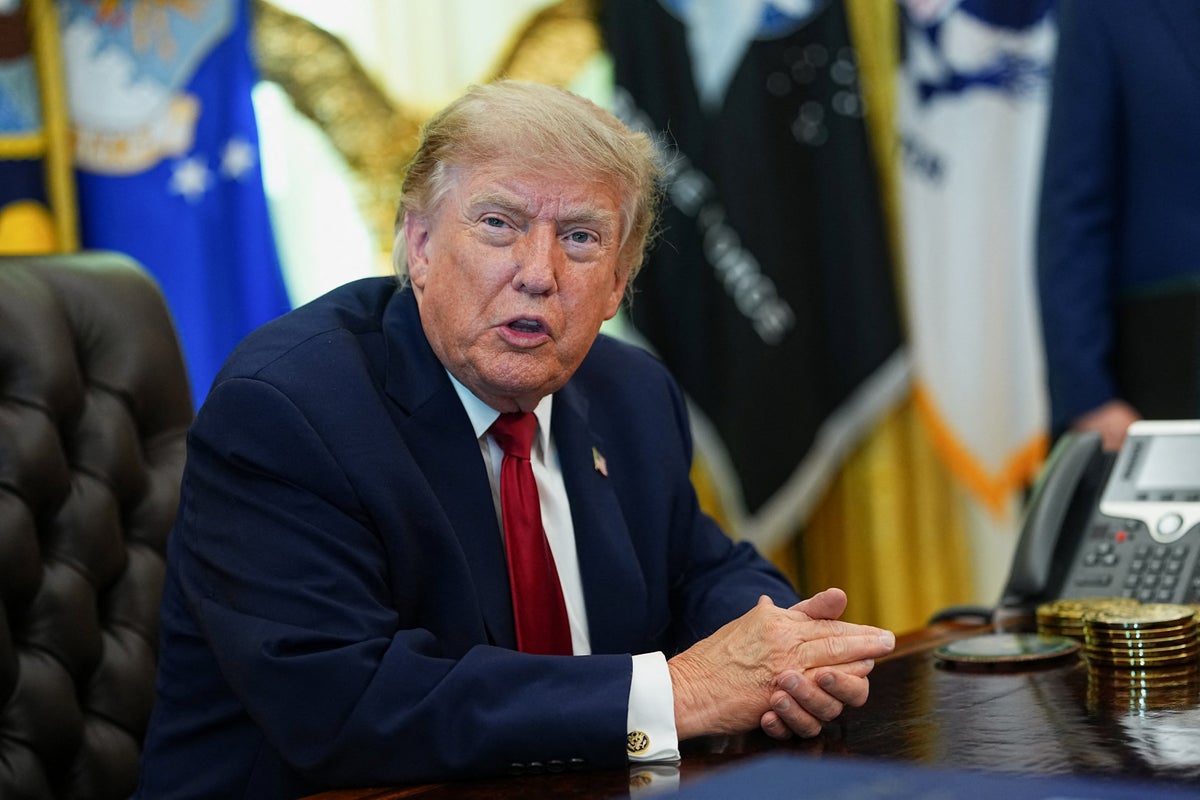
Donald Trump recently turned his signature sarcasm toward the legal and political brick wall facing his promise to end birthright citizenship. By mockingly congratulating Chinese President Xi Jinping, the former president highlighted a narrative he has nurtured for years, which is that automatic citizenship for children born on American soil directly benefits foreign adversaries. This rhetorical pivot exposes a deeper, more complex conflict involving constitutional law, international migration networks, and the shifting boundaries of American executive power. The debate over the Fourteenth Amendment is not merely a campaign talking point, but a fundamental disagreement on the definition of national identity.
The core of the issue rests on a single sentence in the United States Constitution. The Citizenship Clause of the Fourteenth Amendment guarantees citizenship to all persons born or naturalized in the United States and subject to the jurisdiction thereof. For over a century, this clause has been interpreted as a blanket grant of citizenship to almost anyone born within U.S. borders, regardless of their parents' immigration status. Trump and his legal advisers challenge this orthodox interpretation, arguing that the phrase "subject to the jurisdiction thereof" was never intended to include the children of foreign nationals or temporary visitors.
By linking this constitutional debate to China, the political calculus changes completely. The rhetoric transforms a dense legal argument into an immediate national security concern. Congratulating President Xi is a deliberate tactic designed to frame the preservation of birthright citizenship as an act of national weakness that plays straight into the hands of America's primary global competitor.
The Legal Precedents Shielding Birthright Citizenship
The legal foundation supporting birthright citizenship is remarkably durable. The definitive test of the Citizenship Clause occurred in 1898 with the Supreme Court case United States v. Wong Kim Ark. Wong Kim Ark was born in San Francisco to Chinese parents who were legally residing in the United States. When he was denied re-entry to the country after a trip abroad on the grounds that he was not a citizen, the case went to the highest court.
The Supreme Court ruled decisively in his favor. The justices established that the Fourteenth Amendment applied to the children of foreign citizens born on American soil, provided those parents were not diplomatic officials or part of an invading military force. This ruling established the principle of jus soli, or birthright citizenship, as the dominant legal framework in the United States.
Constitutional scholars across the political spectrum generally agree that altering this framework requires a constitutional amendment, which is a notoriously difficult legislative hurdle. A two-thirds majority in both houses of Congress and ratification by three-fourths of the states is required to change the Constitution. Because that path is politically impossible in a deeply divided country, opponents of birthright citizenship have turned their attention toward executive orders and novel legal theories designed to force the Supreme Court to revisit the Wong Kim Ark precedent.
The Business of Birth Tourism
The connection to China is not entirely fabricated out of thin air. A highly lucrative industry known as birth tourism has existed for decades, catering to wealthy foreign nationals who want their children to possess an American passport. Agencies in cities like Shanghai, Beijing, Taipei, and Moscow openly market packages that include housing, medical care, and legal assistance for expectant mothers traveling to the United States on tourist visas.
These families are not entering the country surreptitiously. They pay tens of thousands of dollars in cash to private clinics and luxury apartment complexes, primarily in California, New York, and Florida. The attraction is obvious. An American passport grants entry to over a hundred countries without a visa, opens doors to elite American universities, and allows the child, upon turning 21, to sponsor their parents for lawful permanent residency.
Federal law enforcement has occasionally cracked down on these operations, but the charges are typically filed for visa fraud or tax evasion, rather than the act of giving birth itself. The legal act of giving birth on U.S. soil remains protected. This creates a glaring policy contradiction that infuriates immigration hawks. They see a system being actively gamed by affluent foreign citizens who have no intention of assimilating or contributing to the American economy in the long term.
The Executive Order Strategy and Its Practical Limitations
Trump has repeatedly asserted that he can end birthright citizenship through an executive order on his first day back in office. The proposed mechanism involves instructing federal agencies, specifically the Social Security Administration and the Department of State, to deny social security numbers and passports to children born in the U.S. unless at least one parent is a citizen or a lawful permanent resident.
This strategy is designed to provoke an immediate lawsuit. The goal is to bypass Congress entirely and force a direct confrontation in the federal court system, ultimately reaching a conservative-leaning Supreme Court that has previously demonstrated a willingness to overturn long-standing precedents.
However, the operational chaos of such an executive order would be immense. It would instantly create a class of undocumented individuals who were born in American hospitals but lack any legal status or identity documents. Hospitals, schools, and local governments would find themselves caught in a bureaucratic nightmare, unsure of how to verify the legal status of newborns. The legal challenges would clog the federal court system within minutes of the order being signed, and federal judges would almost certainly issue immediate injunctions to halt the policy before it could take effect.
Global Norms and the American Exception
The United States is one of the few developed nations that maintains an unrestricted policy of jus soli. Most European countries abandoned pure birthright citizenship decades ago, moving toward a system of jus sanguinis, where citizenship is determined by the nationality of the parents rather than the place of birth. Countries like France, Germany, and the United Kingdom require at least one parent to have legal residency or citizenship for a child to automatically acquire nationality at birth.
Opponents of the American system argue that unrestricted birthright citizenship is an anachronism left over from the 19th century, a period when the United States desperately needed to populate vast expanses of land and encourage immigration. They argue that in a globalized world characterized by mass migration and rapid international travel, the policy acts as a powerful magnet for illegal immigration and exploitation.
Conversely, defenders of the policy argue that birthright citizenship has been an essential tool for integration, preventing the creation of a permanent, multi-generational underclass of non-citizens. In countries with strict parental lineage laws, the grandchildren of immigrants can still be denied citizenship, leading to social alienation and political instability. The American model, despite its flaws, ensures that anyone born within the national community is a full member of that community from day one.
The Rhetorical Shift to Great Power Competition
Framing the immigration debate through the lens of great power competition with China represents a significant shift in political messaging. Historically, restrictionist rhetoric focused primarily on economic competition, the strain on public services, or concerns about cultural assimilation. By shifting the focus to President Xi Jinping, the argument becomes geopolitical.
This framing taps into a broader anxiety regarding the rise of China and the perceived decline of American global dominance. It transforms a domestic policy dispute into a theater of international conflict, suggesting that every child born to a foreign national is a potential tool of a foreign state. This rhetoric is highly effective at mobilizing a political base, but it complicates the search for realistic policy solutions. It reduces a complex legal and administrative challenge down to a simple narrative of strength versus weakness.
The true vulnerability in the American system is not the Fourteenth Amendment itself, but the systemic failure to manage and enforce existing visa programs. The birth tourism industry relies on the exploitation of tourist visas, a problem that could be addressed through stricter visa screening, increased funding for consular officers, and tougher penalties for the domestic agencies that facilitate these arrangements. Focusing on these administrative levers is far less politically dramatic than threatening to dismantle a foundational element of the Constitution, but it avoids a constitutional crisis while addressing the underlying issue. The political theater surrounding the issue ensures that these practical, unglamorous solutions are routinely ignored in favor of grand rhetorical gestures that do little to change the reality on the ground.