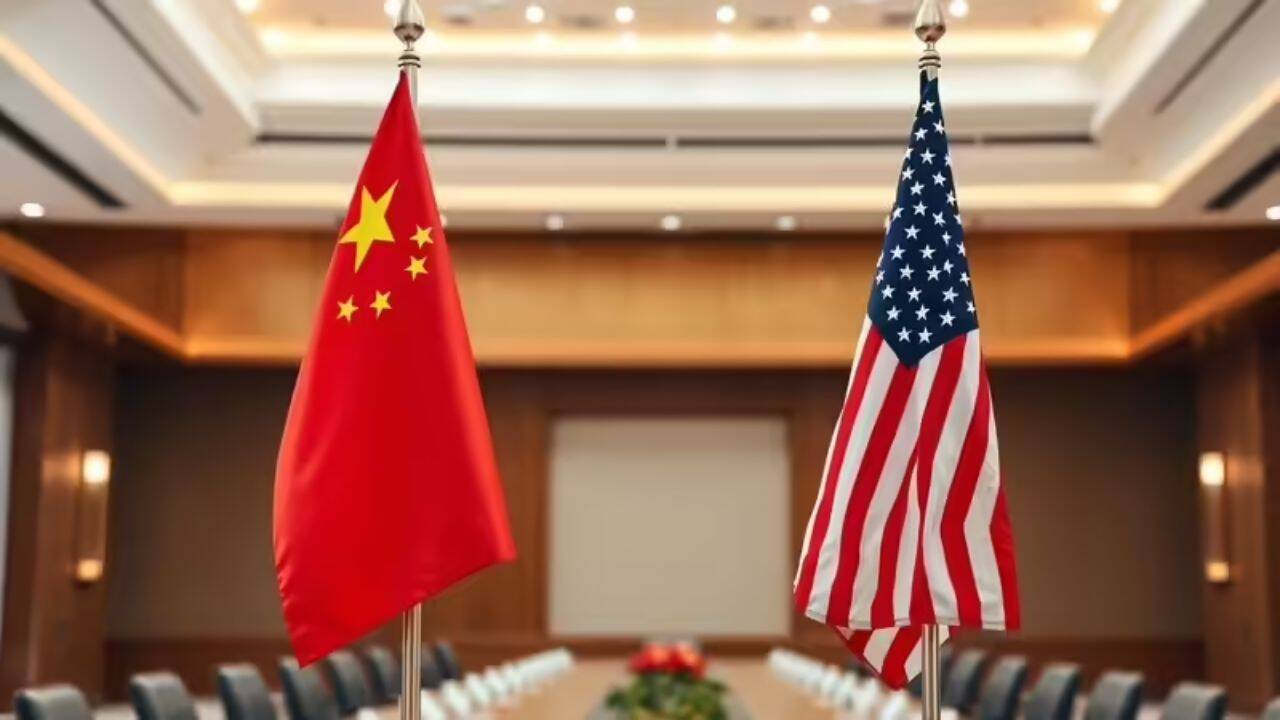
Beijing has quietly transformed its export controls from a reactive diplomatic slap on the wrist into a proactive squeeze on Western military production. When China recently announced sweeping restrictions targeting foreign defense contractors and critical rare earth elements, headline writers rushed to frame it as a predictable tit-for-tat response to Washington’s tech blacklists. That reading misses the structural trap currently being sprung.
This is not a temporary trade spat. It is the tactical deployment of near-monopoly power over the elements required to build modern precision weaponry, stealth aircraft, and missile guidance systems. By shifting the battlefield from semiconductor manufacturing equipment to raw material processing, Beijing is exploiting a vulnerability that the West cannot engineer its way out of for at least a decade.
The Choke Point Inside the Tomahawk Missile
To understand the leverage at play, look past the political rhetoric and examine the bill of materials for a single American F-35 fighter jet or a Tomahawk cruise missile. Each F-35 requires roughly 920 pounds of rare earth materials. These elements, with names like neodymium, dysprosium, and samarium, are what allow military hardware to operate under extreme stress, resist heat, and maintain intense magnetic fields in high-performance motors.
The West does not lack the rocks containing these minerals. It lacks the infrastructure to turn those rocks into weapons-grade components.
[Raw Ore Extraction] -> [Chemical Separation] -> [Oxide Refining] -> [Metallurgy & Magnet Fabrication]
      ▲                          ▲                      ▲                        ▲
  Global Mix             China Monopolies        China Monopolies         China Monopolies
The mining of rare earths is environmentally brutal, but the chemical separation and metallurgy required to create usable magnets and alloys are even more complex. China controls over 90 percent of the global capacity for refining these elements into functional oxides and metals. If a Western defense contractor extracts neodymium in California or Australia, that material historically has traveled to Chinese facilities to be processed.
By imposing strict export licenses on these specific downstream materials, Beijing is effectively turning off the valve at the processing stage. Western firms can look at their stockpiles of raw ore all day, but without the specialized chemical processing plants that China spent thirty years subsidizing, that ore cannot be loaded into a defense production line.
Why the Pentagon Cannot Easily Diversify
Washington has thrown billions of dollars at domestic processing initiatives over the last five years, aiming to build a parallel supply chain independent of Chinese influence. The harsh reality of heavy industry is that money alone cannot buy time.
Building a modern chemical separation facility involves navigating strict environmental permitting, securing specialized refining equipment, and training a workforce in an industry that effectively died out in North America during the 1990s. A processing plant cannot simply be turned on; it requires years of calibration to achieve the purity levels required for military-grade hardware. If a batch of dysprosium oxide is contaminated by even a fraction of a percent, the resulting magnets fail under the thermal stress of a jet engine.
Furthermore, Western attempts to build alternative loops are consistently undercut by Chinese market manipulation. Whenever a non-Chinese processing facility nears commercial viability, Beijing has the capacity to flood the market with cheap, subsidized materials. Prices plummet, the Western upstart loses its private funding, and the monopoly remains intact.
This economic reality forces defense primes to rely on convoluted supply chains that often mask the true origin of their components. A magnet might be stamped as a product of Japan or Germany, but the refined powder used to press that magnet almost certainly originated in a Chinese processing hub like Ganzhou.
The Corporate Blacklist as an Enforcement Mechanism
The other edge of Beijing's policy involves direct sanctions and asset freezes aimed at the corporate entities executing Western defense policy. Names like Lockheed Martin, Raytheon, and General Dynamics are frequent targets, but the recent regulatory updates extend far deeper into the sub-tier supplier network.
These measures create a chilling effect throughout the commercial aerospace and technology sectors. A tier-three supplier providing specialized valves or software to a major defense contractor now faces an existential choice. If they continue to fulfill contracts for blacklisted Western military entities, they risk losing access to the Chinese commercial market, their Chinese manufacturing facilities, or their access to raw materials.
This creates an asymmetric regulatory burden. While Western governments use blacklists to stop the flow of sensitive technology into China, China uses its blacklists to sever the relationship between Western defense firms and the global commercial supply chain.
The Blind Spots in Western Counterstrategies
Current Western mitigation strategies rely heavily on stockpiling and recycling. The Pentagon maintains the National Defense Stockpile, a repository of critical materials meant to carry the military through a prolonged conflict. Stockpiles are finite. They are designed for short-term disruptions, not a generational decoupling of global trade.
Recycling rare earths from old electronics or decommissioned military hardware is frequently cited as a silver bullet by policy analysts. The economics do not track. Extracting a fraction of a gram of neodymium from an old hard drive or a hybrid vehicle motor requires manual teardown, hazardous chemical baths, and massive energy inputs. It is an artisanal solution to a mass-production problem.
The true vulnerability lies in the fact that Western defense procurement remains fundamentally tied to commercial efficiency. For decades, the goal was to drive down costs by outsourcing heavy, dirty, low-margin industrial processes to regions with lower regulatory hurdles. That efficiency has now been weaponized.
The Western defense industrial base is discovering that you cannot build twenty-first-century deterrence on a foundation of outsourced metallurgy. Resolving this imbalance requires more than just capital or political willpower; it demands a fundamental acceptance that the era of borderless, politically neutral commodity markets is over. The coming decade will not be defined by who designs the best software, but by who controls the physical elements required to run it.