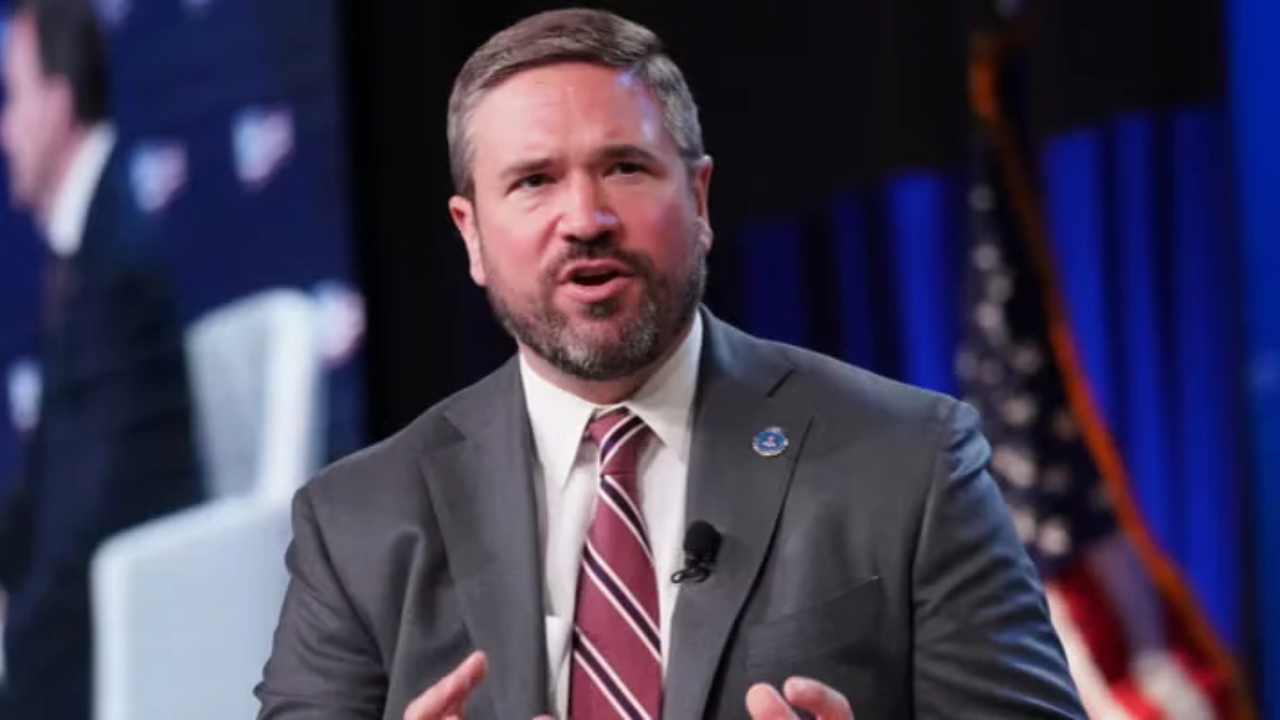
The desk is always cleaner than when you arrived. That is the quiet law of leaving a high-stakes office.
By the time Andrew Bailey packed his things, the corridors of the federal building hummed with the familiar, relentless current of national security. Phones rang in distant cubicles. Monitors flickered with encrypted alerts. It was a world of sharp corners, heavy doors, and the constant, thrumming weight of decisions that ripple across millions of lives. Just over a year ago, he stepped into the role of co-deputy director, joining the leadership machinery at one of the most scrutinized law enforcement agencies on the planet.
Thirteen months. In the span of history, it is a blink. In the span of Washington, D.C., it is a lifetime of leaked memos, congressional hearings, midnight briefings, and the suffocating gravity of the public eye.
Then came the announcement. He was stepping down. The reason was as old as time and as sharp as a knife: he was going home to Missouri.
To understand why a man walks away from the pinnacle of power, you have to look past the press releases and the dry corporate language of resignation letters. You have to look at what power actually costs.
The Currency of Absence
We romanticize leadership. We look at the titles—deputy director, chief, commander—and we picture the corner office, the black SUVs idling at the curb, the quiet authority of a man who can pick up a secure phone and move pieces across a national chessboard.
We rarely picture the kitchen table at 3:00 AM in a time zone two hours behind the capital.
Leadership at that level is a relentless arithmetic of sacrifice. Every hour spent reviewing counterintelligence briefings is an hour stolen from a child's soccer game. Every weekend crisis management meeting is a missed family dinner. The uniform changes, the stakes get higher, but the hours in a day remain stubbornly finite.
When Bailey looked at the calendar after a year in the engine room of the federal government, the math changed. The gravity of home—of the Midwest, of familiar streets, of a life untethered from the relentless glare of the Beltway—began to pull harder than the gravity of the office.
It takes a specific kind of courage to admit that the mountain, no matter how prestigious, is not where you want to spend the rest of your life.
Inside the Machine
The role of a federal co-deputy director is not for the faint of heart. It sits at the messy intersection of law enforcement, politics, and public trust. Every single day brings a fresh parade of impossible choices.
Imagine sitting in a windowless room where the air smells faintly of ozone and stale coffee, looking at a threat matrix that spans cyber attacks, domestic extremism, and transnational cartels. The data points are cold. A series of numbers on a screen. But behind every data point is a human vulnerability. A compromised network. A ticking clock. A community waiting for protection.
In that environment, you develop a hyper-vigilance. You stop sleeping normally. Your mind becomes an engine that never quite idles down, even when you are thousands of miles away from the crisis.
For a year, Bailey operated inside that engine. He helped steer an agency tasked with guarding the nation's fragile boundaries of law and order during a profoundly turbulent era. It is a job that ages you in dog years. The institutional friction is constant. The public scrutiny is unforgiving.
And yet, for all its difficulty, people line up for these jobs. They do it out of a deep-seated sense of duty. They do it because they believe in the architecture of the state, flawed though it may be.
The Pivot West
Missouri is a long way from the marble and monuments of Washington.
It is a place of rolling hills, wide horizons, and a slower, more grounded rhythm of existence. It is where people know your name not because you appeared on the evening news, but because your kids grew up together or you stood side-by-side at a local diner.
When public servants return to places like Missouri after serving at the federal level, they often experience a strange form of whiplash. The sirens stop. The secure comms fall silent. The adrenaline spike that became a baseline for thirteen months suddenly evaporates, leaving behind a profound, ringing quiet.
That quiet can be terrifying. It is the silence of transition.
Yet, it is also healing.
The Real Legacy
History will write its own paragraphs about Andrew Bailey’s tenure. Analysts will parse his decisions, politicians will debate his efficacy, and the institution will march on without missing a beat, because government agencies are designed to outlive the mortals who inhabit them.
The title will fade from the directory. The office will be reassigned to someone else who will inherit the same late-night calls and the same mountain of classified files.
But the human story remains the one that truly matters.
It is the story of a man who answered the call, walked into the storm, stood his ground for a year, and then made the conscious, deliberate choice to turn around and walk back to the people who knew him before the acronyms and the security details.
There is a quiet dignity in knowing when your chapter in a particular city is finished. There is bravery in recognizing that the most important mission you will ever undertake is the one happening under your own roof.
The packed boxes are loaded. The engine is turned toward the west. The capital keeps spinning on its frantic axis, indifferent and relentless, while somewhere out on the highway, the distance between yesterday's heavy burden and tomorrow's quiet sunrise finally begins to shrink.