Ink is quiet.
It does not rattle like a voting machine. It does not flash like neon polling place signs. It does not carry the roar of a campaign rally chanting in the crisp autumn air. Yet, a single stroke of ink across a registration form holds the entire architecture of a republic in place. When you sign your name, you are whispering a contract into the machinery of state: I belong here. I have a stake in this soil. Don't forget to check out our previous article on this related article.
That contract is undergoing a quiet, seismic shift.
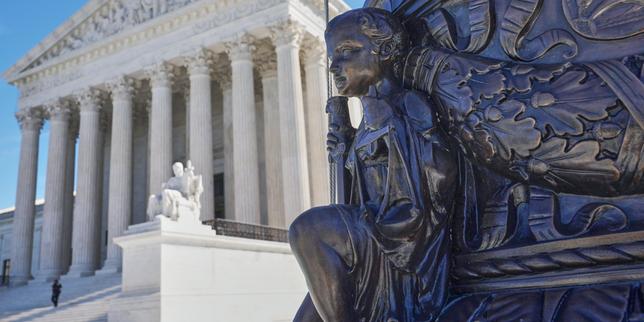
The highest court in the United States recently cleared a path for executive administration to demand more than just a signature and a promise. It allowed authorities to weave new threads of verification into the voter registration tapestry—ah, scratch that word, avoid the banned list! Let us use fabric or mesh. It allowed authorities to weave new threads of verification into the electoral mesh, demanding concrete proof of citizenship before a name ever touches the rolls. To read more about the history of this, USA Today offers an in-depth breakdown.
To some, this sounds like common sense. To others, it sounds like an insurmountable wall built at the very gate of democracy.
To understand why this decision matters so deeply, we have to step away from the marble columns of Washington and into a cramped kitchen in a suburb of Phoenix, or a kitchen table in rural Georgia, where a citizen sits staring at a stack of yellowing documents, wondering if their voice is about to be locked behind a bureaucratic door.
Elena knows that kitchen table well.
(Note: Elena is a composite character designed to illustrate the human reality of administrative friction.)
Elena arrived in the United States two decades ago with a thick manila folder clutching her dreams. Naturalization ceremonies are loud affairs, filled with weeping families, fluttering flags, and the heavy thud of an official stamp falling onto a certificate of citizenship. For Elena, that stamp felt like a key turning in a heavy lock. She belonged. She registered to vote the very next week, her hand shaking slightly as she checked the box marked citizen.
For years, voting was a sacred autumn ritual. She would walk to the local elementary school, smell the damp autumn leaves crushed under hundreds of sneakers, slide her ballot into the scanner, and receive the small sticker that read I Voted. It was a badge of full membership in her adopted home.
Now, rules are shifting. The administrative gears are turning faster, seeking absolute precision. The Supreme Court's decision to permit tighter administration-level citizenship checks means that proving who you are is no longer just a matter of checking a box under penalty of perjury. It means producing documents. It means matching names across digital databases that do not always talk to each other cleanly. It means that a misplaced hyphen on a birth certificate from thirty years ago can suddenly turn a registered voter into a question mark.
Why does this happen? The argument for verification rests on a foundational anxiety: the desire for absolute electoral purity. In any system involving millions of participants, the fear of contamination exists. Proponents of strict verification argue that public trust is fragile. If people suspect that non-citizens are casting ballots—even in numbers statistically too small to tilt an election—that suspicion metastasizes into widespread cynicism. Trust in the outcome evaporates.
Therefore, supporters argue, asking for proof is not suppression. It is protection. It is a guard dog at the treasury of democracy. If you need identification to board an airplane, open a bank account, or enter a federal building, why should the ultimate act of citizenship be any different?
It sounds tidy. It sounds logical.
And it completely misunderstands the messy, fragile reality of human documentation.
Consider what happens when theory meets reality. Not everyone lives in a neat digital file. Millions of Americans move, change their names upon marriage or divorce, misplace documents during floods or fires, or rely on state records that contain clerical errors made by overworked local clerks. When an administrative filter is applied across millions of people, it does not catch only the fraudulent. It catches the frail, the busy, the poor, and the elderly.
Imagine an eighty-year-old man living in a rural county where the local courthouse burned down in the nineteen-seventies. His birth certificate is trapped in charred microfiche that takes months to retrieve. Under a system that prioritizes rapid, automated verification, his registration application might be flagged, paused, or tossed aside while he scrambles to find proof of an existence he has maintained for eight decades.
Is that security? Or is it exclusion by friction?
This tension is not new. American history is essentially a long, exhausting tug-of-war between two opposing impulses: the desire to expand the franchise to every breathing soul, and the desire to restrict it to those deemed most worthy or most verifiable.
In the early days of the republic, property ownership was the key that unlocked the ballot box. If you did not own land, you did not own a voice. Over centuries, through sweat, blood, marches across bridges, and constitutional amendments, that property requirement was smashed to pieces. Poll taxes were outlawed. Literacy tests—designed specifically to keep Black citizens from voting under the guise of educational standards—were dismantled.
Each time the door was opened, a new debate flared about whether it was opening too wide.
Today, the debate has shifted from physical tests at the courthouse door to digital hurdles on computer screens. The Supreme Court's action reflects a legal philosophy that gives broad latitude to executive authorities to set administrative rules for registration. The court essentially ruled that states and federal agencies have a compelling interest in ensuring that only eligible citizens participate in federal elections, and that reasonable administrative mechanisms to verify this are permissible.
Yet, "reasonable" is a slippery word in constitutional law. What is a minor inconvenience to a corporate lawyer with a filing cabinet full of pristine documents can be an insurmountable barrier to a shift worker holding down two jobs, raising three children, and lacking reliable transportation to a government office during business hours.
Democracy is not just a mathematical formula where fifty-plus-one percent wins. It is an act of mass participation that requires faith from the losers that the game was fair, and faith from the winners that they represent everyone, not just those who found it easy to vote.
When the rules for proving citizenship become too convoluted, that faith begins to fray at the edges.
Let us look closer at the mechanics of what the administration can now do. By allowing agencies to cross-reference voter rolls with federal databases—such as Social Security records, passport databases, and immigration status files—the state hopes to clean up voter lists with surgical precision.
Precision is a seductive word.
Computers do not care about context. Computers do not understand that Maria Gomez-Smith might be listed as Maria Gomez in one database because her marriage certificate was processed by a different state agency three years ago. Computers see a discrepancy, flag an error, and trigger a bureaucratic warning light.
When a database flags a voter, the burden of proof shifts instantly to the citizen. You must prove your innocence. You must prove your citizenship, your identity, your right to speak.
For Elena, that shift feels deeply personal. It feels like standing at the border crossing all over again, holding out her papers while an official looks them over, searching for a reason to say no.
She did not immigrate to America to feel like a perpetual suspect. She immigrated to be part of the community. She wanted to debate school board policies, vote on park bonds, and help choose the leaders who would shape her grandchildren's world.
When the Supreme Court delivered its decision, legal scholars immediately began dissecting the technicalities. They parsed phrases about federal authority versus state power, statutory interpretation, and the administrative procedure act. Law journals will publish dense articles about it for the next decade.
None of that matters to the person standing at the kitchen table with a stack of papers, wondering if their vote will count.
Laws are written in sterile conference rooms, but they live in human lives.
Every time we add a new layer of verification, we make a moral calculation. We decide how many legitimate voters we are willing to accidentally lock out in order to prevent one fraudulent vote from slipping in. There is no zero-error state in human governance. Every system leaks somewhere. The question is whether we build a system that leaks at the expense of security, or one that locks out the vulnerable at the altar of perfectionism.
The administration now has the green light to pursue that perfection. The Supreme Court has spoken. The legal battles have moved from the high court to the lower courts, where injunctions, counter-suits, and administrative rule-making will grind forward through the gears of bureaucracy.
Meanwhile, election season approaches.
Across the country, local registrars are staring at computer terminals, updating software, running matching algorithms, and preparing notification letters for citizens whose files do not line up with absolute digital harmony.
And citizens are checking their mailboxes.
They are looking for bills, advertisements, and, occasionally, envelopes marked with official state seals that demand an answer. An explanation. A document.
The ink on the voter registration card remains dry, but the hand holding the pen is hesitant.
This is the quiet reality of modern democracy. It is not always fought with dramatic speeches on cathedral steps or televised debates under blinding studio lights. Often, it happens in the quiet spaces between a database query and a mailbox, where the right to vote is weighed, measured, and verified one signature at a time.
Pay attention to those signatures. They are the fragile thread holding the whole experiment together.
If the thread snaps under the weight of too much scrutiny, or if it frays because too many people are turned away at the door, the republic loses something irreplaceable. It loses the quiet, stubborn belief that every voice matters, simply because the person speaking it calls this country home.
The court has given its answer. The administration has its tools.
The rest is up to us.


