The coffee in the thermos had gone cold hours ago.
That is the small, mundane detail that stays with you when you understand what military aviation actually demands of its people. It is not always the high-altitude heroics or the sweeping cinematic arcs. It is the waiting. The pre-flight checks performed in the biting chill of a pre-dawn flight line. The smell of JP-8 fuel hanging thick in the heavy air. The quiet, unspoken acknowledgment between two crew members who know that the machine they are about to strap themselves into is a complex, magnificent, unforgiving beast of steel and aerodynamics.
Then, silence.
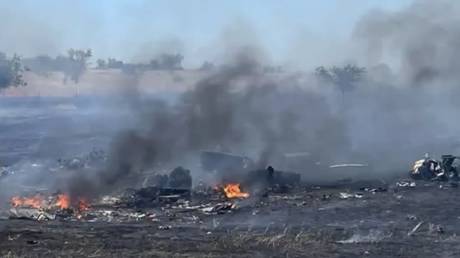
Two lives. Two careers built on hours of sweat, endless simulations, and a commitment to a uniform that asks for everything. When an aircraft goes down—such as the recent US Army helicopter crash that claimed the lives of two pilots—the headlines flash across screens with sterile brevity. Location. Unit. Aircraft type. Casualty count. The machine is named. The tragedy is recorded.
And then the world moves on.
We scroll past. We tap our screens. We look for the next update, the next piece of breaking news, detached by distance and digital glass. But behind the cold statistics of a routine training mission gone wrong lies an entire universe of human gravity.
Consider what happens next in the quiet homes thousands of miles away. A knock on a door. Two service members standing under the amber glow of a porch light. That single moment fractures time, dividing an entire family's existence into a before and an after. The uniform absorbs the grief, but the people underneath bear the permanent scar.
We need to talk about why this happens, and more importantly, what it means to live in the shadow of these recurring aviation tragedies.
The Anatomy of a Routine Flight
Flying a military helicopter is an act of controlled defiance. Unlike a fixed-wing aircraft that demands speed to stay aloft, a helicopter lives by grace of a spinning rotor blade beating the air into submission. Every single second in the cockpit requires micro-corrections. Weight distribution, wind shear, density altitude, mechanical feedback—it is a sensory overload masked by outward calm.
Training flights are supposed to be where pilots hone this defiance. They practice emergency autorotations, instrument-only navigation, and low-level tactical maneuvers designed to mimic the worst environments on Earth. They push themselves because the theater of war does not offer second chances, and neither does a sudden mechanical failure at two hundred feet.
Yet, safety statistics across military aviation reveal a persistent, haunting vulnerability. Equipment ages. Operating tempos remain punishingly high. Maintenance schedules are compressed to meet strategic readiness goals.
Risk is currency. And sometimes, the bank account runs dry.
When an investigation into a fatal crash begins, teams of safety experts comb through wreckage fields looking for anomalies. Was it material fatigue? Was it spatial disorientation—that terrifying psychological illusion where the inner ear lies to the pilot about which way is up? Was it a momentary lapse in hydraulic pressure?
The answers rarely arrive quickly. Months of metallurgical analysis, flight data recorder decryption, and witness testimony follow. But for the families of the fallen, the final report is just a paper trail trying to explain the unexplainable. It measures degrees and angles, but it cannot measure absence.
The Invisible Stakes
To understand the human cost of these incidents, we have to look past the hardware.
Every aviator is a repository of institutional memory. A pilot with five, ten, or fifteen years of stick time is not just an operator; they are a mentor to the nineteen-year-old crew chief inspecting the tail rotor, a tactical thinker who can read a valley floor for thermal updrafts, and a reassuring voice over an intercom when the weather turns foul.
When a crash claims two experienced aviators, the loss ripples outward through the entire formation. Junior pilots lose their safety net. Squadrons lose their institutional anchors. The training pipeline has to absorb a vacuum that cannot be easily filled by issuing new orders or accelerating flight school quotas.
Experience cannot be manufactured on a timeline. It is earned one precarious landing at a time, often in the dark, often when no one is watching.
We often view defense readiness through the lens of billion-dollar budgets and geopolitical strategy. We debate procurement programs and tactical doctrines in air-conditioned rooms. But the true engine of national defense is organic. It is flesh, bone, and muscle. It is the beating heart of a twenty-eight-year-old aircraft commander who checked her controls twice, ran her emergency procedures from memory, and trusted the metal above her head.
Living With the Risk
There is a profound vulnerability in choosing a life of service. Every person who pulls on a flight suit knows the math. They accept the baseline hazard because they believe in the mission, whatever that mission happens to be on any given Tuesday.
When tragedy strikes, the public response follows a predictable rhythm. Shock. Condolences from leadership. Flags at half-mast. Then, the news cycle drifts.
We owe those who fly a deeper form of remembrance. Not just sorrow, but accountability. We must demand rigorous investment in maintenance infrastructure, state-of-the-art safety equipment, and realistic workloads that do not force human beings past the threshold of exhaustion. If we ask young men and women to strap themselves into high-performance rotorcraft and push the envelope of physics, we owe them an absolute commitment to leaving nothing to chance on the ground.
The wreckage gets cleared away. The flight line is swept. New crews walk out to the tarmac, climbing up into the same cabins, smelling the same fuel, and reaching for the same cyclic controls. They take a breath, clear their instruments, and lift off into the wind.
The sky remains open, indifferent, and vast. Below it, the rest of us carry on, sheltered by the quiet vigilance of those willing to risk everything in the spaces between the clouds.


