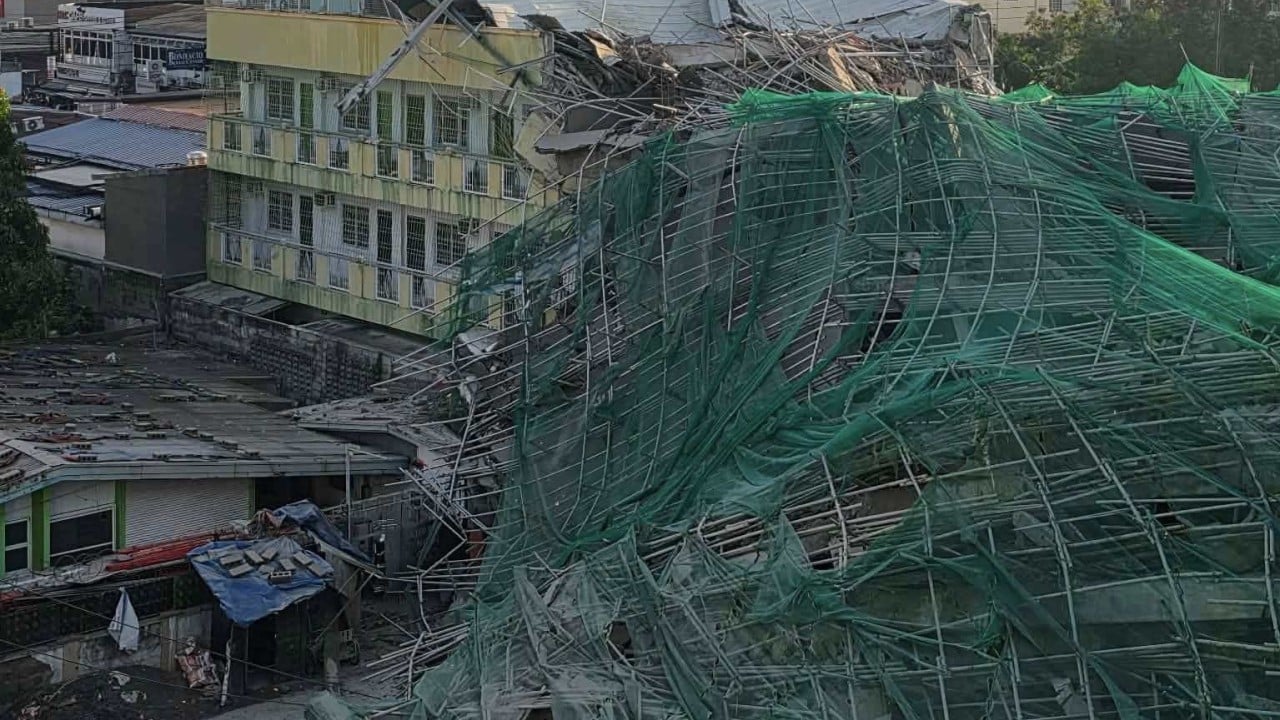
The air in Metro Manila does not circulate; it hangs. It smells of roasting pork, two-stroke engine exhaust, and the damp, metallic tang of impending rain. On an ordinary Tuesday afternoon, that heavy air thickened with something else entirely. It was a sound first—a low, guttural groan that vibrated through the soles of flip-flops and sneakers before it even registered in the ears. Then came the roar. It sounded like a freight train falling out of the sky.
When the dust finally settled over the construction site, the silence that followed was louder than the collapse itself.
We read about these events in fragmented notifications on our phones. Under-construction building collapses in Philippines, trapping workers. We glance at the headline, feel a momentary prick of abstract sympathy, and swipe it away to check the weather or the football scores. The numbers look small on a screen. A few injuries. A handful of missing men. But numbers are an erasure. They flatten the terrifying, suffocating reality of being buried alive beneath tons of wet concrete and twisted rebar into a minor data point.
To understand what actually happens when the scaffolding gives way, you have to look past the official press releases. You have to look at the cheap plastic lunchboxes crushed under blocks of cement.
The Anatomy of an Echo
Every major construction project has a specific rhythm. It is a symphony of screaming circular saws, the rhythmic thud-thud-thud of pile drivers, and the shouting of men in neon vests. It is loud enough to shake the fillings in your teeth.
But when a structure fails, that symphony cuts out instantly.
Consider a hypothetical worker named Jun. He is thirty-two, moved to the capital from Samar to send money back to his mother, and his hands are permanently stained with gray mortar. When the third floor pancake-collapsed onto the second, Jun wasn't thinking about engineering codes or municipal permits. He was thinking about the sudden, impossible shift in gravity.
The floor beneath him simply ceased to exist.
A building collapse is not a slow affair. It is an avalanche of human ambition. In less than four seconds, a multi-story concrete frame can transform into a chaotic jigsaw puzzle of jagged edges and airless pockets. The weight of standard concrete is roughly 150 pounds per cubic foot. When that much mass drops, the air is violently displaced, creating a localized blast wave that tears shirts from backs and fills throats with a blinding, choking powder.
For those trapped inside, the world shrinks to the size of their own ribcage.
The darkness in a collapse zone is absolute. It is not the darkness of a bedroom at night; it is the suffocating opacity of being buried in a tomb while still drawing breath. Every inhale tastes like pulverized stone. Every exhale feels like it might be the last one your chest has room to expand for.
The Economics of a Fractured Beam
Why do these structures fall? The investigation reports will eventually point to structural failure, substandard materials, or a lack of oversight. They will talk about load-bearing capacities and the shear strength of steel.
But the real problem lies elsewhere. It lies in the invisible pressure of the clock.
In rapidly developing urban hubs, speed is the ultimate currency. Developers face staggering financial penalties for every day a project runs over schedule. That pressure trickles downward, transforming from corporate anxiety into a relentless whip cracked over the backs of the site foremen.
Pour the concrete faster.
Strip the wooden forms early.
The curing process can wait.
Imagine baking a cake. If you pull it out of the oven twenty minutes too soon because you are hungry, the center collapses. Now imagine that cake weighs several hundred tons and is made of liquid aggregate that requires days of chemical reaction to achieve its structural integrity. If you load weight onto that framework before the molecules have properly locked together, you aren't building a skyscraper. You are rigging a trapdoor.
The physics are unyielding. Gravity does not negotiate, and it does not care about quarterly profit margins. When the structural math is violated, the building pays the debt immediately.
The Longest Minutes on Earth
Outside the perimeter fence, the atmosphere changes from frantic panic to a agonizingly deliberate stillness.
Rescuers don't just charge into a collapsed building with bulldozers and sledgehammers. To do so would invite a secondary collapse, crushing anyone still clinging to life in the void spaces below. Instead, the heavy machinery is shut down. The sirens are turned off.
The search starts with silence.
Dozens of emergency responders, volunteer firefighters, and civilian bystanders stand completely motionless in the heat. They listen. They strain their ears for the sound of a fingernail scratching against a pipe, or a muffled groan coming from somewhere beneath the mountain of gray debris.
It is an agonizing exercise in hope.
Every minute a human being spends trapped under concrete reduces their chances of survival exponentially. Crush syndrome is the silent killer here. When a heavy object pinches a limb for hours, the muscle tissue begins to die. The moment the weight is lifted during a rescue, toxins built up in the dead tissue rush into the bloodstream, which can cause sudden heart failure.
The rescue itself is a delicate, terrifying paradox: the very act of removing the debris can kill the person trapped beneath it.
The Ripple Beyond the Rubble
When we look at the news, we see the immediate aftermath. We see the flashing red lights and the yellow tape. What we miss is the collateral damage that occurs miles away, in rural provinces where families are waiting for a phone call.
The men who work these high-risk jobs are rarely from the cities where they build. They are the human scaffolding of the nation's economic growth, migrating from coastal towns and agricultural villages to send small, crinkled envelopes of cash back home every two weeks.
When a structure falls, a family's entire economic ecosystem collapses with it.
There is no corporate safety net for an undocumented day laborer. There are no corporate retainers or long-term disability payouts that arrive automatically. There is only the sudden cessation of a lifeline. The daughter's school tuition goes unpaid. The grandmother's medication is left on the pharmacy shelf. The small grocery store down the road stops offering credit.
The disaster doesn't stop at the property line of the construction site. It ripples outward through buses and ferries, settling into quiet living rooms hundreds of miles away where a phone keeps ringing, unanswered.
The Dust That Never Settles
By the third day, the bright camera lights of the media crews begin to disappear. The story grows old. The public's attention drifts to a new political scandal or a tropical storm forming in the Pacific.
The site becomes a salvage operation rather than a rescue mission.
The true cost of our glittering skylines isn't measured in the billions of pesos spent on steel and glass. It is measured in the quiet, permanent gaps left at dinner tables. It is found in the lingering cough of the survivors who will carry the dust of that Tuesday afternoon in their lungs for the rest of their lives.
As the sun sets over Manila, the cranes on neighboring sites continue to turn, their long shadows stretching across the city like skeletal fingers. The work does not stop. The city demands more space, more height, more concrete.
High above the street, on a different bamboo scaffold, another young man reaches for a trowel. He wipes the sweat from his eyes, looks down at the dizzying drop below him, and prays that the ground beneath his feet remains solid for just a few hours more.