The room smells of lavender soap and the sharp, chemical tang of a plastic oxygen tube. It is a quiet apartment in the 11th arrondissement of Paris, three flights up from the cobblestones. Outside, the city moves with its usual, indifferent friction. Inside, Jean-Pierre waits.
His hand, once capable of guiding a chisel through dense oak with millimeter precision, is now a collection of trembling, translucent bones. The cancer has hollowed out his abdomen. It has stolen his appetite, his dignity, and his sleep. For months, Jean-Pierre’s life has been measured not by days, but by the precise intervals between his pain medications. When the drugs work, he drifts in a gray fog. When they wear off, the world becomes a white-hot scream.
He wants it to stop. Not because he hates life, but because the life he knew has already left the building.
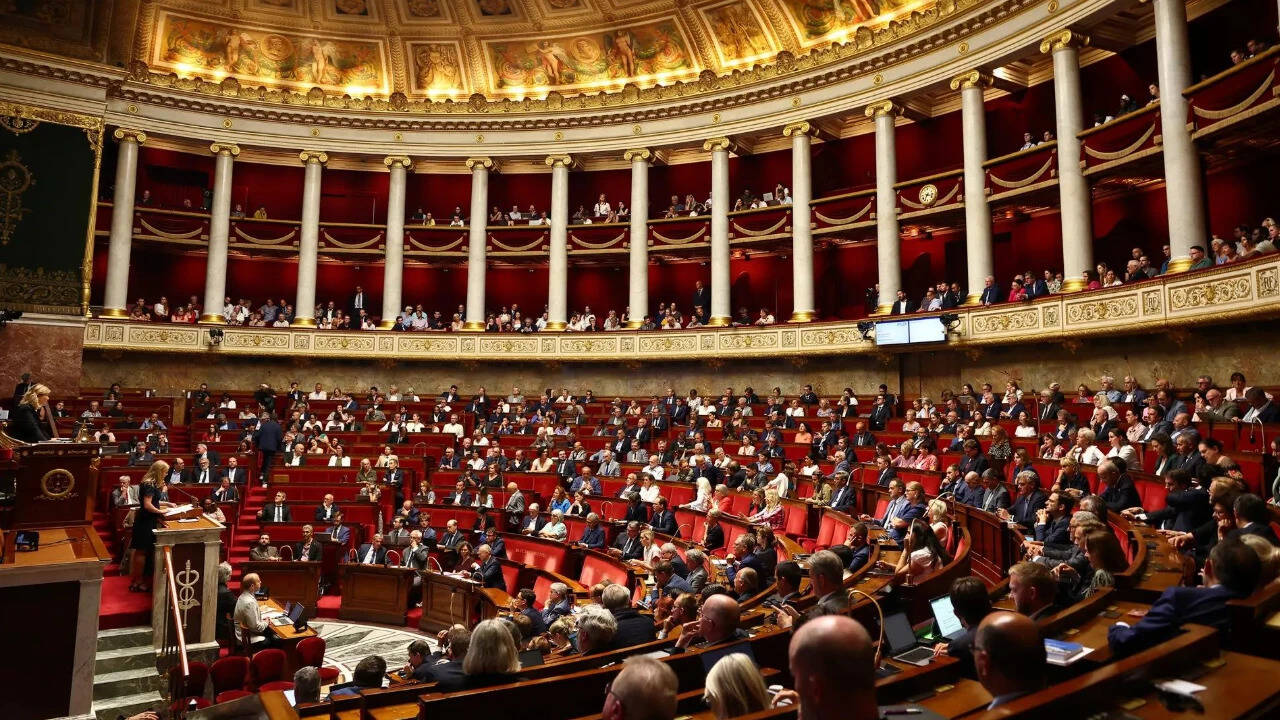
Until now, the French state demanded that Jean-Pierre wait until his heart simply ran out of momentum. But on July 15, 2026, the ceiling shifted. Down the road at the National Assembly, lawmakers sat under the gilded dome of the Palais Bourbon. They voted. The tally was 291 to 241. After years of fierce arguments, multiple rejections by the conservative-majority Senate, and political gridlock that outlasted prime ministers, France finally passed an assisted dying bill.
It is a monumental change in European healthcare, but for people like Jean-Pierre, it is something much smaller and more profound. It is an exit door.
The Bureaucracy of the Final Choice
To understand the reality of this law, one must look past the grand words spoken by politicians on television. The statute is not a blank check for death. It is a complex maze of medical bureaucracy designed to protect the vulnerable while allowing the desperate to slip away.
Consider a hypothetical citizen—let us call her Monique. She is fifty-six, a lifelong resident of Lyon, and she has been diagnosed with an aggressive, incurable form of ALS. Under the new French legal framework, Monique cannot simply walk into a clinic and ask for a lethal dose. The barriers are high, deliberate, and rigid.
First, Monique must be a French citizen or a legal resident. She must be an adult, and her mind must be perfectly lucid. The law explicitly draws a line in the sand: psychological suffering alone does not qualify. If Monique were suffering from a severe psychiatric condition or a neurodegenerative disease like Alzheimer’s where her cognitive capacity is compromised, the door would remain locked. The state demands that the person making the choice must be the one fully aware of its weight.
Monique must initiate the request herself. Her children cannot do it for her. Her spouse cannot sign the papers if she slips into a coma. Once she submits her written plea, a fifteen-day countdown begins. During this fortnight, a team of medical professionals reviews her files, examines her body, and debates her prognosis. They must collectively agree that her illness is terminal, in an advanced stage, and causing pain that cannot be alleviated by modern medicine.
If the doctors say yes, Monique faces one more test: a mandatory forty-eight-hour reflection period. Two days to sit in the quiet of her own mind and confirm that yes, this is truly what she wants.
On the chosen morning, the doctor or nurse arrives. They look Monique in the eyes. They ask the question one last time. If she nods, the medication is handed over. The law states that Monique must administer the lethal substance herself. Only if her limbs are entirely paralyzed—if she is physically incapable of moving the glass or pushing the plunger—can a doctor or nurse step in to assist.
The Fractured Conscience of a Nation
Behind the strict text of the law lies a deep, cultural agony. France is a country built on secular ideals, yet it is deeply haunted by its Catholic heritage and a medical tradition rooted in the absolute preservation of life. The 291-to-241 vote reflects a society divided right down the middle.
The arguments inside the parliament chambers were not abstract. They were visceral.
Opponents of the bill, backed by religious organizations and various palliative care associations, argue that the law is a dangerous surrender. Their fear is subtle and terrifying: that the right to die will slowly mutate into a duty to die. They worry about the grandmother in a crowded hospital who looks at her grieving family, calculates the financial and emotional toll of her prolonged illness, and decides to end her life not because her pain is unbearable, but because she feels like a burden.
Groups like Alliance Vita argue that the solution to suffering is not to hasten death, but to supercharge palliative care. They believe that if society provides enough resources, enough pain management, and enough human warmth, the desire for an early exit vanishes.
But advocates of the law view this perspective as a form of well-meaning cruelty. For them, true dignity means autonomy. They point to the reality that some pain cannot be managed, that some bodies break in ways that medicine cannot fix. Why, they ask, should a person be forced to endure the agonizing final weeks of a terminal illness when the outcome is already written?
The tension is so acute that Prime Minister Sébastien Lecornu announced he would refer parts of the bill to the Constitutional Council for a final review before it officially becomes law. The council has a month to scrutinize the text, ensuring it balances the right to personal freedom with the constitutional principle of human dignity. Healthcare professionals are also granted a strict conscience clause. No doctor or nurse can be forced to participate in assisted dying. If their ethics forbid it, they have the right to walk away, provided they refer the patient to a colleague who will help.
The Quiet Room
Back in the apartment in the 11th arrondissement, the political noise fades to nothing. Jean-Pierre does not care about parliamentary maneuvers, constitutional reviews, or the ideological battles broadcast on the evening news. He cares about the ceiling. He cares about the fact that his world has shrunk to the four corners of a mattress.
The national health insurance system will cover the costs of the procedure. The state that taxed his labor for forty years will now pay for his departure.
If the Constitutional Council clears the bill, Jean-Pierre will eventually have a choice to make. He can choose to let the disease take its natural, jagged course, or he can choose a specific Tuesday morning. He can invite his daughter to sit by the bed. He can listen to his favorite track by Leo Ferré. He can say goodbye while he still looks like himself.
There is a strange comfort in the existence of the option. For months, Jean-Pierre felt like a passenger in a vehicle that had lost its brakes, hurtling toward a cliff in the dark. The new law does not fix his body. It does not cure the cancer. But it hands him back the steering wheel for the final hundred meters.
The medicine will sit in a small vial on the bedside table. On the chosen day, the doctor will ask the final question. Jean-Pierre will look at his hands, then at the window, then at the person he loves. He will take the glass.