Fear has a very specific sound. To most of us, it is the screech of tires or the sudden drop in our stomachs during turbulence. But to a very small, remarkably steady group of people walking the streets of Hong Kong, fear sounds like a ticking clock buried beneath decades of forgotten concrete.
We forget what lies beneath our feet. We build skyscrapers of glass and steel. We pave over history, lay down metro lines, and plant pocket parks where children kick soccer balls on Sunday afternoons. Yet, buried in the dark, silent earth, the ghosts of a turbulent past still sleep. Iron shells packed with high explosives. Relics from a mid-century conflict that refused to detonate on schedule, waiting patiently for a construction drill, a stray shovel, or simple the cruelty of time to finish what they started.
Then the phone rings.
Imagine the room. Fluorescent lights humming. Cold coffee on a metal desk. The call comes in from a construction site in Happy Valley or Chai Wan. A backhoe operator has struck something unyielding. Something that should not be there. Within minutes, the Explosive Ordnance Disposal Bureau team is moving.
They do not run. Running causes panic, and panic is a luxury these specialists cannot afford.
Instead, they drive toward the danger while everyone else flees. Think about the sheer gravity of that moment. Beneath their heavy protective suits, the air is hot, heavy, and smells of sweat and rubber. Every step toward the exposed anomaly requires a terrifying negotiation between physics, mathematics, and raw nerve. They carry tools, but their most critical instrument is absolute emotional control. When you are defusing a bomb that has sat undisturbed since the Second World War, your hands cannot shake. If they do, an entire neighborhood of apartment blocks, wet markets, and sleeping families vanishes into a blinding flash of orange fire.
This is the hidden architecture of a metropolis. We marvel at the efficiency of public transit, the speed of our broadband, the glittering harbor skyline at night. We rarely look down. We rarely think about the men and women who spend their entire careers crawling into the dark so the rest of us can walk safely in the light.
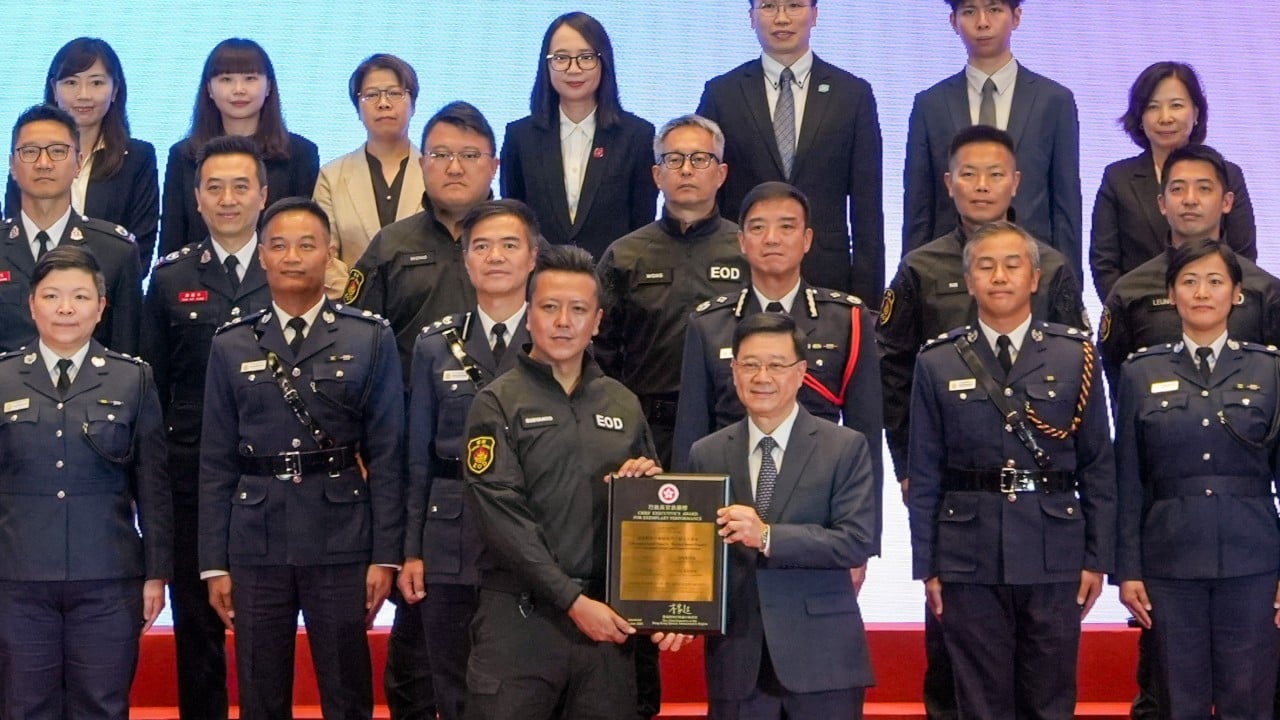
Recently, the Chief Executive’s Award for Exemplary Service recognized this quiet courage. It placed a spotlight on the bomb-disposal specialists who neutralized wartime ordnance with surgical precision. But an award is just a piece of paper hung on a wall. The true measure of their work is the absence of catastrophe. It is the school bus that drives past the construction site without incident. It is the grandfather sipping tea on his balcony, completely unaware that twenty feet below the tarmac, a lethal relic was just gently disarmed and rendered harmless.
Yet, safety is not merely about surviving the hidden violence of the past. It is also about surviving the brutal economic realities of the present.
Shift your gaze across the city, miles away from the excavation pits, to a completely different kind of battleground. Here, the enemy is not shrapnel or unstable TNT. The enemy is rent.
Picture a family of four living in a subdivided flat. It is a space so cramped that the kitchen counter doubles as a homework desk, and the single window looks out onto a brick wall six inches away. The air feels thick, recycled through buzzing fans that never quite cool the room. Every month, the rent check swallows half the household income, leaving a hollow ache of exhaustion in the parents' chests. They are working harder than ever, running as fast as they can on a treadmill that refuses to slow down, yet they are slipping backward.
This is the psychological weight of housing insecurity. It is a slow-motion explosion that happens in the minds of children growing up in overcrowded cages. It drains hope. It breeds despair.
For years, this narrative felt immutable. A crushing cycle of urban poverty that seemed too complex, too massive to solve. Then came a different kind of engineering. Not the mechanical engineering of circuit boards and remote detonators, but the social engineering of Light Public Housing.
Modular units. Rapidly constructed. Placed on vacant land while permanent homes are being built.
When the first families received the keys to their light public housing units, the transformation was instantaneous. We are not talking about concrete and steel here; we are talking about breathing room. We are talking about a child finally having a desk to call their own, free from the shared noise of a partitioned corridor. We are talking about parents sleeping through the night without calculating how many days of groceries are left before the next payday.
Critics initially doubted the model. They worried about temporary fixes, aesthetic compromises, logistics, and location. But those critiques pale against the lived reality of a mother who can finally cook a hot meal in a kitchen where she doesn't have to dodge her children's elbows.
Both the bomb-disposal team and the creators of the light public housing initiative share a common, vital trait. They confront crises that threaten the very fabric of daily life. One stops the sudden, catastrophic destruction from below. The other stops the slow, crushing erosion from within.
We honor them not because their tasks were easy, but because they chose to step directly into the hardest parts of our shared reality. They looked at danger, whether it was a corroded artillery shell or a generational housing shortage, and they refused to blink.
Consider what happens next time you walk down a busy street in the city. Look at the pavement beneath your sneakers. Look at the high-rise windows glowing against the twilight. Remember that every stable moment, every breath of normal life, is a thin, delicate miracle held together by the quiet, uncelebrated labor of strangers. They are out there right now, defusing the world, one heavy step at a time.