The sirens do not sound like music. They sound like panic compressed into forty decibels, echoing off brick walls and fracturing the quiet of an ordinary Tuesday night.
I remember the light. It always starts with a light. A flash of violent red and piercing blue spilling across bedroom ceilings, turning family portraits into grotesque, strobe-lit caricatures for a split second before the cruiser roars past. Most people roll over, pull the duvet a fraction higher, and let the noise fade into the hum of the city. We assume someone else is being saved. We assume the system works.
Then comes the silence that follows the crash. A heavy, absolute quiet that feels entirely wrong for a street meant to be alive.
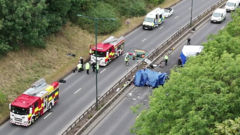
On paper, the police vehicle and car crash during pursuit reads like a clinical ledger. Statistics. Timestamps. Agency policies reviewed under harsh fluorescent lights. A brief mention of multiple deaths, reduced to a single-digit casualty toll in a morning news bulletin. But numbers cannot hold the weight of what actually happens when kinetic energy meets human fragility at eighty miles per hour.
Consider what happens inside the cockpit of a fleeing car. Panic is not a thought; it is a chemical flood. Adrenaline blinds the driver to the stop signs, the pedestrian crossings, the quiet lives unfolding behind yellow-lit kitchen windows. The foot presses harder on the accelerator because stopping means an end they are not ready to face. They are running from a minor warrant, a traffic violation, a mistake that ballooned into terror. They are driving blind, steered entirely by the primal urge to escape.
Now consider the cruiser just twenty yards back.
The officer is not a movie villain. They are a person who kissed their spouse goodbye thirty minutes ago, trading a quiet dinner for a shift that can turn lethal without warning. When a driver refuses to pull over, a switch flips. Training takes over, but so does instinct. The pursuit becomes a chase of authority. The radio crackles. Speeds climb. Every intersection becomes a game of Russian roulette played with other people's children, other people's groceries, other people's futures.
Weighing the risk against the reward is the invisible math of every high-speed chase. It is a calculation made in milliseconds.
If a cruiser pulls back, the suspect might escape into the night. Justice is delayed, property might be stolen, and the ego of the badge takes a bruised hit. But if the chase continues through a crowded corridor, the equation shifts into something horrifying. The collateral damage ceases to be a theoretical possibility and becomes an impending appointment with physics.
We live in a culture obsessed with speed, resolution, and immediate capture. Hollywood has conditioned us to believe that every fleeing vehicle must be cornered, boxed in, and halted with cinematic flair. Real asphalt is less forgiving than a movie set. When two heavy vehicles collide at highway speeds, metal crumples like paper, and human bodies absorb forces they were never engineered to endure.
The aftermath is rarely televised beyond the initial chopper footage of smoking wreckage and flares cutting through the dark.
What lingers is the aftermath in the living rooms. The empty chair at the breakfast table. The phone call that shatters a household with the sterile news that a loved one was in the wrong place at the exact second a routine Tuesday night went catastrophically wrong. The officers involved carry a different kind of wreckage, replaying those final few seconds in their minds for the rest of their lives, wondering if the throttle was worth the outcome.
The blinking red lights eventually move away. The tow trucks clear the debris from the pavement. The city wakes up and goes back to work, pretending that the pavement holds no memory of what happened hours before.
Yet the question remains hanging in the exhaust fumes long after the scene is cleared, echoing down the empty streets.