The heat in Hong Kong is not merely atmospheric. It is a texture. It clings to the back of your neck as you walk through the dense corridors of Mong Kok, where the neon signs flicker with a frantic, stuttering light. It hangs heavy over the harbor, where the salt spray feels less like a breeze and more like a physical barrier between the city’s frantic, shimmering exterior and the quiet, tightening nerves beneath the surface.
In this city, silence has become a language of its own. It is spoken in the way conversations abruptly halt when a stranger sits too close on the MTR. It is written in the sudden, sanitized language of social media posts, where criticism of the status quo has been replaced by carefully curated photos of dim sum and distant sunsets.
Recently, that silence was punctured—not by the people of Hong Kong, but by the clash of international ink.
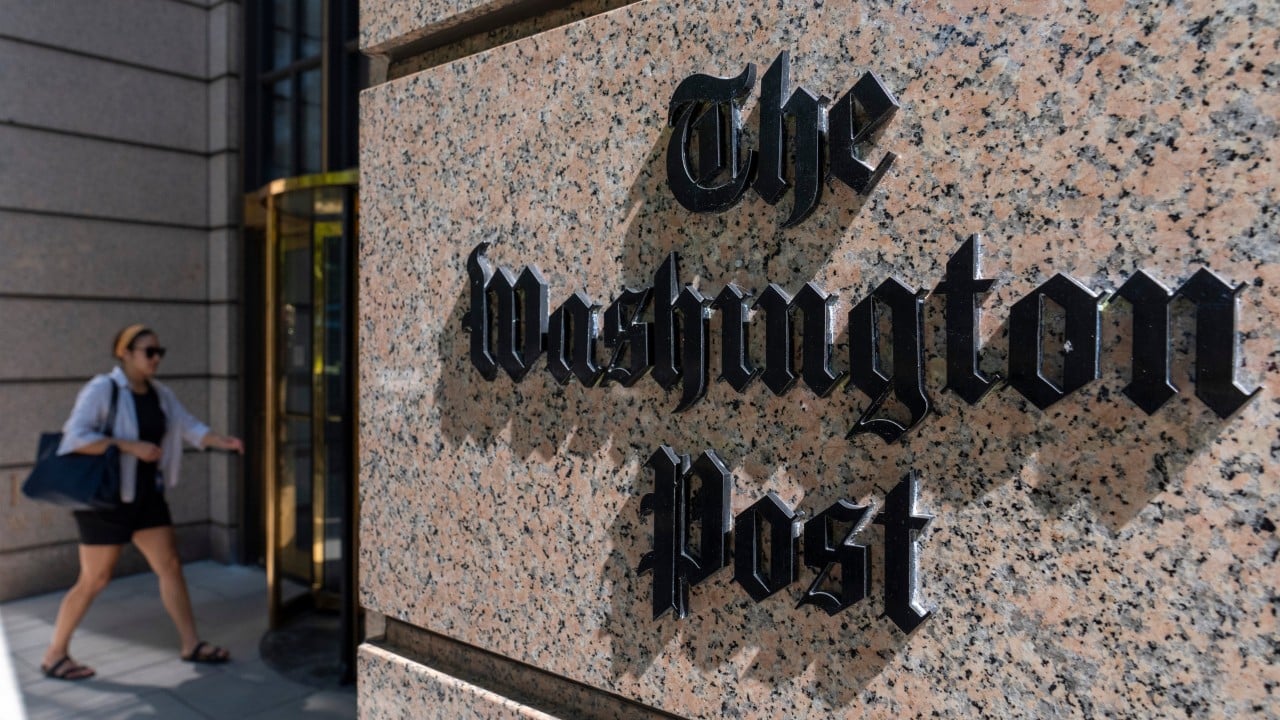
The Washington Post published a commentary that dared to look at the new national security legislation, commonly referred to as Article 23, and saw not the stability the government promised, but a shadow falling over the last vestiges of civil expression. The reaction from the Hong Kong Security Bureau was instantaneous. It was not a debate; it was a rebuke, delivered with the mechanical, unyielding precision of a metronome. They slammed the commentary, labeling it biased, defamatory, and an example of the foreign interference they argue has plagued the city since the turbulent months of 2019.
To read the official response is to glimpse a different version of the city than the one the foreign press describes. The government speaks of a new day, a restoration of order, a city finally shielded from the chaotic winds of insurrection and state-sponsored espionage. They argue that these laws—covering treason, sabotage, and the theft of state secrets—are entirely consistent with international norms. They want the world to see a fortress being fortified. They want us to see the mortar as a safety measure.
But the mortar has a way of sealing windows shut, not just blocking intruders.
Consider Wei. I met him in a dimly lit café tucked away in a side alley of Sheung Wan. Wei is not his real name; names are dangerous things these days, fragile glass vessels that shatter under the wrong scrutiny. He once worked for an NGO, the kind that held forums on human rights and invited speakers to dissect the intricacies of local governance.
"We used to argue," Wei told me, staring into the dark amber of his tea. "We used to disagree openly. That was the point of the city. We were a place where ideas could collide without the sky falling."
He moved his hand in a circular motion, as if stirring memories.
"Now," he whispered, "we measure the space between what we want to say and what we are allowed to think. It is a slow, grinding process. The law is not just words on a page. It is a psychological weight. You wake up, and you perform a quick audit of your day. Whom will I see? What will we talk about? Is this person a friend, or are they an antenna?"
This is the invisible tax of the new legislation. It is not paid in currency, but in the degradation of spontaneity. When the Hong Kong government criticizes foreign outlets for calling their laws draconian, they are essentially arguing about the definition of safety. They see a riotous street and think of the need for a barrier. The critic sees the barrier and fears the cage. Both are looking at the same city, yet they inhabit entirely different realities.
The government’s indignation regarding the Washington Post piece was telling. It revealed a deep-seated anxiety about the international narrative. Hong Kong has always been a city of perception—a jewel, a hub, a gateway. When the world stops seeing a gateway and starts seeing a checkpoint, the city’s identity begins to fracture. The officials know this. They know that prosperity requires trust, and trust requires a certain openness that the current security framework makes nearly impossible to maintain.
To bridge this, the government acts with a ferocity that feels out of proportion to a single article. They are not merely rebutting a newspaper; they are attempting to rewrite the gravity of the room. They are asserting that their sovereign right to control the discourse is, in itself, a form of freedom.
But what of the human element in this equation?
If you walk the streets of Admiralty, the glass towers of finance still scrape the sky, indifferent to the political tremors below. Business continues. The markets churn. Life, on the surface, remains largely unchanged for the average resident who does not dabble in the dangerous waters of political activism. But there is a rot in the marrow of the city’s social fabric.
Imagine a dinner party. Before, the conversation would inevitably drift to the latest legislative scandal or the frustrations of the education system. Now, the conversation centers on the weather, the price of eggs, or the latest film releases. It is a safe, polite, and deeply lonely existence. The government might call this stability. I call it a forced hibernation.
The legal mechanisms are broad. They are intentionally vague. This is not a mistake; it is a feature. When the law is imprecise, the average citizen acts with an excess of caution. They self-censor not because they have been told to, but because they are terrified of guessing wrong. They do not know where the red line is, so they stop walking long before they reach it. This is the ultimate victory of the security state—it turns the citizenry into its own police force, monitoring their own thoughts, policing their own tongues, fearing their own shadows.
There is a historical precedent for this. Societies that prioritize absolute internal security over the chaotic vibrancy of dissent often find that the very stability they sought becomes a tomb. You can silence the critic. You can intimidate the journalist. You can issue press releases that frame the world in shades of black and white. But you cannot command the human spirit to stop wondering about the truth.
The international community watches with a mixture of helplessness and cold, hard pragmatism. They see the writing on the wall. The Washington Post was merely pointing at the graffiti. The government’s reaction was an attempt to whitewash the wall, to pretend the message wasn't there.
What happens when the questioning stops? What happens when every voice in the city repeats the same approved melody? The city becomes a monotone, a flat line on a monitor. The vibrancy that defined Hong Kong—the messy, beautiful, argumentative, thriving spirit of a metropolis that sat at the crossroads of East and West—begins to dim.
Wei stood up to leave the café. He put on his coat, adjusted his glasses, and looked at me with a weary, knowing expression.
"The government thinks they are protecting the city," he said, his voice barely rising above the hum of the air conditioner. "But they are merely dismantling the reason why the city mattered in the first place."
He walked out into the humid air, blending instantly into the crowd of anonymous suits and shoppers. He looked like everyone else. He was just another ghost in a city that is slowly turning into a museum of what it used to be.
We tend to think of freedom as a loud, chaotic affair—protests, slogans, grand debates in legislative halls. But sometimes, freedom dies in the quiet spaces. It dies in the unwritten editorial, the unspoken criticism, the dinner party where the most important things go unsaid.
The struggle over Article 23 is not just about laws or national security. It is a struggle for the soul of a place that once thrived on being the exception to the rule. Now, it is becoming the rule itself. The lights of the harbor still shine, reflected in the dark, churning water, but the city they illuminate is changing. It is becoming a place where the echo of a question is the most dangerous sound of all.
We can track the legislation, count the arrests, and analyze the government’s statements until we are blue in the face. We can argue about treaties and historical agreements and the minutiae of legal definitions. But the truth is simpler, and infinitely more painful.
A city is a collective conversation. When you stop that conversation, you stop the city.
The officials in the Security Bureau, in their fervor to silence the critics, have forgotten a fundamental truth about governance: you can build walls high enough to block the view, but you cannot stop the earth from moving beneath your feet. The tension is still there. The anxiety is still there. It has simply gone underground, finding new, subterranean ways to exist.
And in that darkness, in the silence of the cafes and the hesitation of the students, something is being forged. It is not the stability the government wanted. It is a quiet, enduring resentment, a memory of a time when the city was not afraid of its own voice.
One day, the heat will break. The storm will come, as it always does in this part of the world. And when it does, the questions that were stifled will be the ones that roar the loudest. The government may have silenced the Washington Post commentary, but they have not silenced the doubt. They have only ensured that when the time finally comes, the cost of the answer will be far higher than they ever imagined.
For now, the city waits. It watches the ships in the harbor. It tracks the flickering neon. It keeps its head down, its mouth shut, and its heart full of all the things it can no longer afford to say out loud. And in that heavy, suffocating silence, the real story of Hong Kong continues to be written, one unspoken word at a time.
The harbor lights dim, the tide pulls back, and the city, for a brief, breathless moment, forgets how to speak, waiting for the silence to finally break.