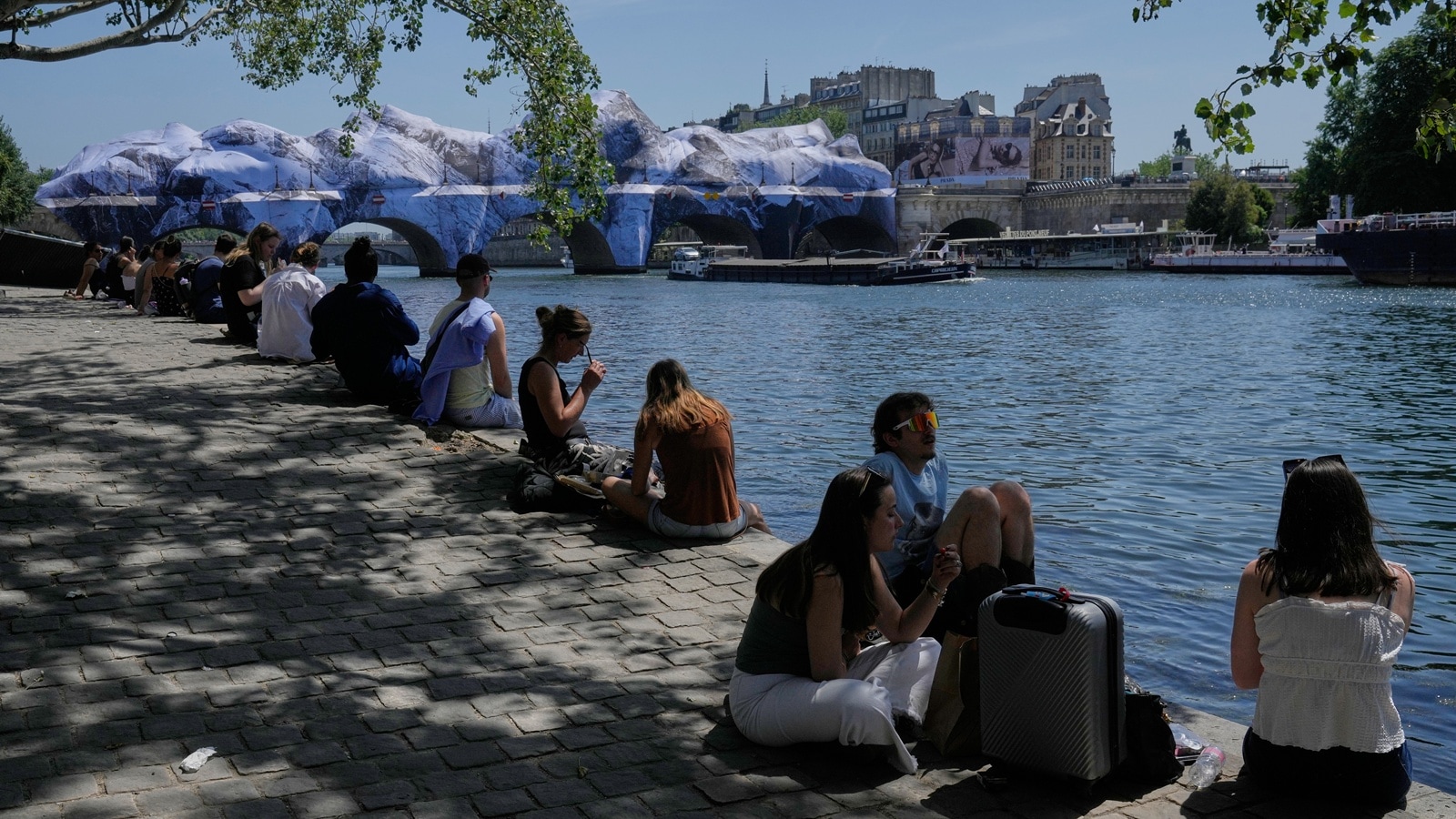
Spring isn't supposed to feel like August. Yet, across Western Europe, a massive heat dome has parked itself over the continent, sending temperatures screaming past long-standing historical records. Londoners are sweating through unprecedented humidity, while emergency services in France are recovering drowning victims from lakes and rivers. This isn't just a brief spell of sunny weather. It's a brutal, early-season crisis that proves European infrastructure is dangerously out of sync with a rapidly warming planet.
If you think a late-May heatwave sounds like a pleasant prelude to summer, you're missing the grim reality on the ground. Western Europe is built to retain heat, not shed it. When a meteorological anomaly traps a plume of scorching air from North Africa over countries completely unaccustomed to it, people die.
The Numbers That Are Shocking Meteorologists
The sheer scale of this weather system has left seasoned climate scientists genuinely stunned. We aren't seeing records broken by fractions of a degree. We are seeing them utterly demolished.
On Monday, Kew Gardens in southwest London hit a provisional high of 34.8°C. If you think that was a fluke, Tuesday proved even worse, with the mercury climbing further to 35.1°C. To put that in perspective, the previous May record for the United Kingdom stood at 32.8°C, a milestone set way back in 1922 and only matched once in 1944. Smashed by over two full degrees. In a country where the average May temperature hovers around 17°C or 18°C, this is nothing short of a systemic shock.
London even experienced a rare tropical night, meaning the temperature refused to drop below 20°C. Think about that. Millions of people huddled in brick terraced houses designed to trap winter warmth, with absolutely no air conditioning, trying to sleep in 20°C-plus nighttime stagnation.
Across the English Channel, France is facing an identical nightmare. Météo-France confirmed that Monday was the hottest overall May day since national record-keeping began. In the southwest of the country, temperatures peaked at 36°C on Monday and show no signs of cooling down. The air is stagnant, heavy, and dangerous.
A Tragic Toll From Unexpected Exposure
The human cost of this sudden heat dome has been immediate and devastating. French Junior Energy Minister Maud Bregeon confirmed that seven deaths are directly or indirectly linked to the extreme weather.
Five of those fatalities were drownings. It's a tragic, recurring pattern whenever a sudden heatwave strikes before summer officially begins. People flock to beaches, lakes, and rivers to find relief. But because it's only May, the annual summer safety infrastructure isn't active yet. Lifeguards aren't on duty at popular resorts along France’s Atlantic seaboard, where powerful riptides easily overwhelm unsuspecting swimmers. Two people drowned on Sunday alone at resorts in the southwestern Gironde region.
The other two French deaths occurred during amateur sports competitions. A 53-year-old runner suffered a fatal heart attack during a 10-kilometre race in Paris, where temperatures breached 32°C. In Lyon, a woman died of heat stroke after a competitive fitness run. French Sports Minister Marina Ferrari had to publicly plead with the public for absolute vigilance, noting that exercising in this kind of heat requires precautions most people don't think about in the spring.
The United Kingdom is seeing the exact same tragedy play out. British authorities reported that at least four teenagers drowned in lakes and reservoirs across the country, alongside a 60-year-old man who perished in the sea off southwest England. People see blue skies and rush to the nearest body of water, unaware of the hidden currents or the shock of cold-water gasping.
The Infrastructure Problem Nobody Wants to Face
Here's the inconvenient truth. Western Europe is built for a climate that simply doesn't exist anymore.
Peter Thorne, the director of the ICARUS Climate Research Centre at Maynooth University, noted that while climate change undeniably makes these events more frequent, the records being broken right now are mind-bogglingly crazy.
Walk through London or Paris during this heatwave, and the cracks in the system are glaringly obvious:
- The Transit Trap: London commuters are currently suffocating in deep-level subway carriages that lack air conditioning. On Tuesday, smoke on the tracks near Waterloo station disrupted major rail lines as infrastructure warped under the thermal stress.
- The Architecture Dilemma: Unlike the southern United States or parts of Asia, less than 5% of residential homes in the UK and northern France have air conditioning. Brick walls and double-glazed windows turn flats into literal ovens during prolonged exposure.
- The Wildfire Risk: Ground that should still be damp from spring rains is bone dry. In Scotland, firefighters had to battle through the night to extinguish a rampant grass fire on Arthur's Seat, the iconic rocky hill overlooking Edinburgh.
Further south, Spain and Italy are bracing for an even worse escalation. Spain's weather agency, AEMET, warned that Seville already hit 38°C over the weekend, with parts of the Iberian Peninsula tracking up to 10°C above normal. In Rome, authorities have had to ban outdoor manual labor, including construction and agricultural work, between 12:30 PM and 4:00 PM to keep workers alive.
How to Handle an Unseasonal Heat Dome Safely
The U.K. Health Security Agency has issued an amber health alert through Thursday. This means the heat isn't just uncomfortable; it's a direct threat to life, particularly for the elderly, the very young, and those with pre-existing cardiovascular conditions.
If you are currently caught in this European heatwave, stop treating it like a normal sunny holiday. You need to adapt your daily routine immediately.
Never jump into open, unmonitored bodies of water to cool down, especially in reservoirs or rivers with hidden machinery and currents. If you must swim, stick to designated pools or areas with active lifeguards.
Keep your windows closed during the hottest parts of the day if the outside air is hotter than the inside air. Pull down your blinds or close your curtains to block direct sunlight from baking your rooms. Open your windows only at night when the outside temperature drops below the inside temperature to create a cross-breeze.
Postpone heavy outdoor workouts, runs, or strenuous yard work until early morning or late evening. Drink water constantly, even if you don't feel actively thirsty. If you have elderly neighbors or vulnerable relatives, check on them. They might be sitting in a dangerously hot room without realizing how quickly heat exhaustion can turn into fatal heat stroke. This weather is the new norm, and surviving it requires changing how we live.