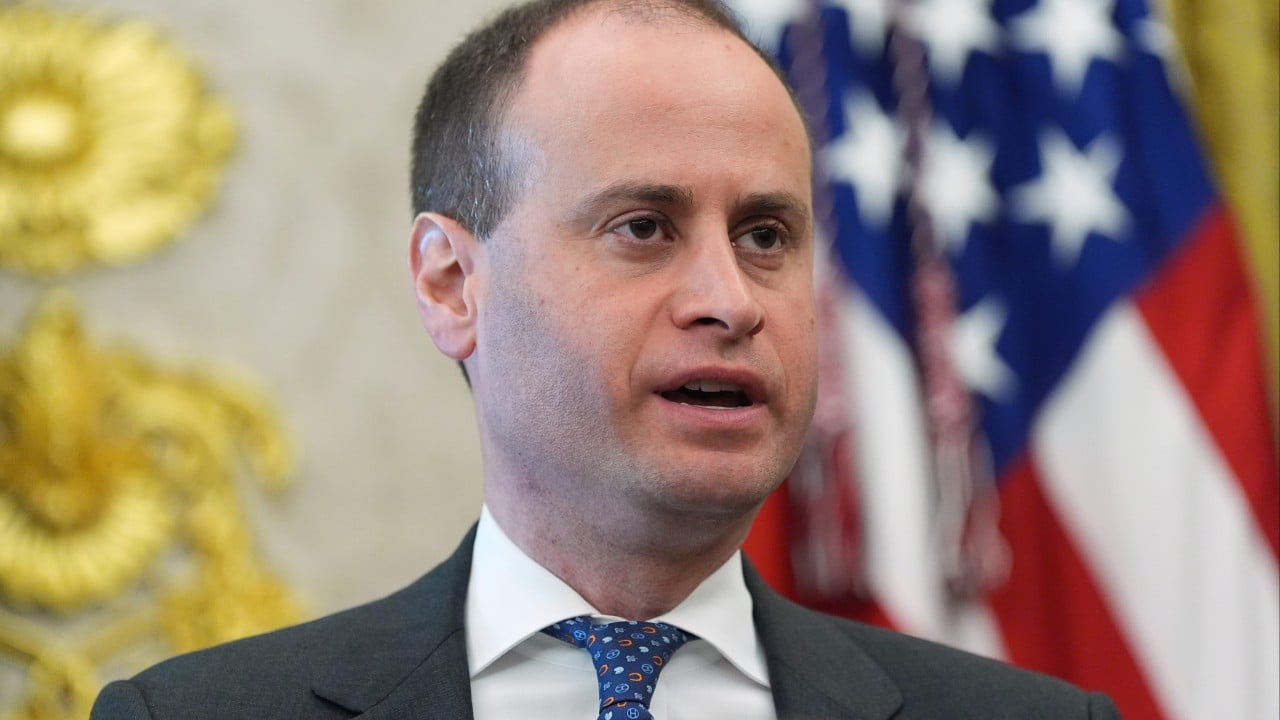
The media narrative writes itself with lazy predictability. When an administration names a new White House counsel, the conventional press treats the appointment like a standard corporate general counsel hiring event. They look at the resume, count the credentials from prestigious clerkships, nod at the pedigree, and assume the job is about dotting legal i's and crossing administrative t's.
That framework is fundamentally wrong.
When Will Scharf steps into the role of White House counsel, Washington will hyperventilate over his background, his television appearances, and his association with high-profile litigation. Pundits will frame this as a tactical escalation, a defensive crouch, or an aggressive maneuver. They miss the mark entirely. A White House counsel is not hired to keep the president out of trouble in the abstract. They are hired to manage the friction between raw executive ambition and the immovable machinery of the administrative state.
I have watched institutional insiders spend millions of dollars and countless hours trying to weaponize legal compliance as a political shield, only to watch their strategies disintegrate the moment a real crisis hits. The mistake everyone makes is treating the White House counsel office like a traditional downtown law firm. It is not. It is ground zero for a constitutional wrestling match.
The Myth of the Neutral Arbiter
The mainstream media loves the trope of the sober, dispassionate lawyer who serves as an adult in the room, whispering caution into the ear of an impulsive executive. This is a comforting fairy tale invented by historians who prefer romance to reality.
Every successful administration understands that the executive branch is unitary for a reason. Article II of the Constitution vests executive power in a single person, not in a committee of cautious bureaucrats or nervous general counsels. When a president wants to move fast, standard legal risk aversion is often just institutional drag.
Scharf does not come from the traditional mold of Washington lawyers who view their primary duty as appeasing the permanent bureaucracy or safeguarding the sensibilities of the establishment press. His background reflects a different operational reality: one where the rules of engagement have already fundamentally shifted.
Let us look at what the counsel actually does day-to-day. The office handles judicial nominations, executive orders, ethics reviews, and congressional oversight. But beneath those dry headings lies the real mandate. The mandate is institutional survival and aggressive policy implementation under hostile fire.
If you think the job is about writing polite memos explaining why an agency head cannot fire a rogue civil servant, you do not understand modern governance. The real job is finding the structural levers within executive authority to bypass the procedural roadblocks that exist solely to preserve the status quo.
The Compliance Trap
Companies and political campaigns alike fall into the compliance trap. They hire hyper-cautious lawyers whose default setting is no. These attorneys treat every novel interpretation of executive power as an existential threat to the republic.
This approach guarantees paralysis.
Imagine a scenario where an administration wants to overhaul a multi-billion-dollar regulatory regime through executive action rather than waiting for a dysfunctional Congress to act. A conventional counsel will immediately list fifty reasons why the initiative will get blocked by a district court injunction within forty-eight hours. They will prioritize avoiding judicial embarrassment over achieving policy goals.
A sharp counsel, conversely, treats litigation not as a failure, but as a necessary theater of operations. They recognize that pushing the envelope of executive authority is the only way to test the boundaries of a system that has calcified over decades.
Scharf’s trajectory suggests an appetite for this exact kind of structural friction. He has spent time in the trenches of appellate litigation and high-stakes legal combat. He understands that judicial battles are not anomalies to be avoided; they are the terrain upon which modern political power is contested.
Dismantling the Oversight Industry
Another massive misconception centers on congressional oversight and executive privilege. The press treats every subpoena fight as a constitutional crisis. It is not a crisis. It is a negotiation backed by leverage.
The conventional wisdom dictates that the White House counsel must adopt a posture of reluctant compliance, turning over documents and cooperating with investigations to minimize political damage. This is a sucker's game. When congressional committees issue sweeping demands, they are rarely looking for truth. They are looking for headlines, talking points, and tactical advantages for the next election cycle.
A high-performing legal team does not play defense in these scenarios. They understand that executive privilege exists to protect the internal deliberations necessary for effective governance. If you surrender that ground casually, you erode the office not just for the current occupant, but for every future president.
The strategy requires absolute clarity on where the hard lines are drawn. It requires a willingness to absorb short-term media criticism in exchange for long-term structural preservation. Scharf’s background indicates he is fluent in this kind of hardball constitutional defense. He has watched firsthand how legal frameworks are utilized as political weapons. You do not respond to a political weapon with a polite request for procedural fairness. You respond with counter-leverage.
The Cost of the Contrarian Approach
Let us be completely transparent about the downsides here. This aggressive posture carries real risks.
When you treat legal positions as dynamic instruments of policy rather than static rules of a courtroom, you increase the likelihood of judicial pushback. Courts will strike down executive actions. Judges will write sharp opinions rebuking overreaches. That is the cost of doing business when you refuse to accept institutional stagnation.
Furthermore, this approach alienates the permanent legal establishment. The elite bar, the law review editors, and the editorial boards of major newspapers will consistently clutch their pearls over any departure from polite norms. If your primary goal is to be invited to cocktail parties in Georgetown, this path is not for you.
But if your goal is to break through bureaucratic gridlock and actually execute an agenda, the traditional playbook is absolute poison.
The Real Question You Should Be Asking
D.C. insiders keep asking whether this appointment signals a more confrontational legal strategy. That is a naive question. The confrontation is already here. It has been here for years.
The real question is whether the new White House counsel has the operational discipline to turn high-level constitutional theories into durable administrative wins while surviving the inevitable counterattacks from a hostile judicial and bureaucratic ecosystem.
Stop looking at resumes. Stop counting clerkships. Stop worrying about what the editorial board thinks of the pedigree. Power doesn't care about polite consensus. It cares about who knows how to use the machinery before the other side figures out how to jam it.


